Discover the fascinating world of birds in Belarus through detailed descriptions of some of the most remarkable species. From the vibrant common jay and the agile black-headed goldfinch to the intelligent common shrike and the elegant blackbird, explore their unique appearances, behaviors, and cultural symbolism. Learn how these birds contribute to ecosystems, their migration patterns, and the myths and legends they inspire.
Blackbird (Turdus merula)
If you are walking through a forest or a park and hear melodic singing with rich, varied sounds, there is a good chance that the “singer” is a blackbird. This bird is about 24–26 centimeters in size. As the name suggests, it is black in color, but with a bright yellow beak. In Belarus, Turdus merula is considered a common bird that can be found both in forests and in deciduous city parks. It is migratory—leaving in September and returning at the end of March. However, some individuals stay for the winter and do not migrate.

Young blackbirds are brown and lighter in color, making them easily confused with the song thrush or even the starling (due to the spots). The bird is widespread throughout the world, and various myths, legends, and stories are associated with it. For example, the blackbird was considered an unofficial symbol of piety and even hermitage. Due to its color, mystical properties were also attributed to the bird; for instance, it was believed that lightning would not strike a house where a blackbird had settled. However, in ancient Rome, Turdus merula was treated quite differently and was raised like ordinary chickens, fattened and grown for food.

What Does the Common Nuthatch Look Like?
One of the most common birds in Belarus, especially in deciduous parks, is the common nuthatch (Sitta europaea, Belarusian: “Unusual popuzen”). This nimble bird can also be easily spotted in coniferous forests and even city gardens.

The common nuthatch is small, about 13–15 centimeters in size, and belongs to the order Passeriformes. Outwardly, it is easily recognizable by its distinctive appearance and interesting coloration. The upper part of its body is usually gray-blue, with various shades and tints. The belly is light, but in some individuals, it can be a rich reddish color. The beak is elongated, and it visually appears larger due to a black stripe that runs through the nuthatch’s eyes. Distinguishing between a male and a female nuthatch can be difficult, as they are very similar in appearance. The main difference is size—the male is slightly larger. The nuthatch’s diet includes both plant material and various insects.
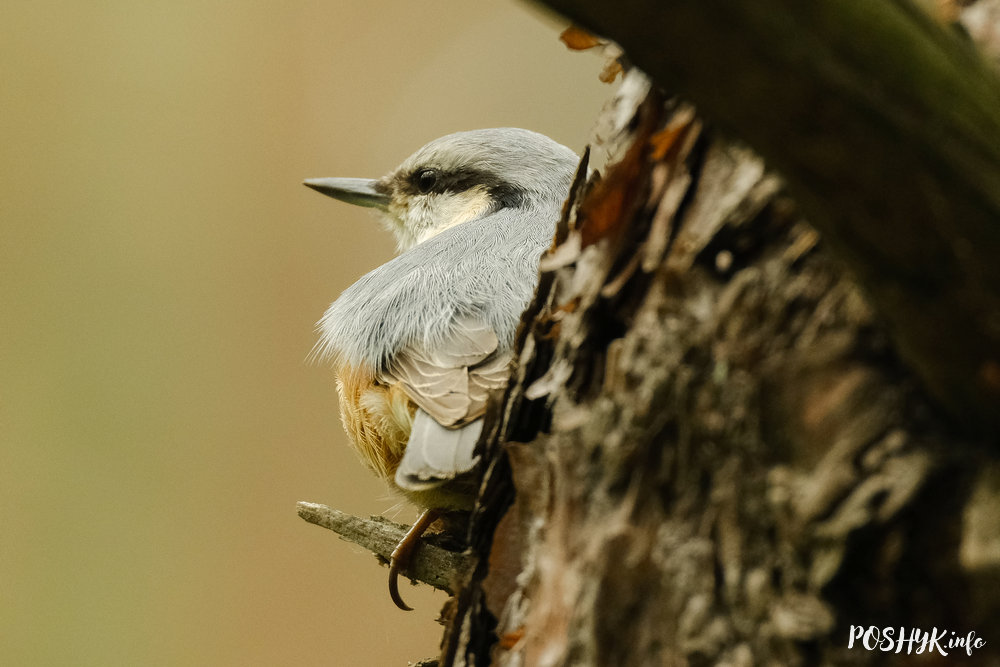
This agile bird is most easily observed when it is stocking up on food and hiding seeds in tree bark. Nuthatches are noisy and vociferous, with a wide range of calls. In addition, the bird is quite the “gymnast”—it can hang upside down and quickly move through trees (which is somewhat similar to the pika). It prefers to live in tree hollows but does not make its own; it often uses abandoned cavities or holes in trees. In Belarus, the nuthatch stays for the winter and does not migrate, so you can see it year-round.
Black-headed Goldfinch
One of the most beautiful birds in Belarus, which is quite easy to spot in its natural environment, is the black-headed goldfinch (Carduelis carduelis). These birds are active and often move in small flocks. They can be found in city parks as well as in fields.
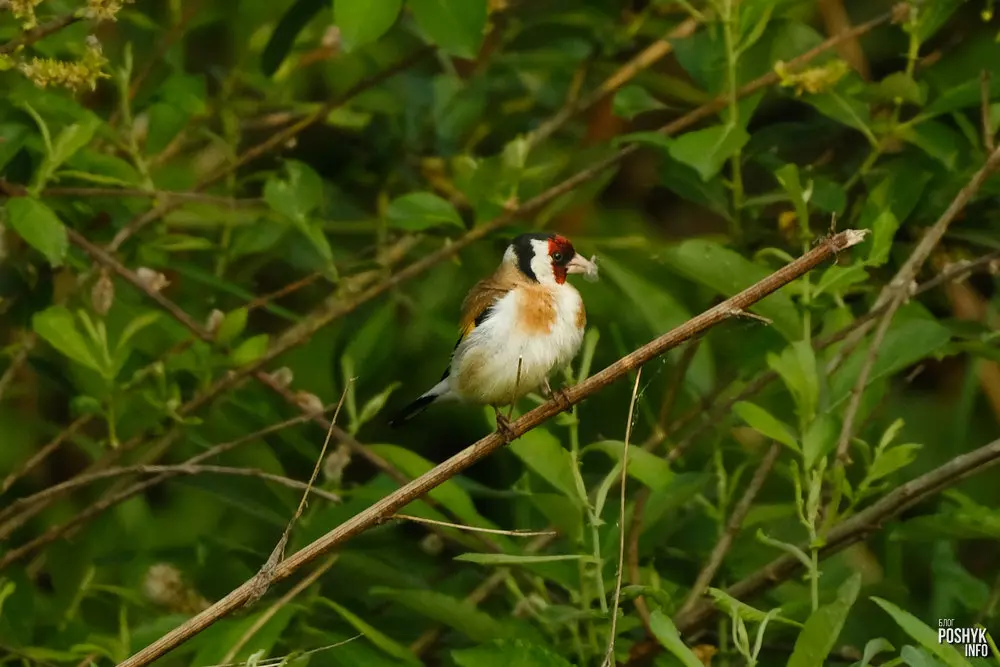
Females and males do not differ much in appearance and are difficult to distinguish. The black-headed goldfinch is a small bird, measuring a little more than 12–13 centimeters. It has bright plumage: a red edging near the beak, a black cap on the crown, white cheeks, a brownish body, and a yellow stripe on the wings. The primary diet of the common goldfinch consists of small insects and various seeds. You can often spot this bird eating dandelions. In Belarus, the black-headed goldfinch is considered a migratory bird. With the onset of autumn, it migrates to Europe, although in some areas it remains for the winter.

Goldfinches are considered symbols of happiness, virtue, and love. The bird is also associated with Christian stories and legends. One such legend explains the red spot on its head as being the blood of Christ. One of the most famous works by Carel Fabritius, The Goldfinch, was painted in the mid-17th century. As you may have guessed, Carduelis carduelis is depicted in the painting. This artwork later became an inspiration for the American writer Donna Tartt, whose novel of the same name won the Pulitzer Prize in 2014. So, the black-headed goldfinch continues to inspire and captivate.
Common Shrike
One of the most common birds of the shrike family found in Belarus is the common shrike (also known as the “small growler,” Lanius collurio). Slightly larger than a field sparrow, it doesn’t stand out for its singing and tends to avoid close proximity to other birds.
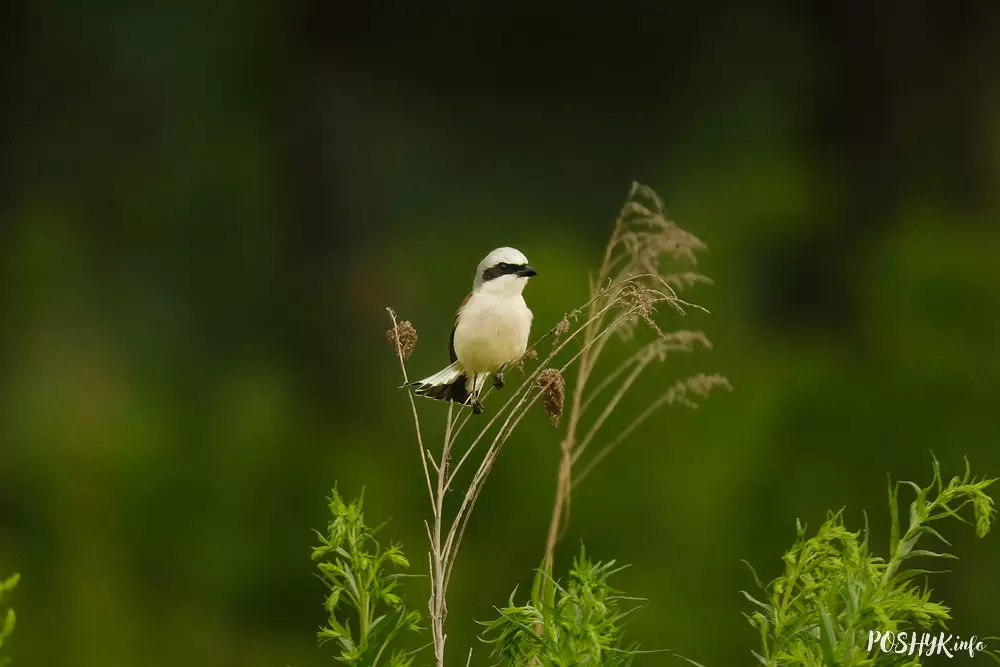
Outwardly, the male and female shrikes are strikingly different. The male is recognizable by the bright black stripe running through its eyes and beak. Its back is red, its head is gray, and its abdomen is light brown. The female, on the other hand, is more monochromatic, mostly brown. The common shrike migrates to Belarus quite late, usually arriving in late April to early May, and leaves at the end of August or in the first weeks of September. An interesting feature of this bird is that it conducts all of its migrations at night, making it almost unnoticed during these times.

The primary diet of Lanius collurio consists of a variety of insects. The easiest way to spot a shrike is near the banks of overgrown rivers, in areas where forests are nearby.
What Does the Common Jay Look Like?
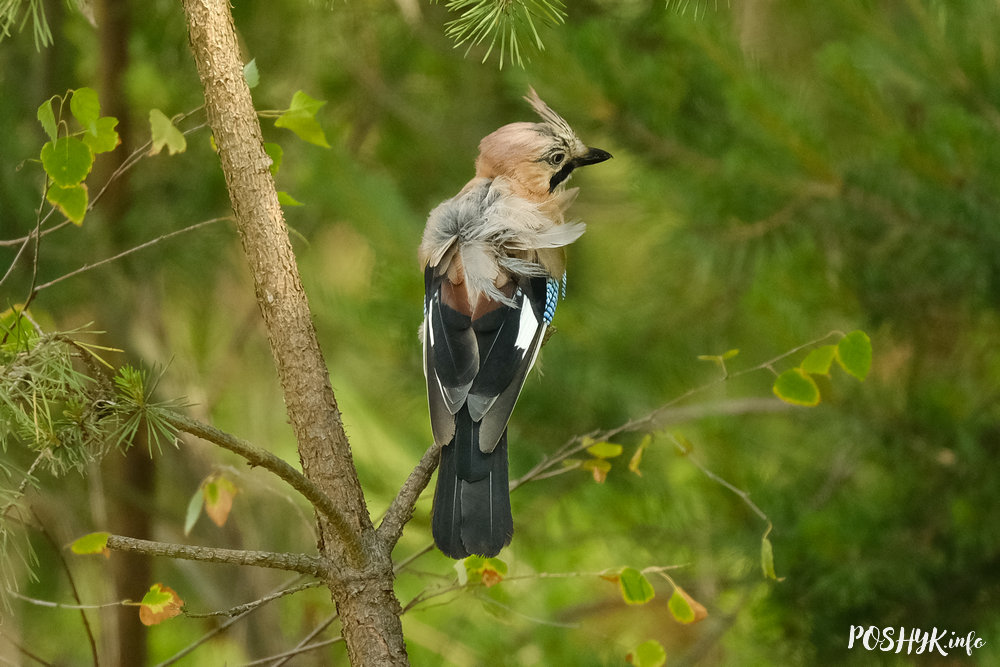
In almost all of Belarus, one can find a bright and beautiful bird – the common jay (Garrulus glandarius). Externally, the jay is easily recognizable and colorful: its plumage is predominantly pinkish-brown, with white and black markings on the wings and characteristic blue-black stripes along the sides of the wings. The head is typically lighter in color, with a black stripe running across the eyes. The bird’s body length ranges from 32 to 35 centimeters, and its wingspan is about 54–58 cm. The jay has a strong, sharp beak, well-suited to a wide variety of foods.
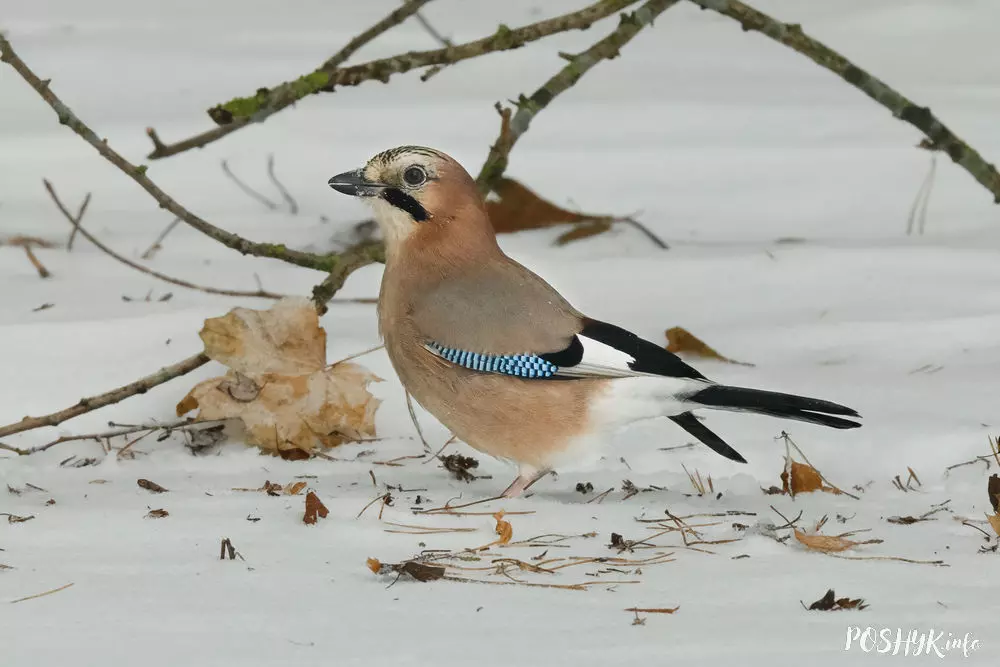
These birds are not only beautiful and biologically interesting but also play an important role in the ecosystems they inhabit. Jays are crucial for the spread of oak trees, as they bury acorns in the ground as a winter reserve. Some of these acorns are forgotten and eventually germinate into new trees. Like other corvids, Garrulus glandarius is known for its high intelligence, including the ability to solve complex problems and even use tools.
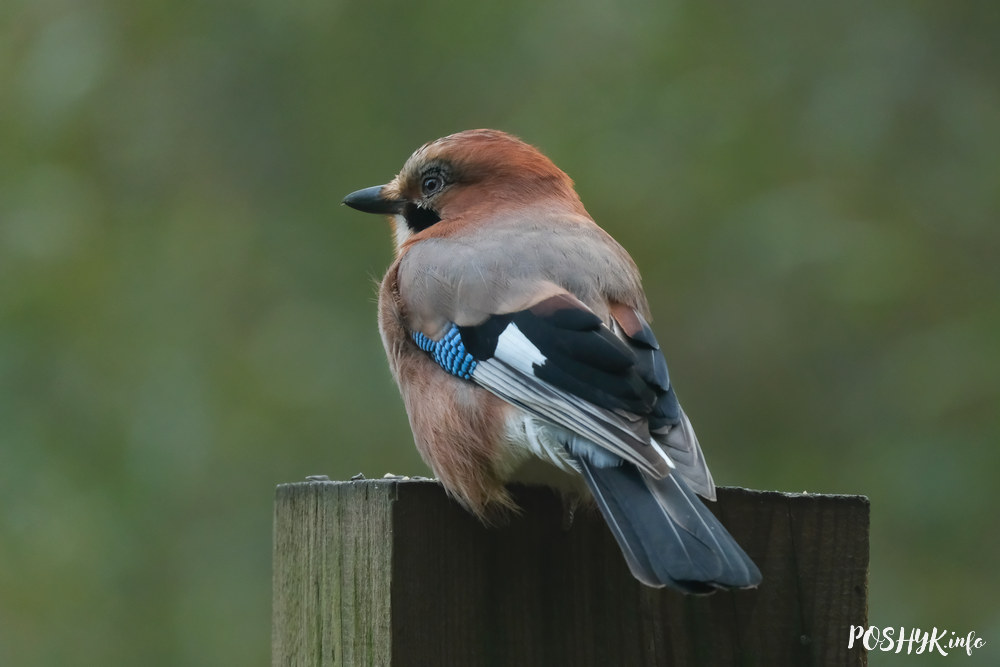
The symbolic meaning of the jay can vary depending on cultural context and personal beliefs. Due to its cautious and vigilant behavior, the jay is often associated with caution and the ability to anticipate danger. The bird’s ability to imitate the sounds of other animals and its environment makes it a symbol of communication and adaptability. In the corvid family, to which the jay belongs, birds are known for their intelligence and resourcefulness. As such, the jay is often seen as a symbol of cunning and cleverness. Jays are also highly protective of their nests and young, symbolizing family values and the protection of loved ones. Since they help spread oak seeds, they can also represent growth, development, and renewal. Jays are omnivorous birds. They eat insects, nuts, seeds, berries, and sometimes small animals or carrion. They build large nests in trees using branches, grass, and other materials, and are known for their caution and secrecy during the nesting period.