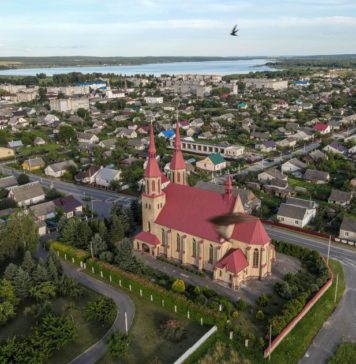
Explore the fascinating world of birds found in Belarus with detailed descriptions of species like the robin, finch, kingfisher, siskin, magpie, and more. Learn about their appearance, behavior, migratory patterns, and habitats. From the vibrant plumage of the common bullfinch to the distinctive orange chest of the robin, each bird has its unique features. Understand their feeding habits, nesting behaviors, and how they interact with their environment. Whether you’re a birdwatching enthusiast or just curious about local wildlife, this comprehensive guide offers valuable insights into the diverse bird species of Belarus.
Common Pika (Certhia familiaris)
Despite its large population and impressive habitat, spotting the common pika might not be that simple. This bird is small in size and, from a distance, can easily be mistaken for an ordinary sparrow. Certhia familiaris is characterized by a slightly curved beak, camouflaged spotted plumage on the back, and a white belly underneath. In search of food, the pika skillfully moves through the trees from the bottom up, usually following a spiral path.
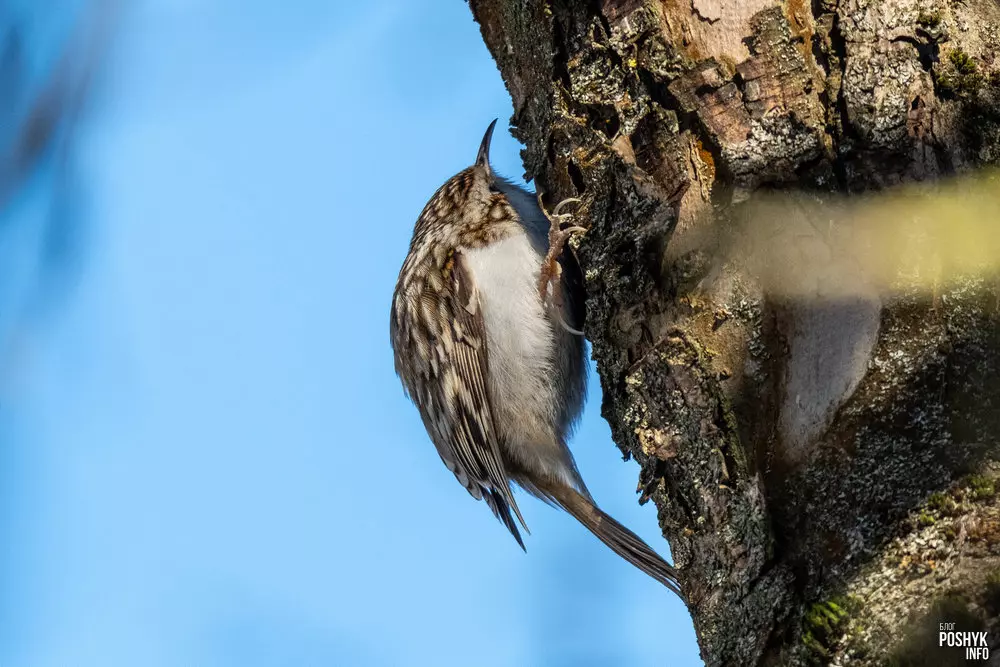
Some birds in the pika family are very similar to each other and differ only slightly. The common pika is often confused with the short-toed pika. The main visual differences include the length of the beak (the short-toed pika has a longer beak), the hind claw (in the common pika, the claws are longer, especially the back ones), and coloration (the common pika has a lighter abdomen and brighter plumage). However, in practice, it is extremely difficult to distinguish between these two birds. In Belarus, the bird can be found both in parks and forests.

Kingfisher (Alcedo atthis)
One of the most beautiful birds that can be seen in Belarus is the kingfisher (Alcedo atthis). This very small bird is often hidden from human view, making it quite difficult to spot. The common kingfisher tends to stay away from other birds and leads a somewhat solitary lifestyle. Its preferred habitats are steep riverbanks near clean, fast-flowing rivers with dams. It primarily feeds on fish, but sometimes also eats insects and small frogs. That is why the presence of water is essential to the kingfisher’s life.

The kingfisher looks like a truly exotic bird. Its back is a rich turquoise (a blend of green and blue) with a stripe of light blue and small bright specks. The belly and cheeks are reddish-orange. The kingfisher moves very quickly, primarily using its wings, as its legs are short. This is another reason why spotting this beautiful bird is difficult: it sits motionless on branches and flies almost unnoticed.
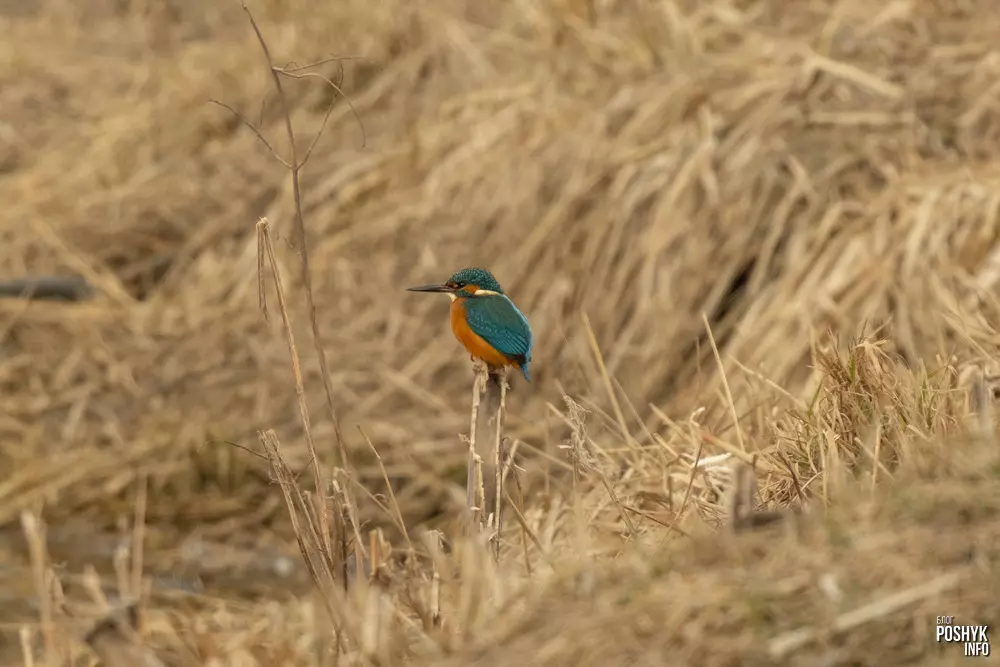
Common kingfishers live for a relatively long time—about 15 years. They form monogamous pairs (though there are exceptions), breed by mid-spring, and sometimes manage to do so twice a year (with the second brood closer to the end of summer). The chicks, like the adults, require a large amount of food, so the parents spend nearly the entire day hunting.Since 1981, this bird has been included in the Red Book of Belarus. It is difficult to distinguish between males and females. The main differences are size (the male is slightly larger), the beak (the male’s beak is entirely black, while the female’s beak has an orange bottom), and brightness (as is often the case with birds).
Common Bullfinch (Pyrrhula pyrrhula)
The bullfinch is a beautiful, small bird, measuring 15–17 centimeters in length, and is quite easy to identify. The males are particularly distinctive, with a bright, rich red belly, neck, and even cheeks. In contrast, the female has a more subdued color, with combinations of brown, gray, and olive tones. In trees and in flight, the female bullfinch is much harder to spot than the male.

In Belarus, Pyrrhula pyrrhula can be found year-round, both in woodlands and urban parks. However, it is much easier to see the bullfinch in winter, as the bright plumage stands out. In addition to various seeds and tree buds, bullfinches are fond of berries, especially rowan berries. Therefore, like fieldfares, they are often found in fruit trees. The common bullfinch belongs to the order Passeriformes and the finch family, making it a songbird.

Greenfinch
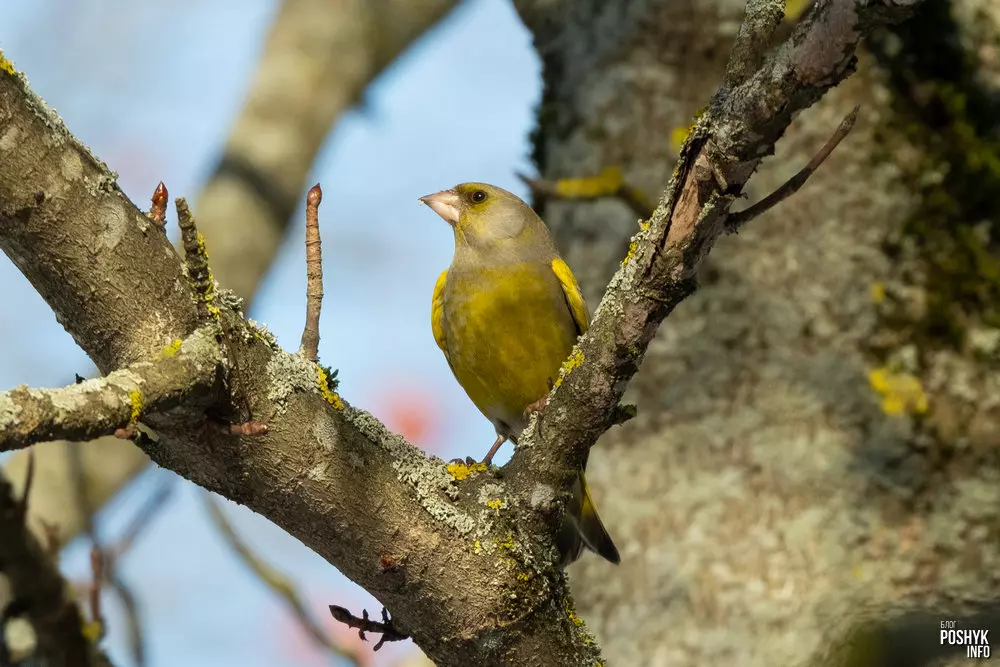
The common greenfinch is a brightly colored “sparrow-like” bird, especially the male, which features olive and green hues in its plumage. These finches are also distinguished by a yellow stripe along the edge of their wings and a powerful beak, which resembles that of a grosbeak. Male Chloris chloris are larger and more conspicuous, as is typical in the bird world. Females are more sparrow-like and have lighter gray tones instead of green. However, the distinctive yellow stripe makes it easy to identify this bird even from a distance.
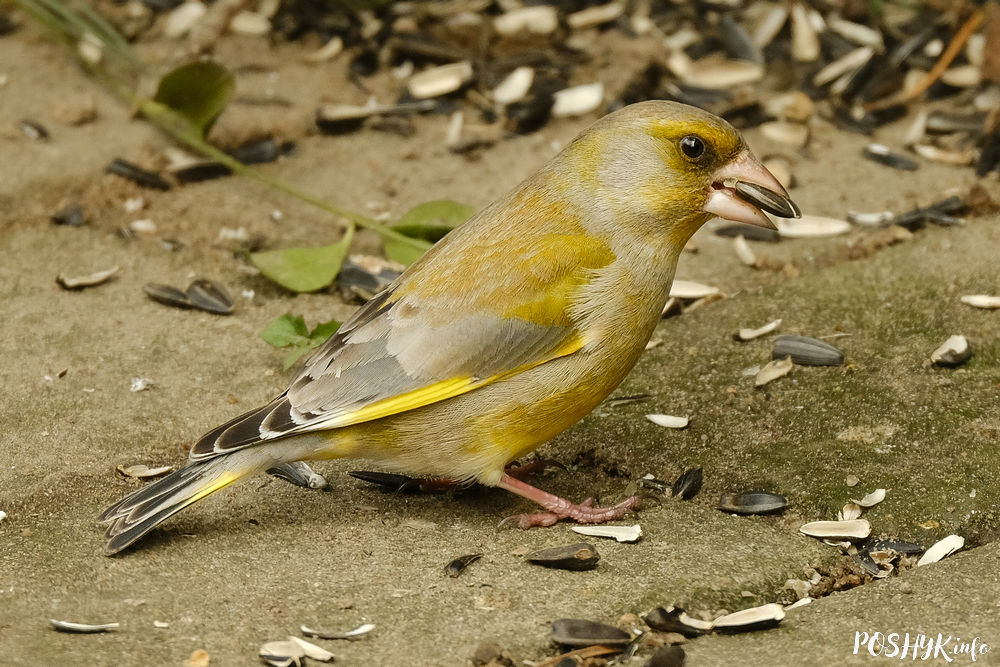
In Belarus, the greenfinch is found year-round. It can be seen both in forests and urban parks. For example, all the photos in this article were taken near the Chizhovsky Reservoir in Minsk.In bright sunlight, the greenfinch can sometimes be confused with a siskin.
Common Starling
The common starling (Sturnus vulgaris) is a symbolic bird often associated with the arrival of spring. Externally, it is a small bird, averaging just over 20 centimeters in length, with a rich black plumage that has a metallic sheen and cream-colored specks. These specks are most visible at the end of winter and early spring, but after molting, they nearly disappear. Additionally, the closer the breeding season gets, the lighter the starling’s beak becomes. It changes from black-brown to a bright yellow, as seen in the picture below.

In Belarus, the starling migrates for the winter. As spring approaches, the males are the first to return, preparing nests, followed by the females. Starlings are excellent imitators, capable of mimicking the songs of other birds. By borrowing these sounds, they create unique “melodies,” which have also become a signature feature of their calls. An interesting fact: In 2020, the common starling was chosen as the natural symbol of the Glubokoe district in the Vitebsk region.
Birdhouses are commonly referred to as “birdhouses,” but many don’t realize that they are often specifically built for starlings (hence the name). These birds are happy to settle in such artificial nests. In the past, there was even a belief that the more elaborate the birdhouse you built, the better your life would be.
White Wagtail
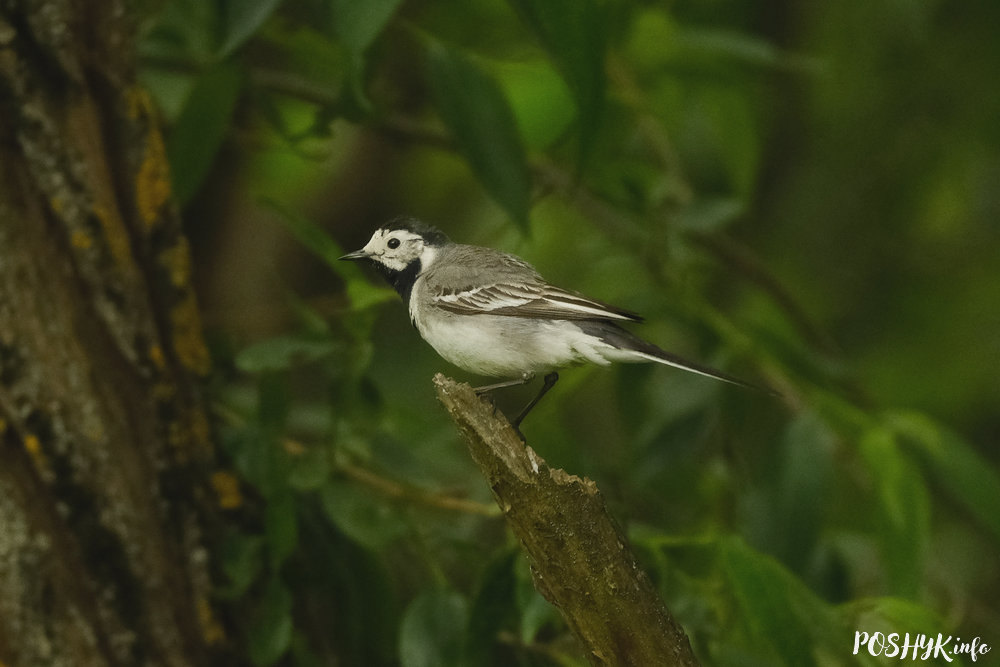
One of the most notable and frequently seen birds in Belarus is the White Wagtail (Motacilla alba). It is similar in size to the common field sparrow, measuring about 17-18 cm. It is distinguished by its beautiful coloration: a white or light gray belly, a black neck and crown, and a gray upper body.
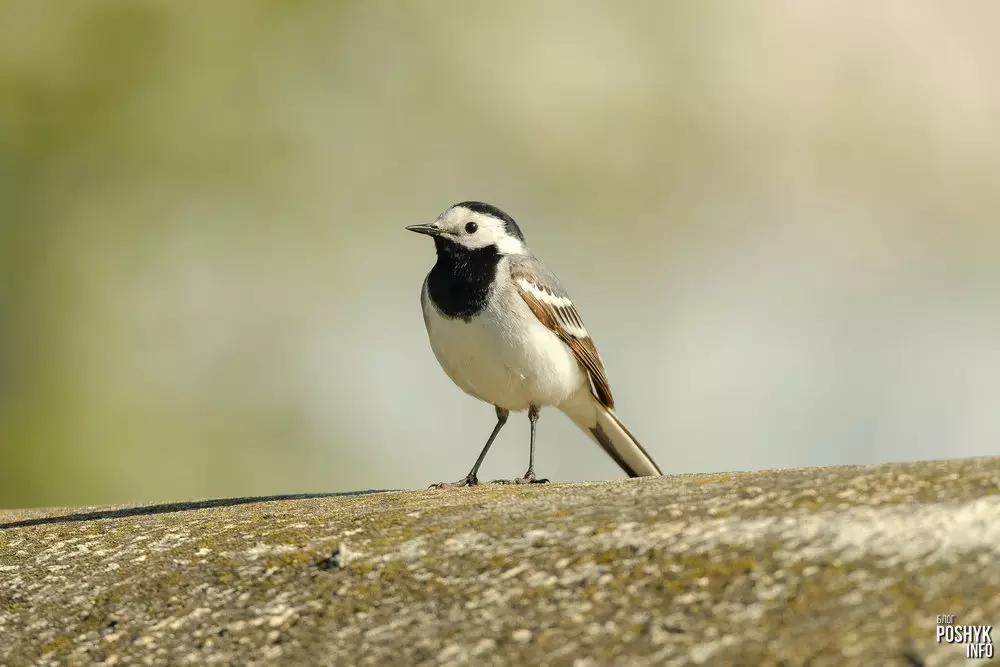
An interesting feature of this bird is its way of moving on the ground. Unlike many other birds, the White Wagtail does not hop but quickly runs from place to place. In Belarus, this bird is a migratory species, flying to warmer regions of Europe and Africa for the winter. You can spot this black, white, and gray bird both in cities and forests. It is also commonly found near rivers and along the banks of reservoirs. A fascinating fact: the White Wagtail was chosen as the national symbol (national bird) of Latvia.
Magpie (Pica pica)
The common magpie is well known to the residents of Belarus and Europe. It is found everywhere and has a distinctive color pattern. The head, tail, wingtips, and legs are black, often with an unusual sheen of blue, purple, or green. The rest of the body is white. There is little difference in appearance between females, males, and even young magpies and adults.
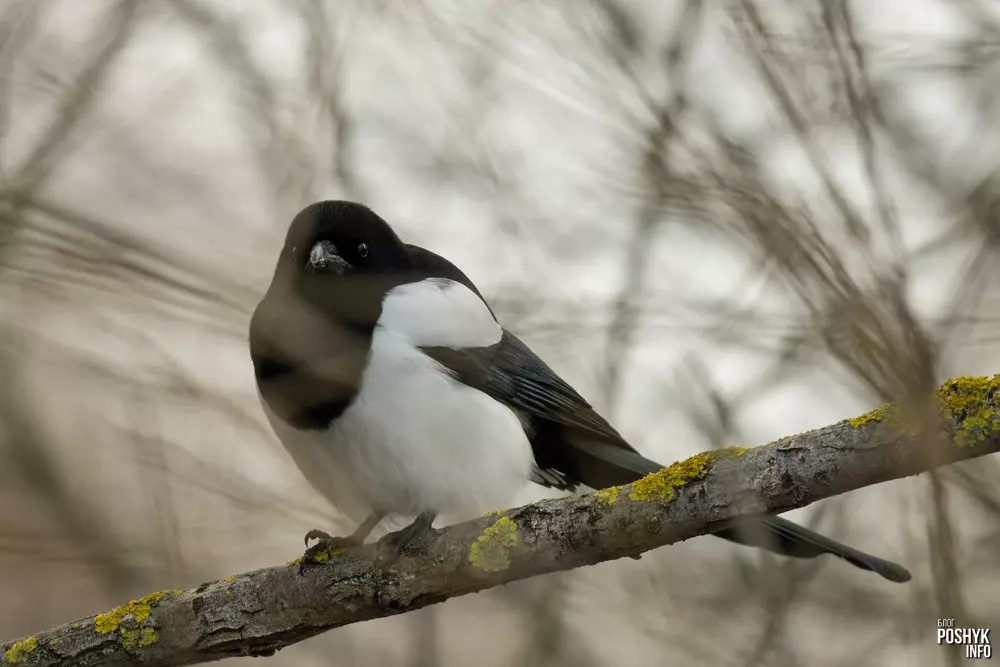
Many legends and superstitions are associated with magpies. This bird has long been considered a symbol of news. In some countries, it is seen as a positive omen, while in others it is considered a harbinger of trouble (though more often, bad things are linked to the bird). According to one legend, the magpie is the only animal that refused to board Noah’s Ark and was given the nickname “Devil’s Bird” as a result. Unfortunately, many people take such legends seriously and harbor prejudice against magpies. Despite these superstitions, the magpie is renowned for its intelligence and is considered one of the smartest birds. It leads a sedentary lifestyle, so it can be found year-round. Magpies prefer forests, parks, and small groves.
Siskin (Spinus spinus)
The siskin (Spinus spinus) is a beautiful songbird, roughly the size of a sparrow, but with brighter and more striking colors. In Belarus, it can be found year-round. Its preferred habitats are coniferous forests, but siskins can also be seen in urban areas. In colder weather (from late autumn to early spring), they gather in flocks, moving together, while in warmer seasons, they form pairs.

Externally, males and females look distinctly different, though both share a similar color palette dominated by yellow and green tones. The male is recognizable by a black “cap” on its head, while the female is more mottled all over her body, with a lighter-colored belly. The main diet of this bird consists of insects and various tree seeds. Siskins are quick movers and prefer to stay in the trees, descending to the ground only when necessary. Due to their melodic songs, siskins are often captured and kept in cages as pets. Interestingly, the bird’s name “siskin” comes from the unusual sounds it makes.
Finch (Fringilla coelebs)
By spring, a beautiful songbird from the passerine order returns to Belarus – the finch (Fringilla coelebs). It is comparable in size to an ordinary field sparrow (about 15-17 centimeters), but it stands out strikingly with its vivid colors and melodic song. This species can be found both in forests and city parks, and it is known to visit feeders. Its primary diet consists of various seeds, and during the chick-feeding period, insects are also added.
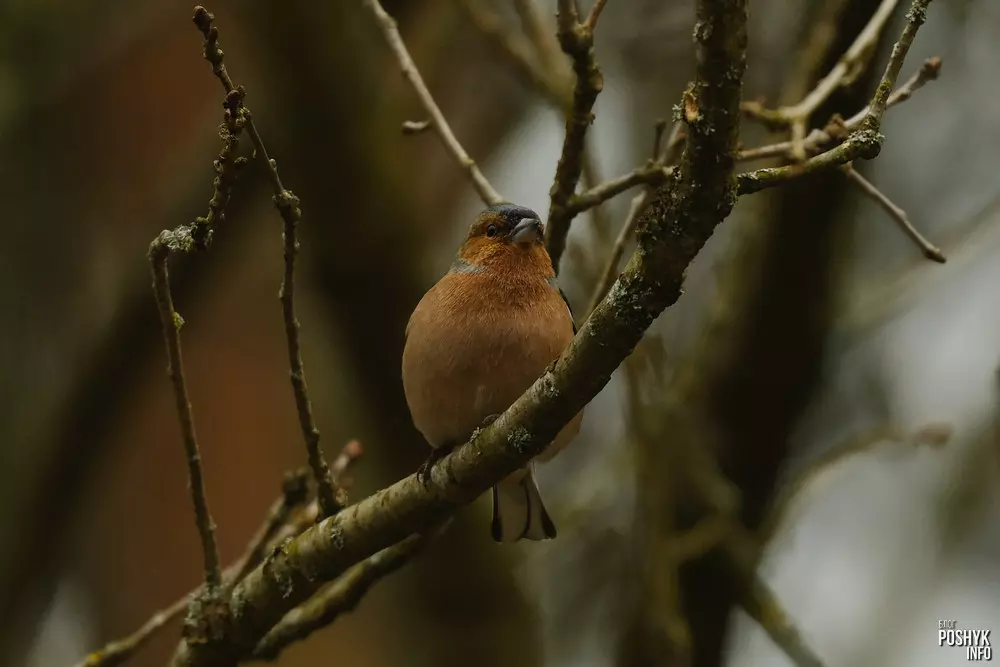
Male finches, as is common in the bird world, have brighter and more attractive plumage. The top of the head and neck are dark blue, the back is brown with noticeable greenish tints, and the abdomen and chest are brownish. From a distance, they can resemble bullfinches, with which they are sometimes confused. The female finch is less striking, with a dominant brown-gray color and yellowish tints.
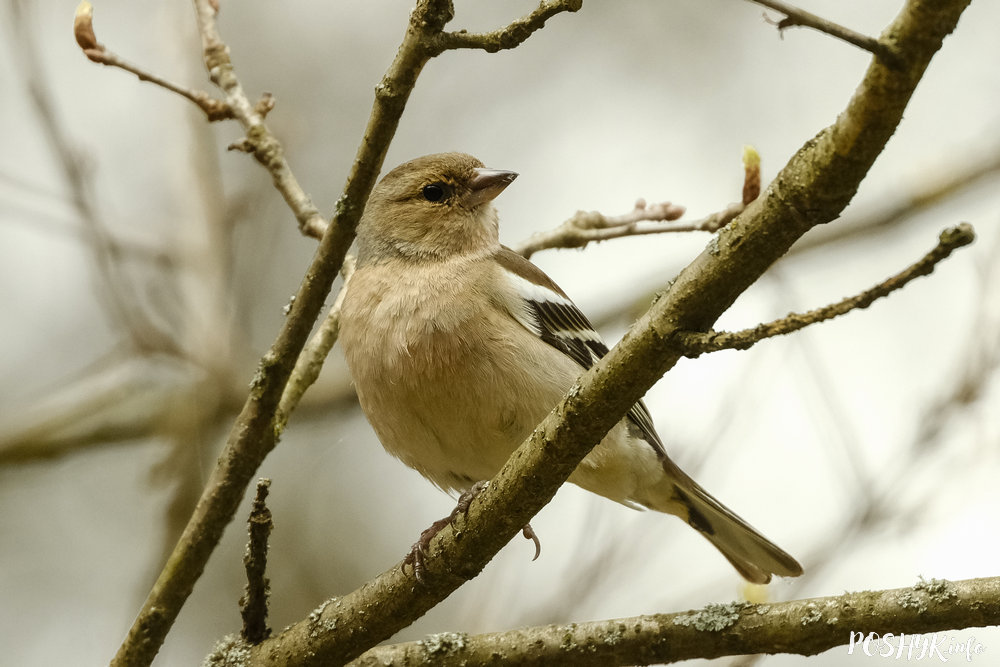
A common feature of both males and females is their beautiful wings, marked with white and yellow stripes. During the breeding season, these birds usually raise two broods. The first brood appears in late spring (May), and the second closer to July or early August. They migrate for the winter in October-November, with the onset of colder weather.
Zaryanka (Robin)
The robin (Erithacus rubecula) is a numerous and commonly found forest bird from the flycatcher family. Externally, the robin (as this bird is also called) is easily recognizable, with a distinctive bright orange patch on the neck, part of the abdomen, and the face. This colorful marking makes the robin easy to identify. The rest of the bird’s body is light gray with an olive tint, and both the beak and eyes are black. The robin is slightly smaller than the common field sparrow, averaging 13–14 centimeters in length.

One interesting feature of these birds is that not only the males but also the females sing, although their songs are less varied. Outwardly, males and females look quite similar, with only slight differences. In Belarus, the robin returns early in the spring. By mid-March, these birds can be found in the forests. They begin migrating for the winter in September, but some robins stay until the first snowfall.
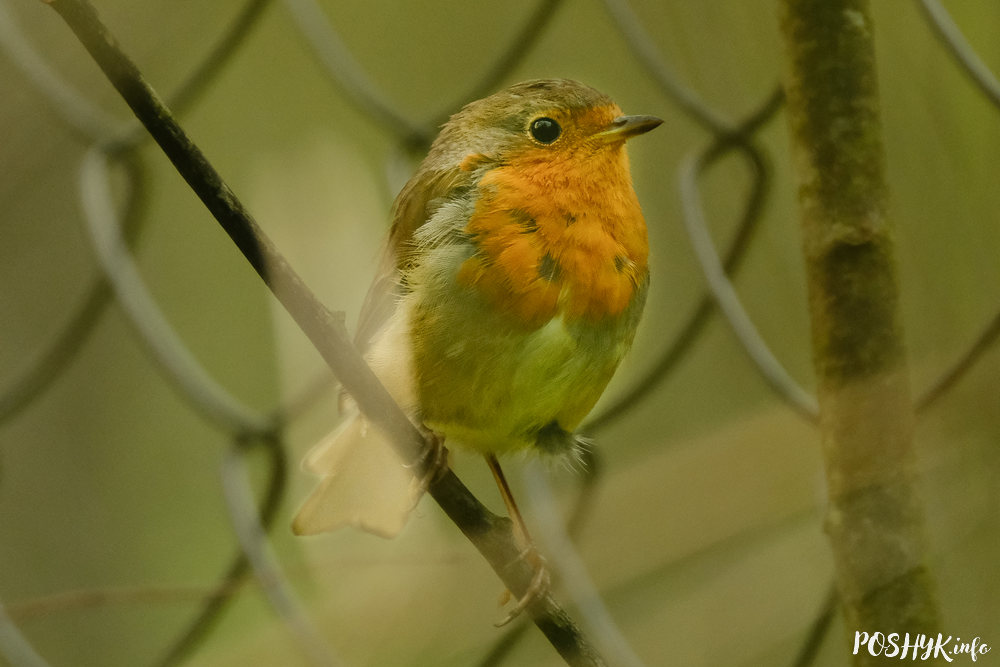
Their main diet consists of insects, but in the fall, robins may also eat berries and visit feeders to collect seeds.