Explore the rich religious and architectural heritage of Belarus through its historic churches and monasteries. Visit the Dyatlovsky Church of the Assumption of the Virgin Mary, dating back to the mid-17th century, and admire its Vilna Baroque style and the stunning restoration work it has undergone. In Zelva, the Trinity Church, built in the early 20th century, captivates visitors with its Neo-Gothic design and peaceful park surroundings. Shchuchyn’s Church of St. Teresa and its PR Monastery, established in the 18th century, form an impressive architectural ensemble, while the Peter and Paul Church in Medvedichi showcases eclectic design and a fascinating history. Lastly, the Church of St. Anne in Voroncha stands as a monument to late classicism, surrounded by historical graves and symbolic plaques. These churches not only offer a glimpse into the past but also provide a spiritual journey through Belarus’s diverse cultural landscape.
Dyatlovsky Church of the Assumption of the Virgin Mary
In Dyatlovo, on the central square named after September 17, the life of the city is still concentrated, just as it was five centuries ago. Here stands the city’s main and most important attraction — the Church of the Assumption of the Virgin Mary. The Dyatlovsky Church dates back to the mid-17th century and is built in the architectural style of Vilna Baroque with Rococo touches. According to an information plaque on the temple, the church was constructed in 1664 with the direct participation and funding of Kazimir Lev Sapieha. By the way, it was with his support that the famous monastery in Bereza was established.

In the middle of the 18th century, in 1751, after a devastating fire, the temple was partially rebuilt, with modifications to the facade. These changes added more Vilna Baroque features to the church. The work was carried out under the guidance of architect Alexander Asikevich, who also worked on the Basilian Monastery in Boruny.

The reconstruction was funded by the Radziwiłłs, who owned Dyatlovo at the time. Around the same period, they built a manor-palace on the banks of the Dyatlovka River. In 1882, another fire occurred, damaging the church once more. As a result of the repair work, the roof and ceilings were almost completely replaced.
At the beginning of the 20th century, in 1900, the Dyatlovsky Church of the Assumption of the Virgin Mary was surrounded by a high stone fence with a gate. Many old photographs and postcards feature this fence, which was next to shopping arcades. At some point, the fence was dismantled or destroyed, though there is no exact information about these events. Today, the temple is enclosed by a decorative wrought-iron fence. An interesting fact: In 2017, a photo taken during the Christmas service in the Dyatlovsky Church made it to the front pages of the Wall Street Journal.

The temple dominates the town and is clearly visible even from the entrance, located at the intersection of Mickiewicz and Lenin streets. In the Dyatlovsky District, you can also visit the church in the village of Palace. There are many other interesting places in Belarus, with various tour options around the country.
Zelvensky Trinity Church
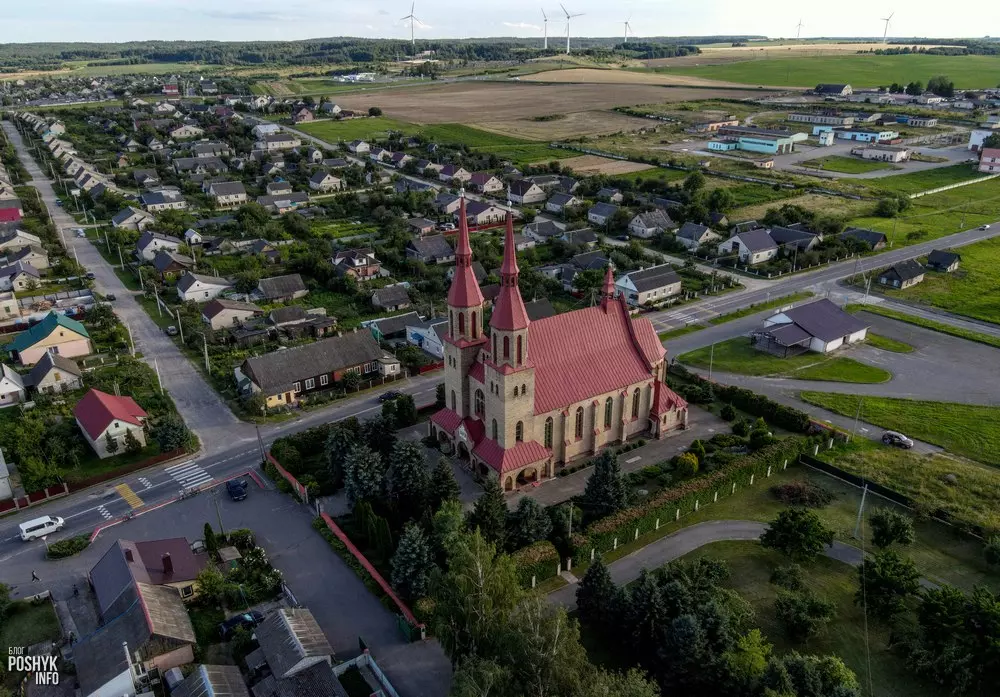
The urban settlement of Zelva is located in the Grodno region, on the Zelvyanka River. The settlement dates back to the mid-13th century, with the first written mention occurring in 1470. The central attraction of Zelva is the Church of the Holy Trinity, which is clearly visible from the entrance. The church is atypical, featuring two towers and a concave roof. On the church grounds, there is also a park, which deserves special attention.
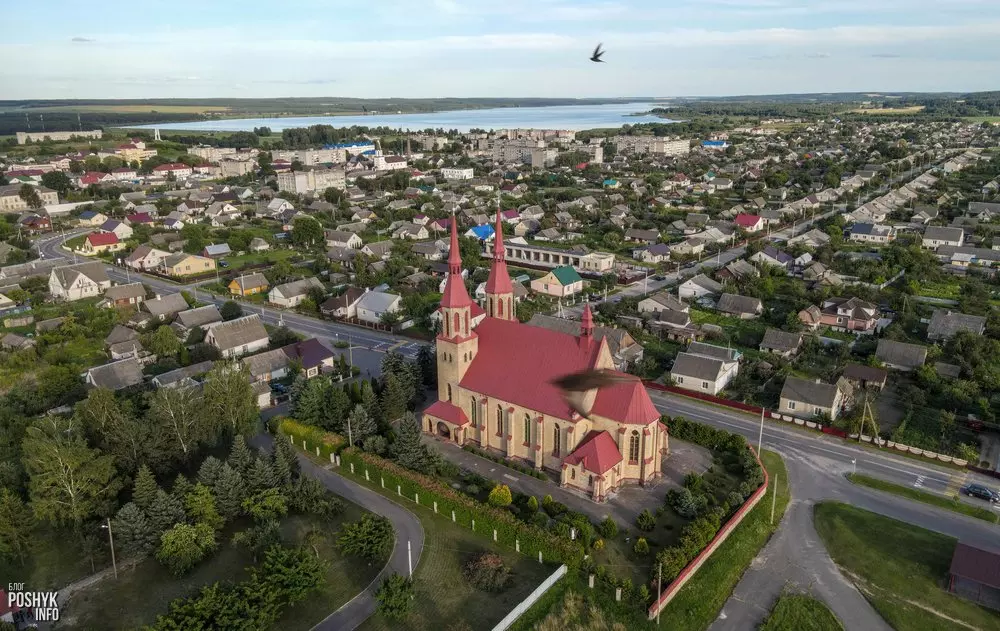
Construction of the temple took place in several stages, beginning in 1905 when priest Ludwik Kluk visited Zelva. The construction was completed in 1913. Neo-Gothic architecture predominates in the Zelvensky Church, but there are also features of the Neo-Romanesque style. The church was built from yellow brick, which was a common choice for Neo-Gothic churches in the early 20th century.

During World War II, the church was severely damaged: the spires and roof were destroyed by shelling. In 1950, the church in Zelva was forcibly closed. During the Soviet period, the building was repurposed as a store, and later as a warehouse, leading to a period of neglect.
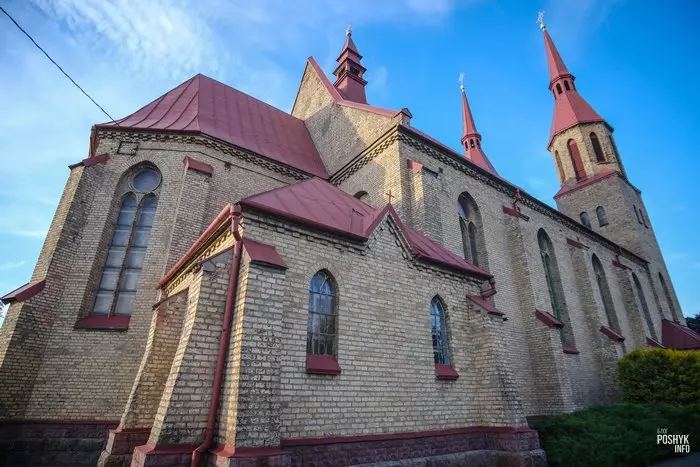
After almost 40 years, the church was returned to the Catholic community, who carried out restoration work. It was reopened as the Church of the Holy Trinity in 1991. Zelva is located 40 kilometers from Slonim, and the church is the dominant feature of the urban settlement, situated on 50 Years of the Komsomol Street.
Church of St. Teresa and the PR Monastery in Shchuchyn
Shchuchyn is a small but beautiful city with several noteworthy attractions. The first is the Shchuchyn Palace, which is covered in a separate article, and the second is the Church of St. Teresa and the PR Monastery.

The history of the Catholic parish in Shchuchyn dates back to the 15th century, when there was already a church in the town. However, the temple that stands today was built much later, at the site of the PR Monastery, which has existed here since 1718. The church was constructed between 1826 and 1829, funded by Francis Xavier of the Drutsky-Lubetsky family.
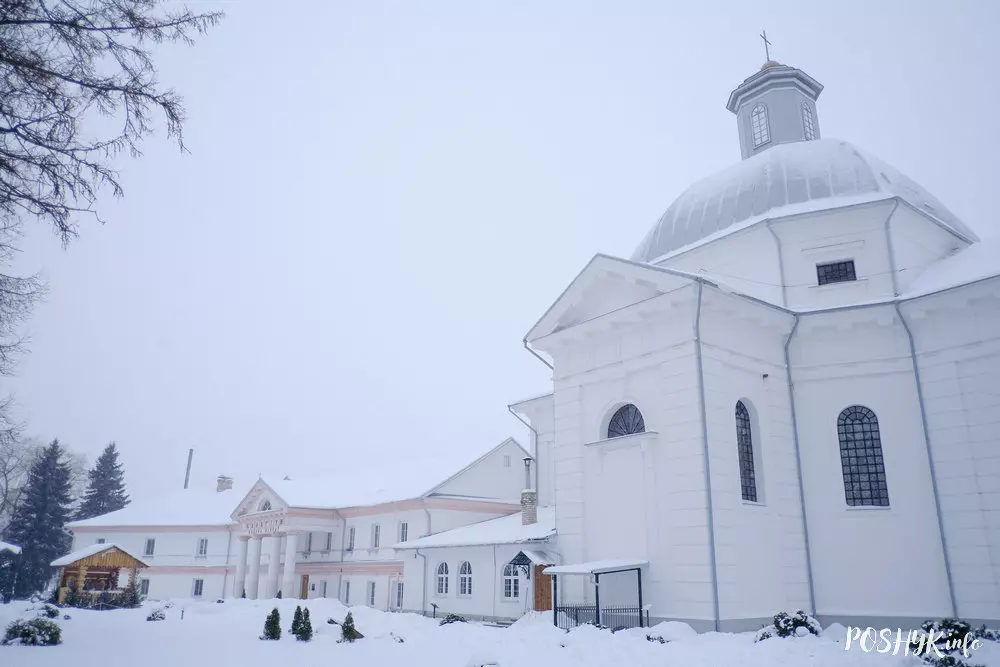
Almost immediately after its completion, the national uprising of the 1830s began, and as a result, both the PR Monastery and the church in Shchuchyn were closed. Unfortunately, this fate befell many Catholic churches of the time. After the monastery’s dissolution, the church became a parish church. In 1927, the PR Order was restored and functioned until 1954. During the Soviet period, the temple in Shchuchyn was closed, and it was only returned to the Catholic community in 1989.
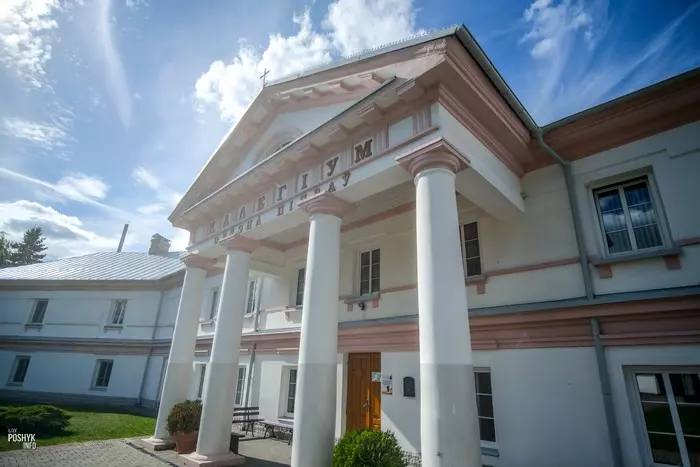
Today, the church and monastery are operational and open to visitors. The monastery building itself was restored in 2009. Together with the Church of St. Teresa, they form a single architectural ensemble. The main distinction of the PR monks compared to traditional Catholic monks is their vow to care for and educate children and youth. Interestingly, in the territory of modern-day Belarus, the PR Order was relatively small, and aside from Shchuchyn, their monasteries were only in Lida and Polotsk. The Shchuchyn Church is built in the Classicist style, with the main entrance highlighted by a four-column portico and a small square window above the door. The church is conveniently located in the very center of Shchuchyn, at Sovetskaya Street, 1. Directly across from it is the Orthodox Church of Saint Michael the Archangel.
Peter and Paul Church in Medvedichi
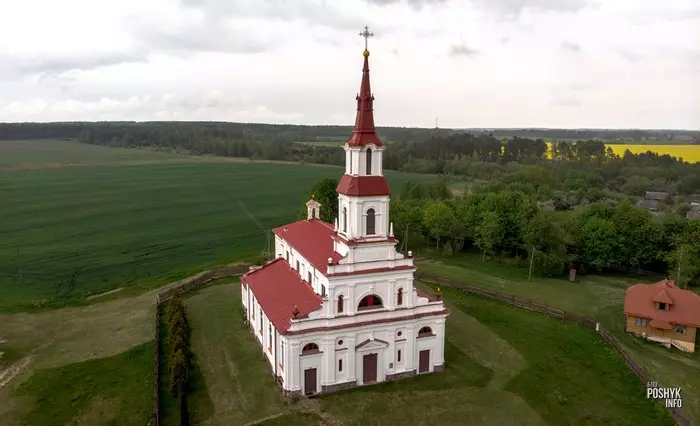
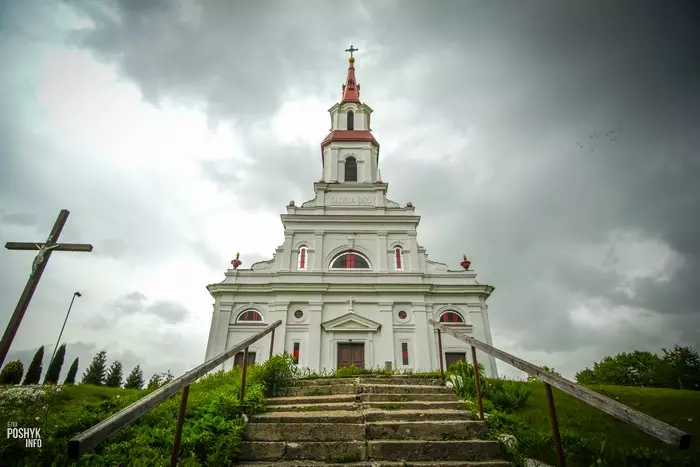
Located just 12 kilometers from the city of Lyakhovichi, in the Brest region, you can visit the Church of St. Peter and Paul. This one-towered temple is located in the village of Medvedichi, and it is clearly visible from the entrance. The stepped facade of the church has a tiered structure, ending with a high spire and a bell tower. Construction of the Peter and Paul Church was completed in 1908, on the site of a wooden predecessor, following the project of the well-known Polish architect Stefan Schiller. As Schiller was a representative of the eclectic style, you can see a mix of architectural elements in the church’s design.
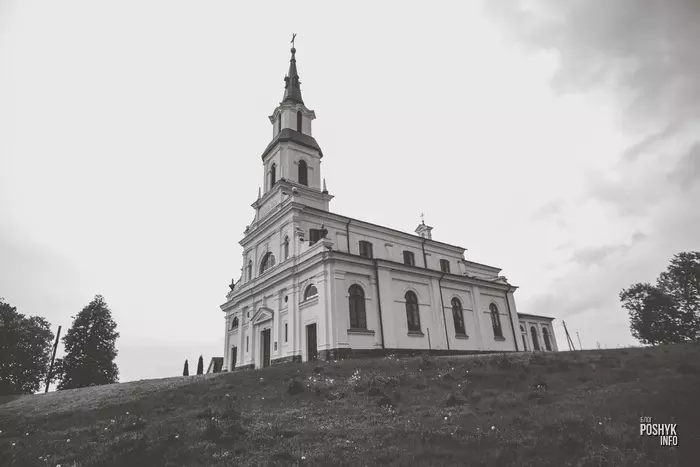
The new church in Medvedichi was solemnly consecrated on August 6, 1910, with Yana Eismont appointed as the first priest.
On the facade of the temple, there is an inscription in Latin: “Gloria Deo,” which is likely short for the liturgical hymn “Gloria in excelsis Deo”. Below this inscription is the year 1908, marking the completion of construction. Despite the difficult period of atheism during the Soviet era, the temple remained active.
Church of St. Anne in Voroncha Village
Voroncha is an agro-town on the border of the Grodno region, located near the P5 Baranovichi-Novogrudok highway. The settlement is quite old and was first mentioned in the mid-17th century as the possession of Stefan Curch. Among the town’s attractions is the stone Church of St. Anne, which was established in 1781.
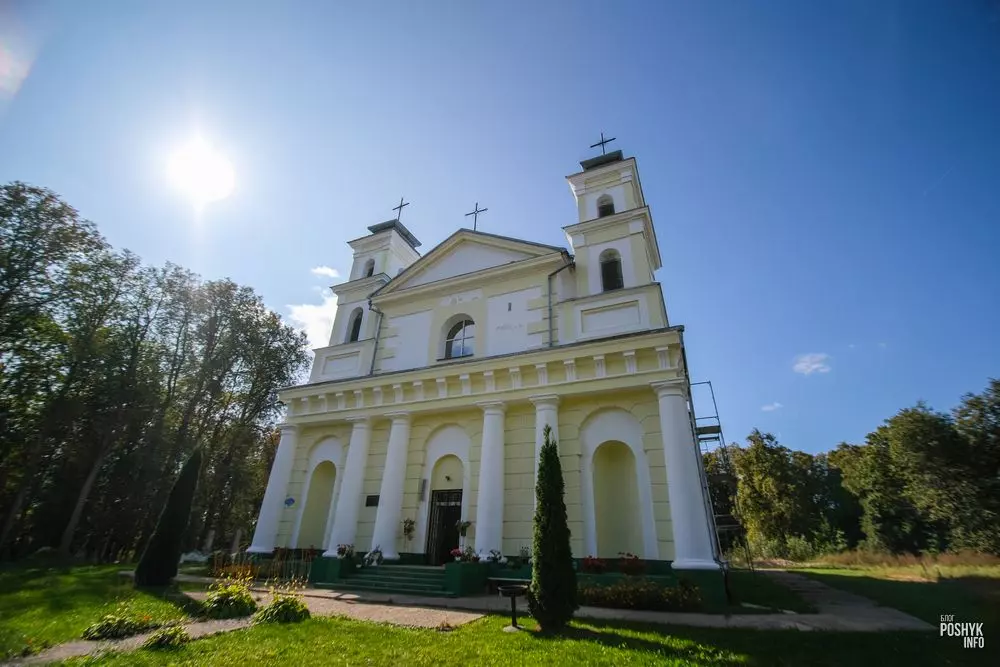
The construction of the temple was funded by Jozef Neselovsky starting in 1773. The church features no apse and includes elements of late classicism and Baroque. The facade is distinguished by a six-column portico with two false niches. The temple is dominated by two three-tiered towers, united by a triangular pediment with a semicircular window. Interestingly, there is no direct road to the Church of St. Anne, making the building appear somewhat isolated.
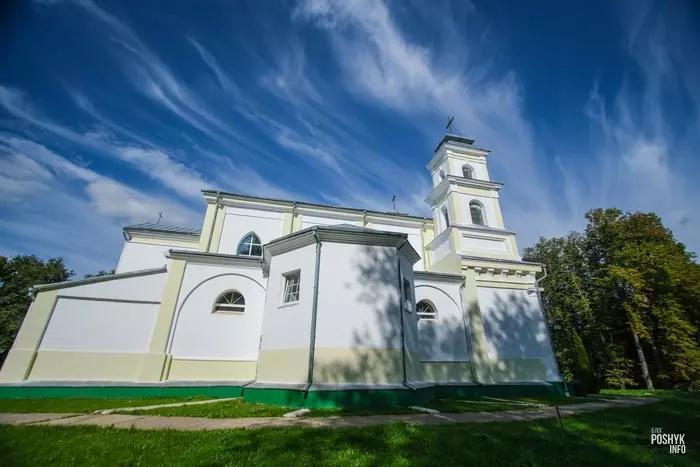
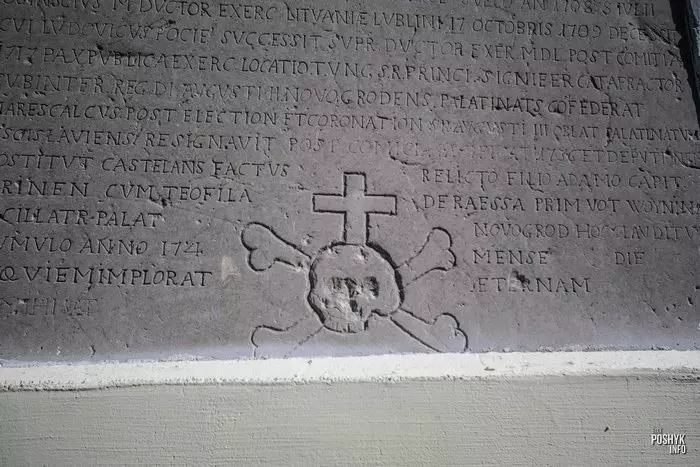
In the late 18th century, Voroncha was home to the Merzheevsky Manor, which no longer exists today. Like the church, the manor house was burned by partisans in 1943. For nearly 50 years, the temple stood in disrepair, but in the early 1990s, it was restored and returned to the Catholic community. If you walk around the church, you’ll find a small cemetery with large tombstones. On the reverse side, there is an unusual memorial plaque. The upper part features coats of arms from various gentry families related to Voroncha, and at the bottom, there is a symbol — Adam’s head, which represents death or fearlessness in the face of it.
Voroncha is also notable for its Catholic cemetery, which contains fascinating sculptures. Near the lake, a 19th-century brewery has been preserved, though it is located on the grounds of a local enterprise and is likely inaccessible to visitors.