Belarus is home to a diverse array of bird species, including several rare and fascinating visitors. From the tiny and restless Goldcrest, the smallest bird in Europe, to the striking Bearded Reedling with its distinctive black markings, each species has its own unique charm. The Eurasian Dipper, an expert swimmer, thrives near fast-flowing rivers, while the Dunlin and Little Ringed Plover showcase the beauty of migratory shorebirds. One of the rarest guests, the Ruddy Shelduck, stands out with its bright orange plumage and unmistakable call. Discover the habits, habitats, and intriguing facts about these remarkable birds in this detailed guide.
Bearded Tit (Panurus biarmicus)
One of the most unusual birds in Belarus, the bearded tit, can occasionally be spotted along the banks of overgrown reservoirs, in areas where reeds grow abundantly. This bird is rare in the region and is distinguished by its unique appearance, habits, and habitat.
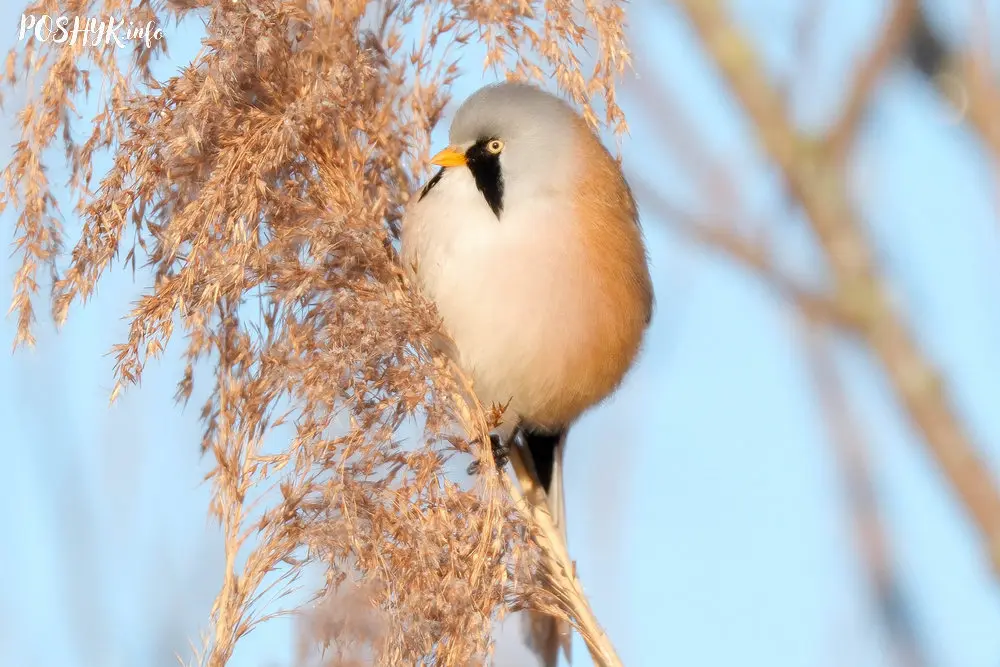
The bearded tit (bel. Vusata sinica) is listed in the Red Book of the Republic of Belarus and has a conservation status of category 4, meaning its population remains stable in suitable habitats. However, factors such as swamp drainage, reed cutting, and climate change may negatively impact its population in the future.
Male bearded tits have a striking appearance, featuring warm, reddish-brown plumage, a bluish-gray head, and characteristic black “whiskers” on the sides of their face.
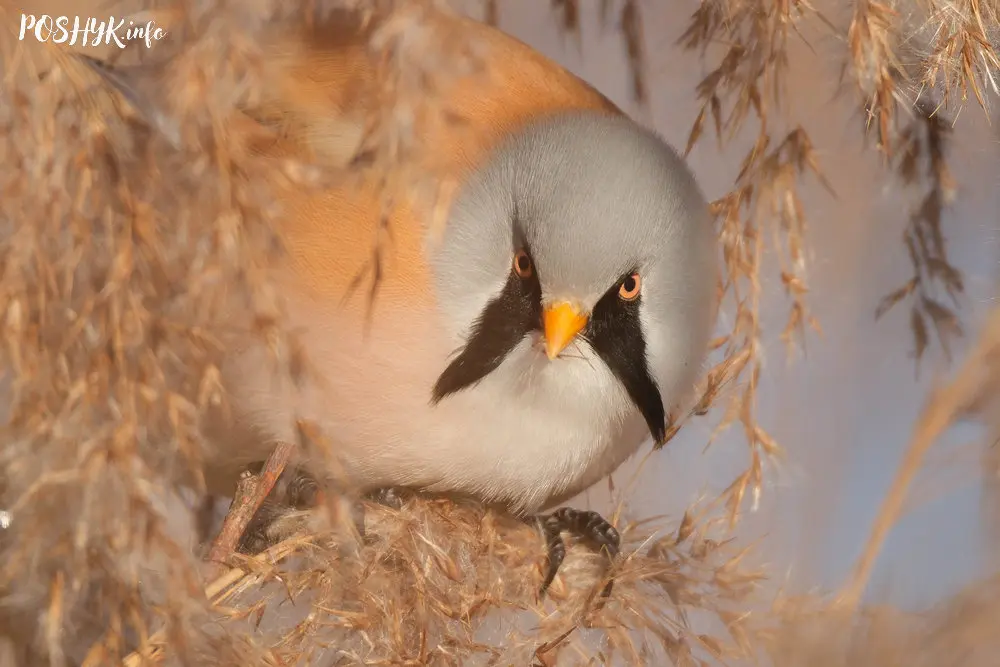
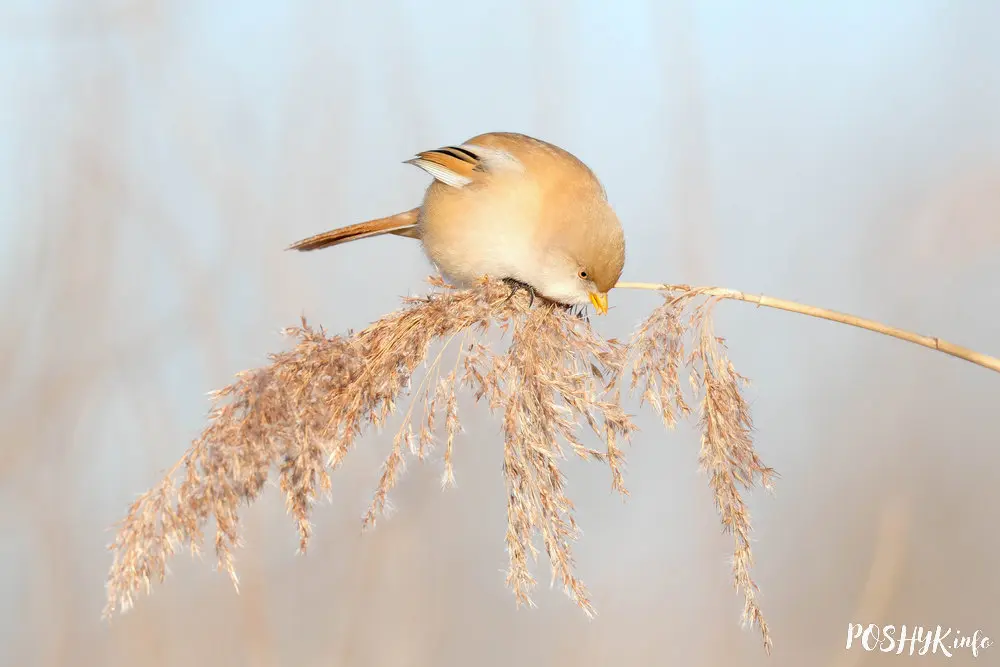
Females lack the black markings on their heads and are more uniformly colored in warm brown tones. Both sexes have long tails, yellowish-orange eyes, and a bright orange beak.
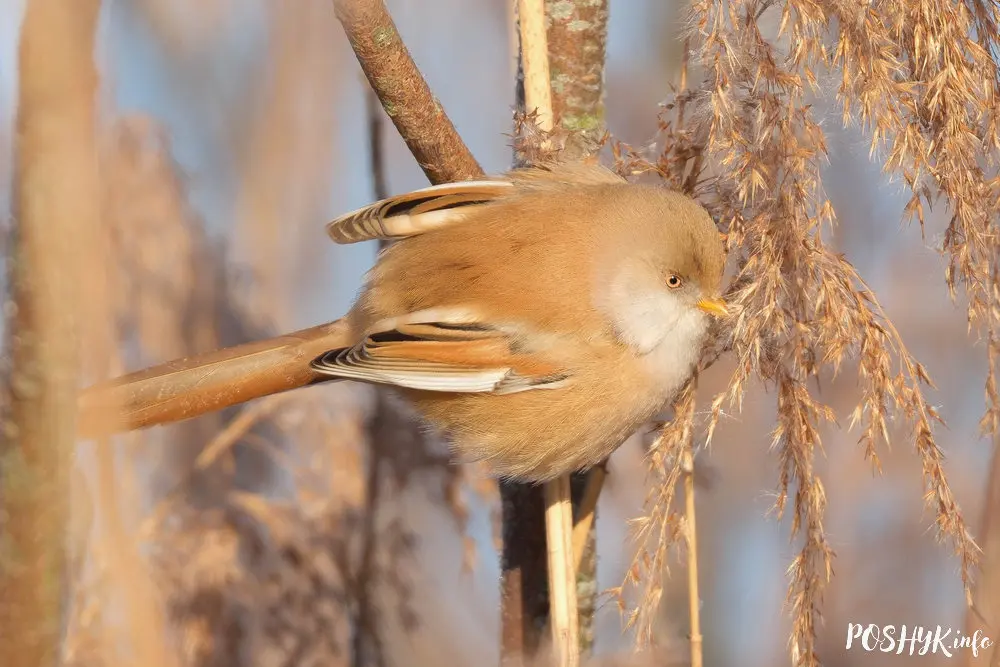
A rather curious fact about this bird is that, despite its name, the bearded tit is not a true tit. It does not belong to the tit family (Paridae) but is instead classified under a separate family.
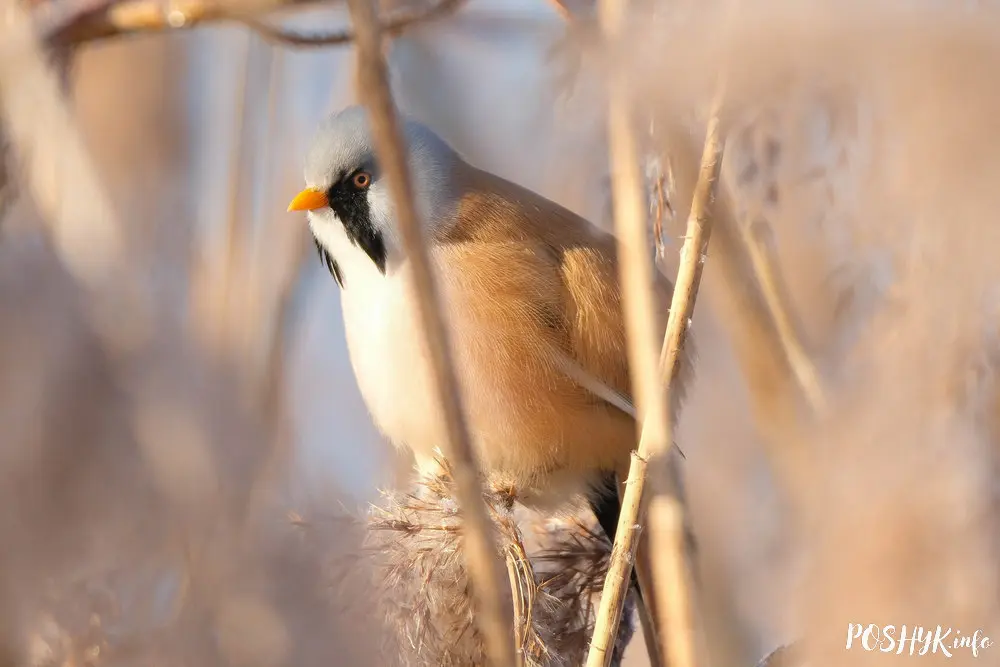
The bearded tit measures approximately 12–14 centimeters in length, with a wingspan of about 16–18 centimeters. Its average weight typically ranges from 12 to 18 grams. In summer, these birds feed primarily on insects and spiders, while in winter, they switch to a diet of reed seeds, adapting to this change through modifications in their digestive system. Bearded tits are known for their distinctive vocalizations—producing a characteristic “pinging” sound that helps them communicate in dense thickets.
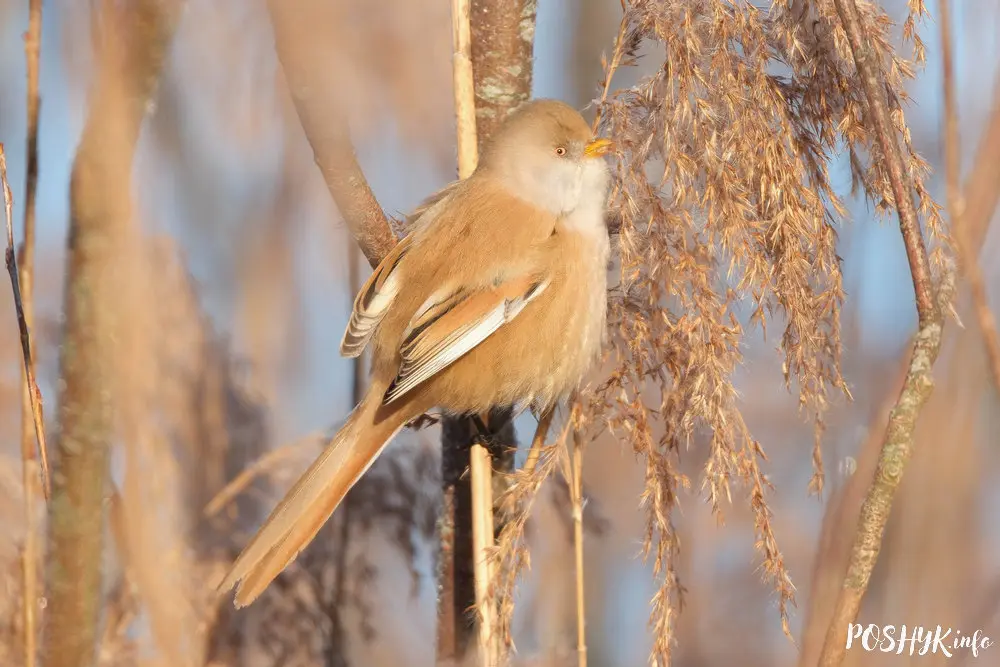
The nesting season usually lasts from April to July. The bearded tit builds its nest quite low among dense reeds. The nest is cup-shaped and lined with feathers. A single clutch contains 4–8 eggs, which hatch after 10–13 days. Both parents participate in feeding and protecting the chicks. In Belarus, Panurus biarmicus can produce 2–3 broods per season if conditions are favorable. The population of bearded tits is sensitive to harsh winters but can recover quickly due to their high reproductive rate.
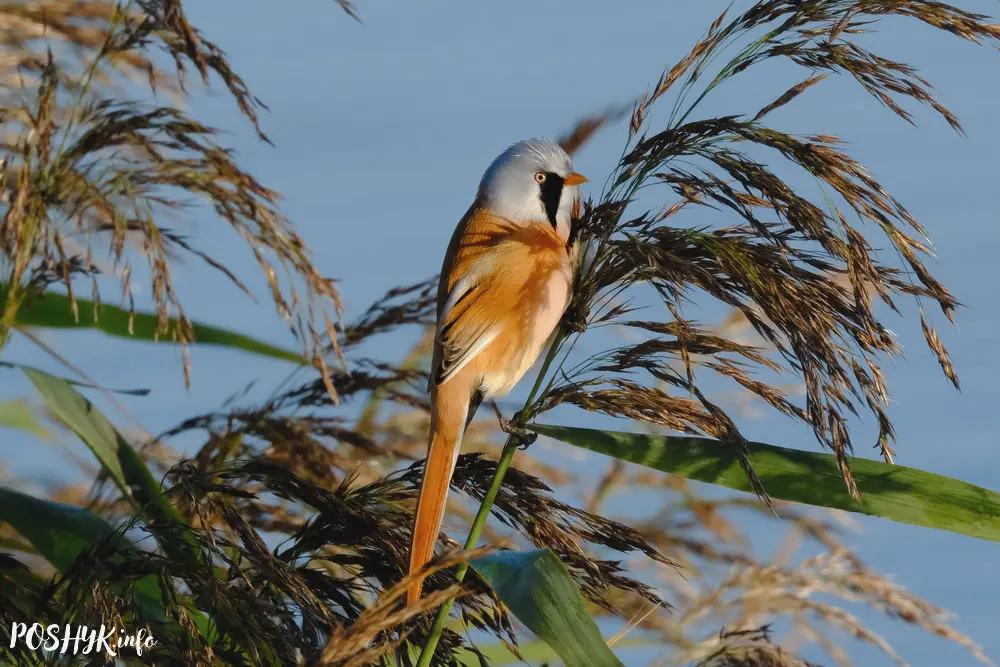
Bearded tits are true masters of navigating through reeds—their long legs and strong claws allow them to skillfully climb and balance on thin plant stems.
What Kind of Bird is the Goldcrest?
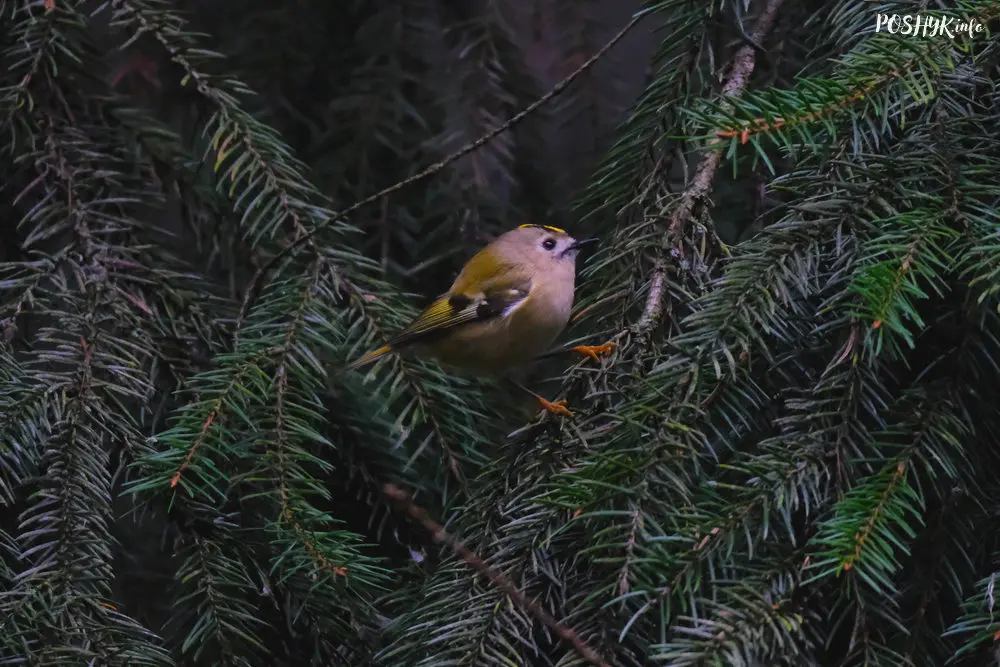
The goldcrest (Regulus regulus) is the smallest bird in Belarus and Europe as a whole. This unusual bird is sometimes called the “king of birds” due to the golden stripe on its head. The tiny creature is known for its agility, energetic character, and ringing calls.
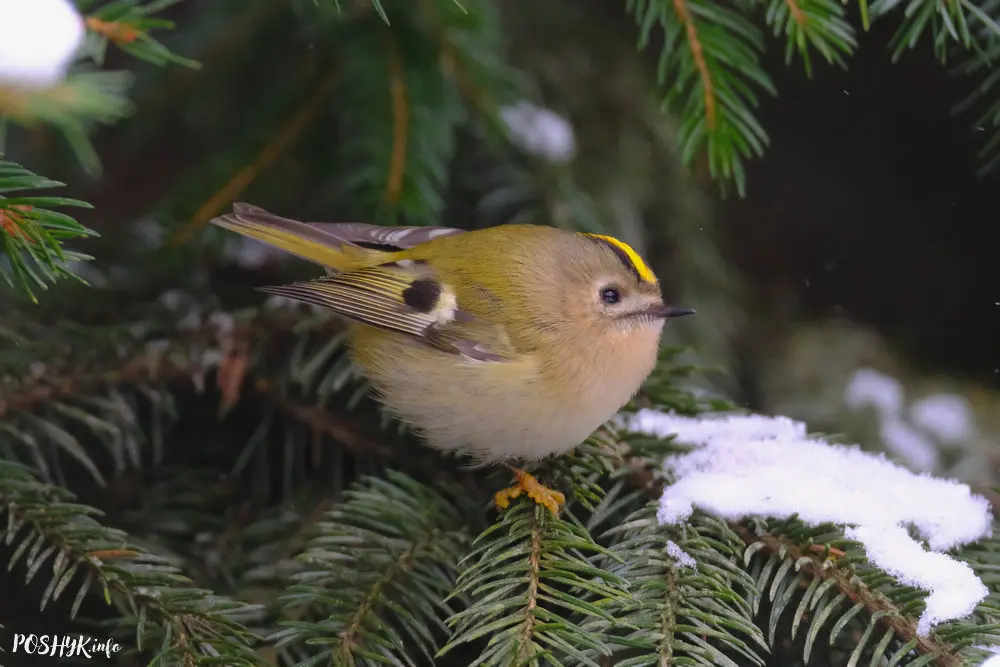
The goldcrest measures just 8.5–9.5 centimeters (3.3–3.7 inches) in length, with a wingspan of 13.5–15.5 centimeters (5.3–6.1 inches). Impressive for such a small bird!
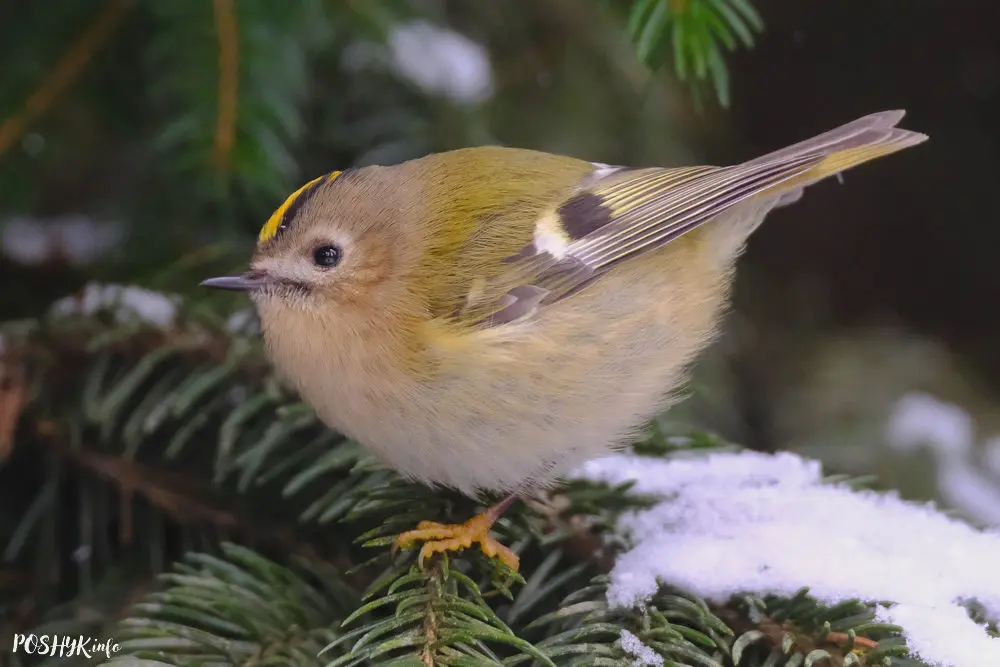
Both males and females have olive-green upperparts and pale underparts. The goldcrest’s most distinctive feature is the yellow or orange stripe on its head, framed by black edges. Males have a brighter stripe, often with an orange tint in the center. Its tiny black beak and large, round eyes give the bird an expressive and charming appearance.

The goldcrest is found across Europe, including Belarus, as well as in North Africa and Asia. It is also present in Great Britain, Scandinavia, Russia, and China. The species prefers coniferous forests, especially spruce and fir groves, but can also be found in mixed forests, parks, and gardens. Northern populations of the goldcrest migrate south for the winter, while southern populations remain sedentary. In Belarus, the bird is commonly observed in winter, and most of the population stays in the country year-round. During severe frosts, goldcrests form small flocks to help them stay warm and find food.
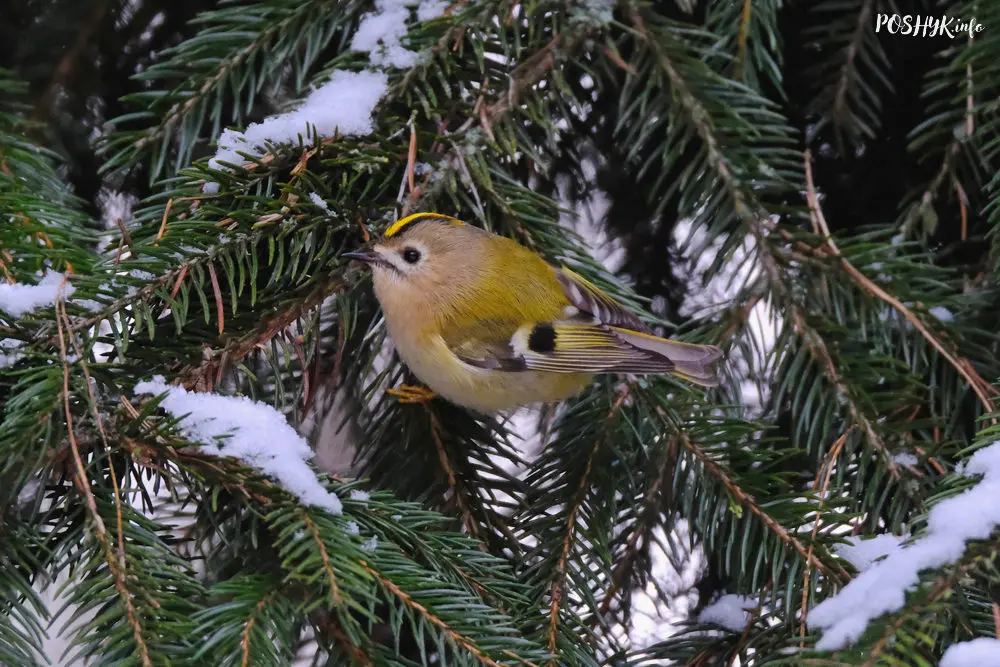
The goldcrest is not listed in the Red Book of Belarus, as its population remains stable. However, deforestation of spruce forests, climate change, and sudden cold snaps in winter could negatively affect its numbers.
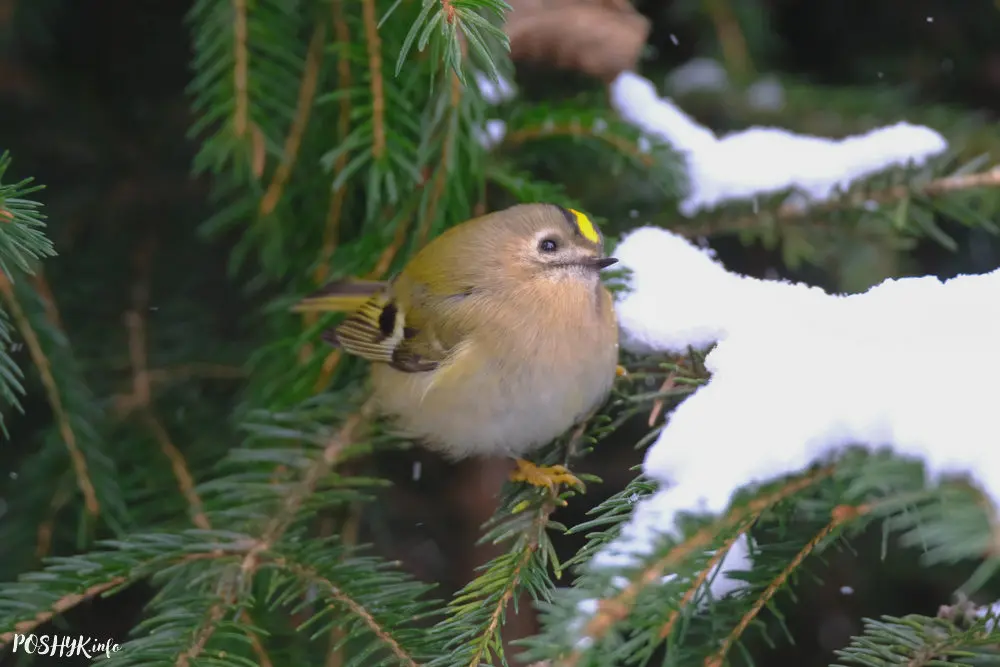
As the smallest bird in Europe, the goldcrest lays an impressive 6–12 tiny eggs, a record number for a bird of its size. The incubation period lasts 16–19 days, and both parents take part in feeding the chicks. Their diet consists mainly of small insects, spiders, and larvae, which they hunt by constantly moving between branches. Goldcrests are almost never still, fluttering and quickly hopping along tree limbs—making it an incredibly difficult bird to photograph or film!
Dipper (Cinclus cinclus) – Description and Photo
In Belarus, the dipper is considered a rare bird and is mainly observed during migration periods. For example, all the photos of the dipper in this article were taken in Minsk in early November.

This unusual and highly active bird is also known as the “water sparrow” or “water thrush.”

The dipper (Cinclus cinclus) belongs to the order of passerines, yet it is an excellent swimmer and can stay underwater for up to 50 seconds. Observing its behavior is a truly fascinating experience.

The dipper has dark plumage with a brownish tint, while its belly and throat are white. Its beak, legs, and eyes are black. In terms of size, the bird is comparable to a common starling or a thrush, measuring about 17–20 centimeters in length. Males and females look nearly identical and are difficult to distinguish.

The dipper prefers to live near clean, fast-flowing rivers and is most easily spotted near waterfalls, regardless of their size or origin.


This bird spends a lot of time in the water, searching for and collecting various larvae and other small aquatic creatures.
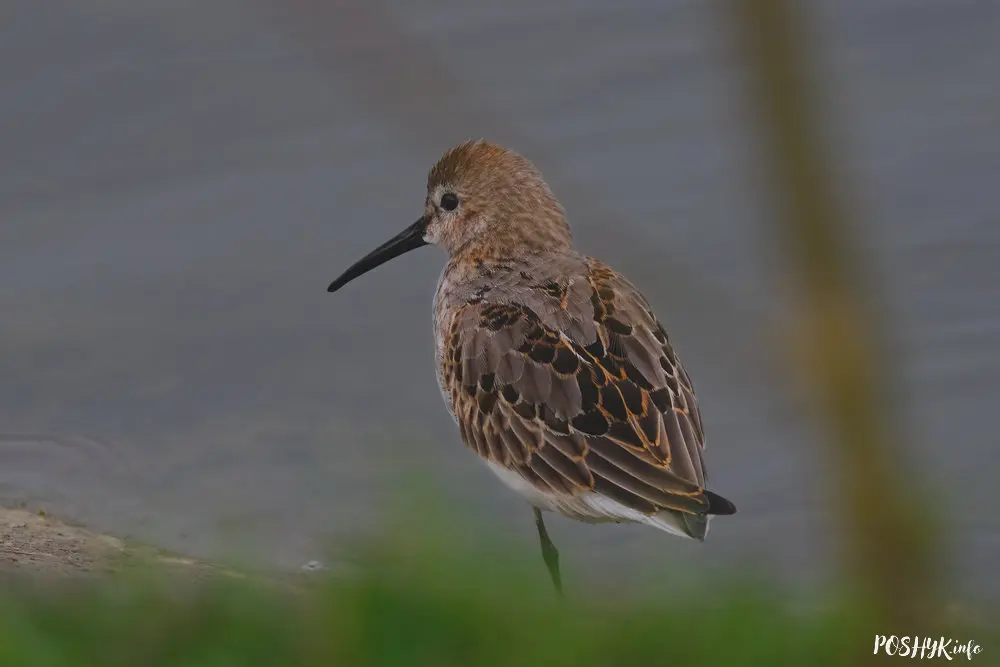
Dunlin (Calidris alpina) bird
The dunlin (Calidris alpina), also known as the large sandpiper, is a small bird from the snipe family. It is a typical representative of coastal birds, inhabiting marshy and damp areas. This highly active bird runs quickly and swims well.
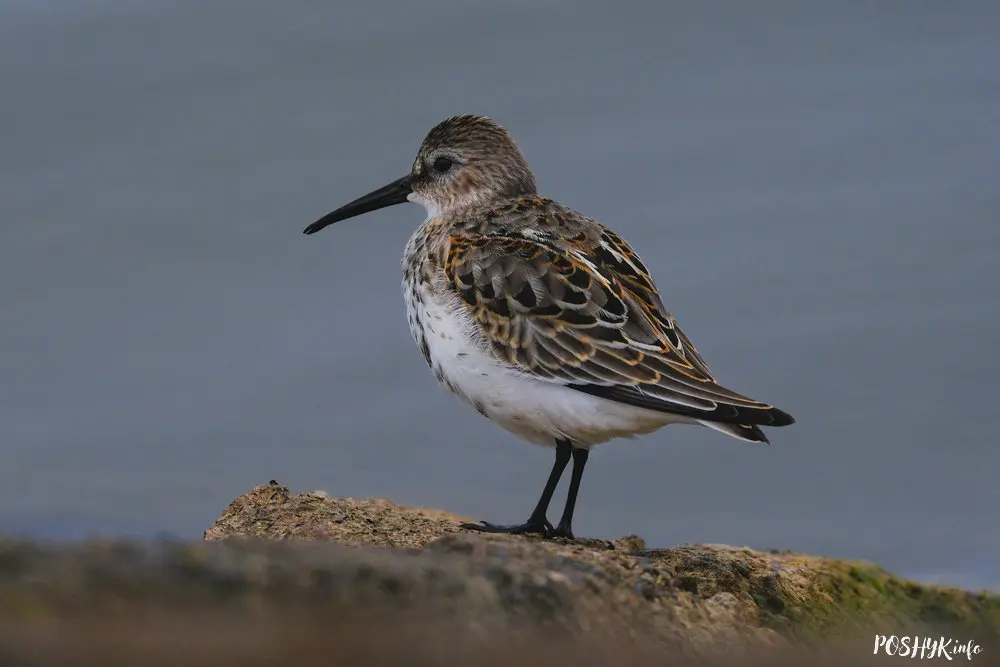
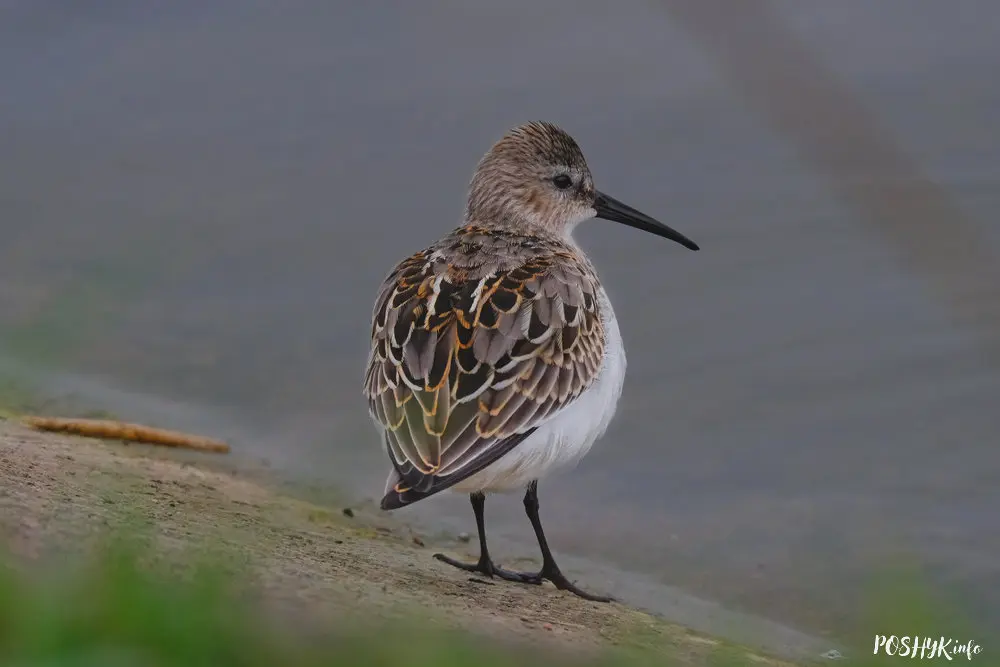
During the breeding season, the dunlin develops a distinctive black patch on its chest (which gives the bird its name), along with reddish feathers on its back and head. In winter, its plumage becomes duller and more greyish, helping it blend into its surroundings.

The dunlin is a modest-sized bird, measuring 17–21 centimeters in length, with a wingspan of 32–36 centimeters. It has a long, slightly downward-curved bill and dark, relatively long legs, which aid in moving across wet soil.
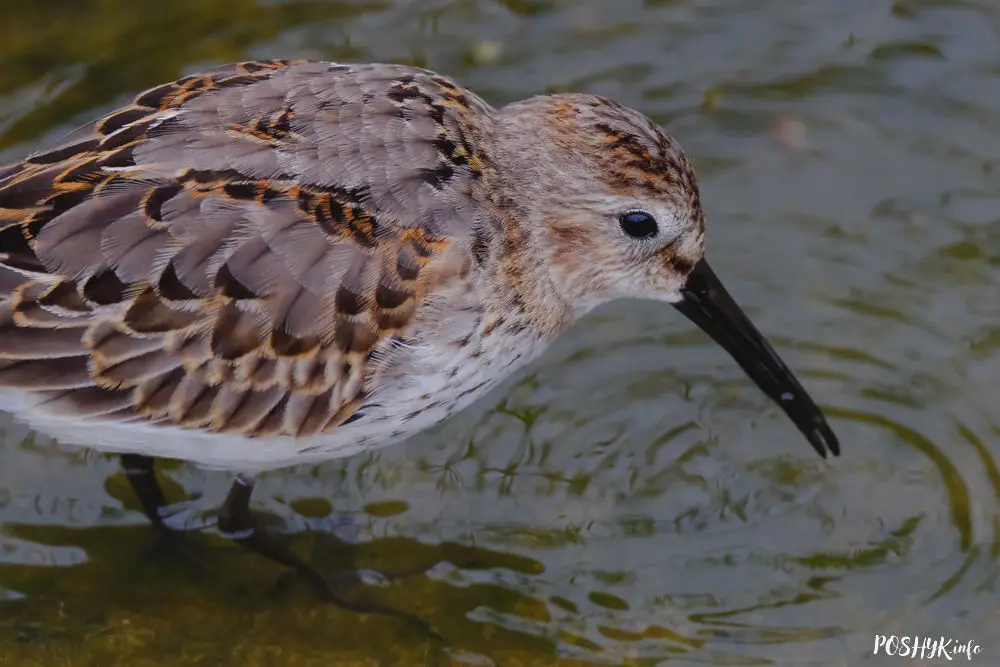
The dunlin is a common migratory species in Belarus, primarily found in wetland areas and along coastlines. These birds arrive in Belarus between April and May during their spring migration as they travel north for the breeding season. In autumn (August to October), they return south, using Belarus as a temporary stop before continuing their journey to warmer regions.
Interesting Facts About the Dunlin:
Long migrations: Dunlins are migratory birds capable of covering great distances. In winter, they travel to southern regions, reaching Africa, India, and even Southeast Asia.
Adaptive eating habits: Dunlins primarily feed on small invertebrates, such as mollusks, crustaceans, and worms. They can adjust their diet based on seasonal and habitat conditions.
Social birds: Outside the breeding season, dunlins often gather in large flocks, especially during migration rest periods, which helps protect them from predators.
Seasonal color change: Their plumage changes with the seasons. In summer, their bright and contrasting colors help attract mates, while in winter, their greyish plumage provides better camouflage in their environment.
Little Ringed Plover bird
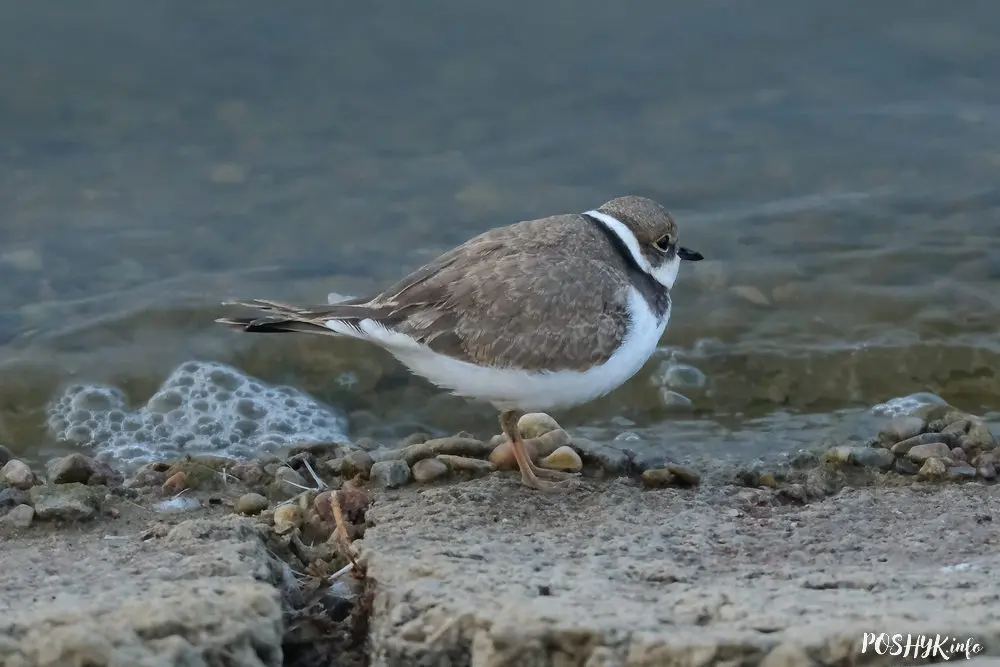
The Little Ringed Plover (Charadrius dubius), also known as the Lesser Ringed Plover, is a member of the plover family. It has a light grey-brown back and a white underbelly. Its most distinctive feature is a black stripe around its neck, resembling a tie—hence one of its popular nicknames.
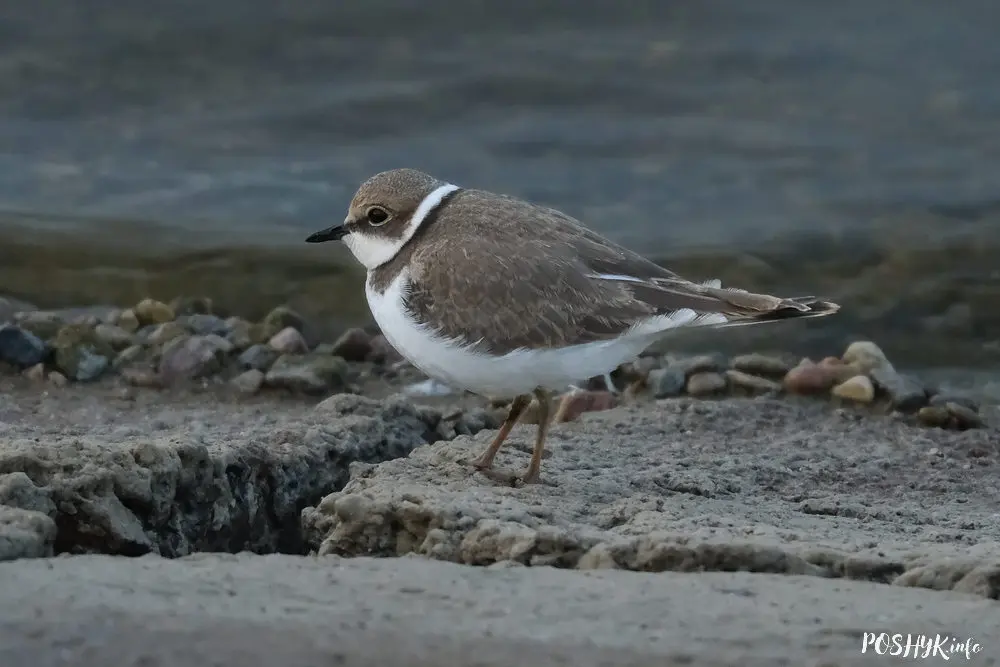
Another characteristic feature is the white ring around its eye and a black mask on its head, giving the bird a unique and striking appearance.
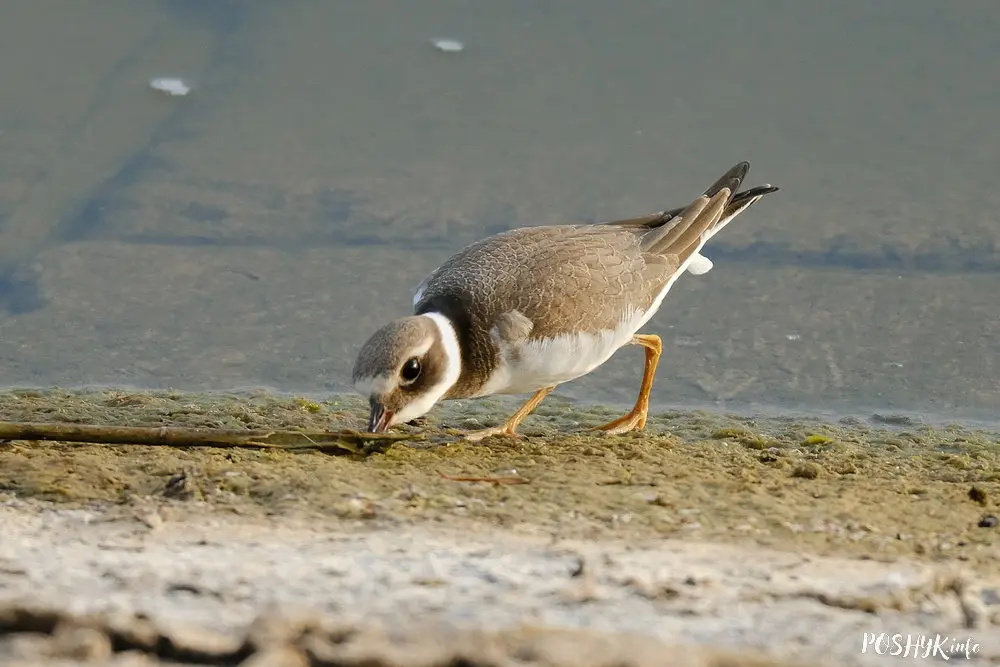
The Little Ringed Plover is not considered a rare species, but its population may decline due to habitat changes, such as coastal development and water pollution. In Belarus, it is a migratory species, arriving in April or May to breed and staying until August or September. This bird prefers open areas, such as rocky or sandy shores of rivers, lakes, and artificial reservoirs. It favors damp areas with minimal vegetation, which allows it to move and hunt with ease.

The plover feeds mainly on insects, worms, and small invertebrates, which it finds on the ground or in shallow water. It moves quickly along the shoreline, frequently stopping to peck at its prey.
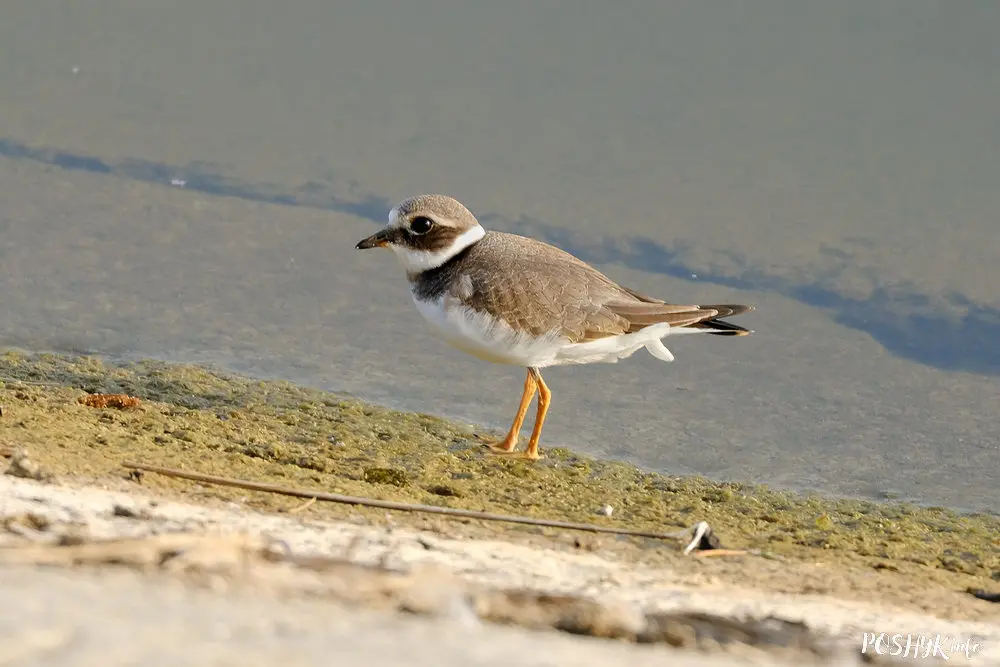
As a migratory bird, the Little Ringed Plover winters in warmer regions, including southern Europe, Africa, and Southeast Asia. It is a cautious and wary species, often fleeing or hiding when threatened, making it difficult to observe in the wild.
Ruddy Shelduck (Red Duck)
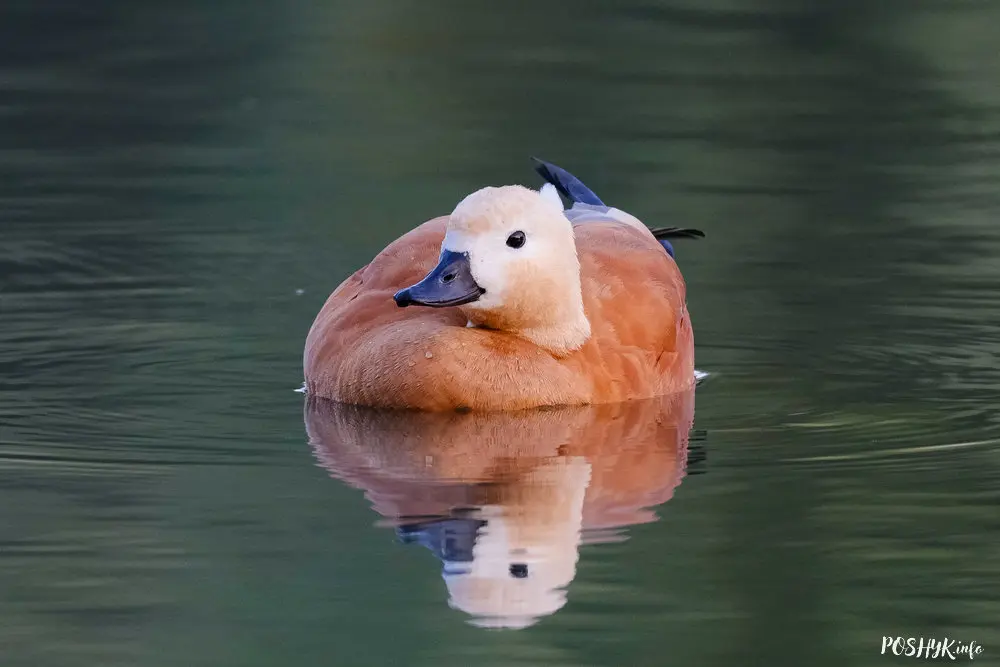
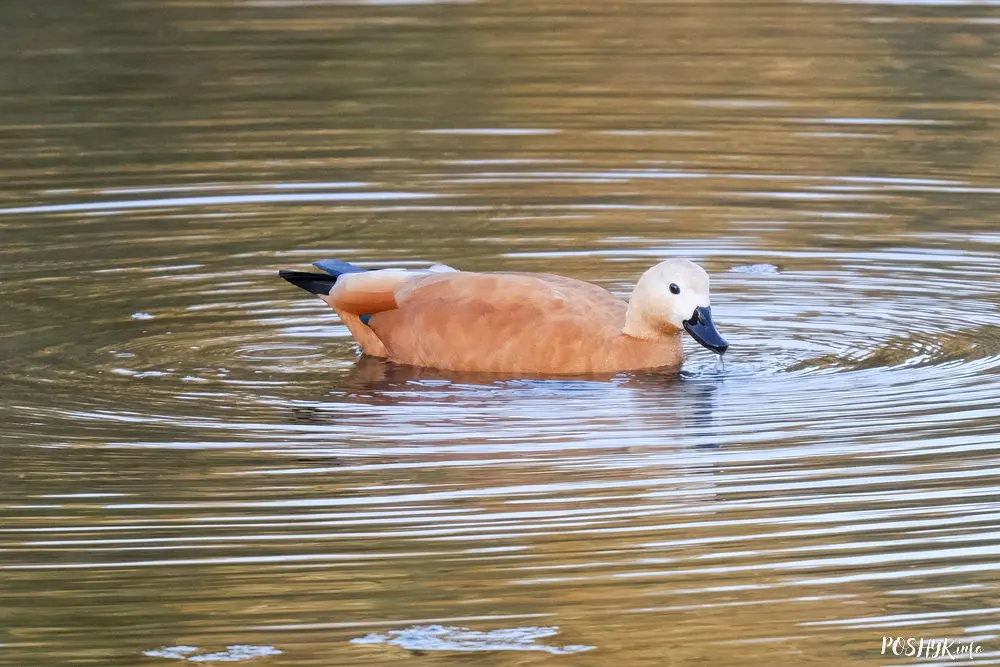
Among the many bird species found in Belarus, some are particularly rare and even considered vagrant species, making their sighting a true success. One such bird is the Ruddy Shelduck (Tadorna ferruginea), also known as the Red Duck. This striking bird was first recorded in Belarus in 1954. In recent years, it has been observed at various water bodies across the country, though sightings remain extremely rare.

The Ruddy Shelduck is a large duck, measuring 58 to 70 cm in body length with a wingspan of up to 145 cm. Its most distinctive feature is its rich orange-red plumage, which appears almost uniform in adult birds. Males have a slightly paler head and neck, which can be almost white, while females are more evenly colored. During the breeding season, males develop a black ring around their necks. In flight, the bird is easily recognizable due to its white wings with black-tipped flight feathers.
This species primarily inhabits steppe and semi-desert regions of southern Eurasia, ranging from Southeast Europe to Central Asia. It prefers to settle near freshwater bodies but can also be found in brackish lakes and reservoirs. Depending on the region, it may be either sedentary or nomadic. Interestingly, Ruddy Shelducks have been actively spreading in Moscow, leading to speculation that some birds may have escaped from zoos and adapted to urban life.

The Ruddy Shelduck is known for its loud, sharp, cackling calls, which make it noticeable even from a distance. It is a highly territorial species, especially during the nesting season, and will aggressively defend its territory against both other ducks and predators.

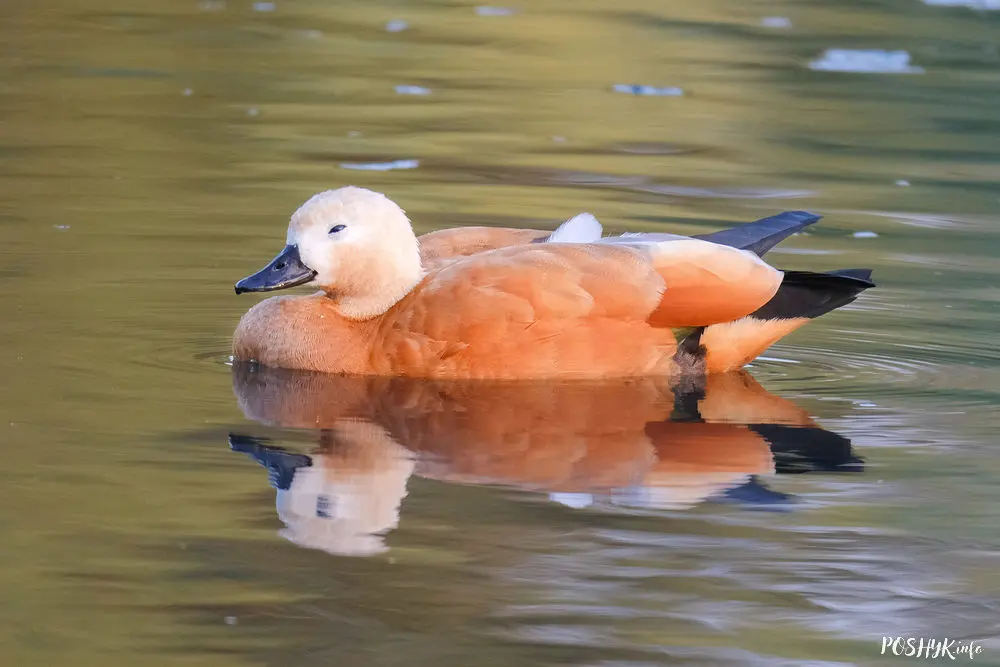
In Belarus, the Ruddy Shelduck remains a rare visitor. Historically, this species did not inhabit the country, but in recent decades, isolated sightings have been recorded, particularly during spring and autumn migration periods. Due to climate change and the species’ expanding range, the chances of encountering this striking bird in Belarus are gradually increasing.