Tucked away in quiet villages and along winding rural roads, these eight historic churches of Belarus tell powerful stories of faith, resilience, and architectural beauty. From neo-Gothic chapels built as noble tombs to Baroque monasteries founded by Trinitarian monks, each church has weathered wars, political upheaval, and time itself. Though once shuttered, repurposed, or nearly lost, they’ve been lovingly restored and reopened — now standing as cultural landmarks and spiritual sanctuaries. Whether you’re a history lover, architecture enthusiast, or curious traveler, these sacred spaces offer a window into Belarus’s rich and layered past.
Church of the Body of God in the Agricultural Town of Bogushevichi
In the Berezinsky District of the Minsk Region lies the small agricultural town of Bogushevichi, first mentioned in chronicles as early as the beginning of the 16th century. Over its long history, the town has belonged to several noble families, including the Zawiszas, Wankowiczes, and Sventorzhetskys. It was under the ownership of the latter that the Church of the Body of God was built on the banks of the Usa River.
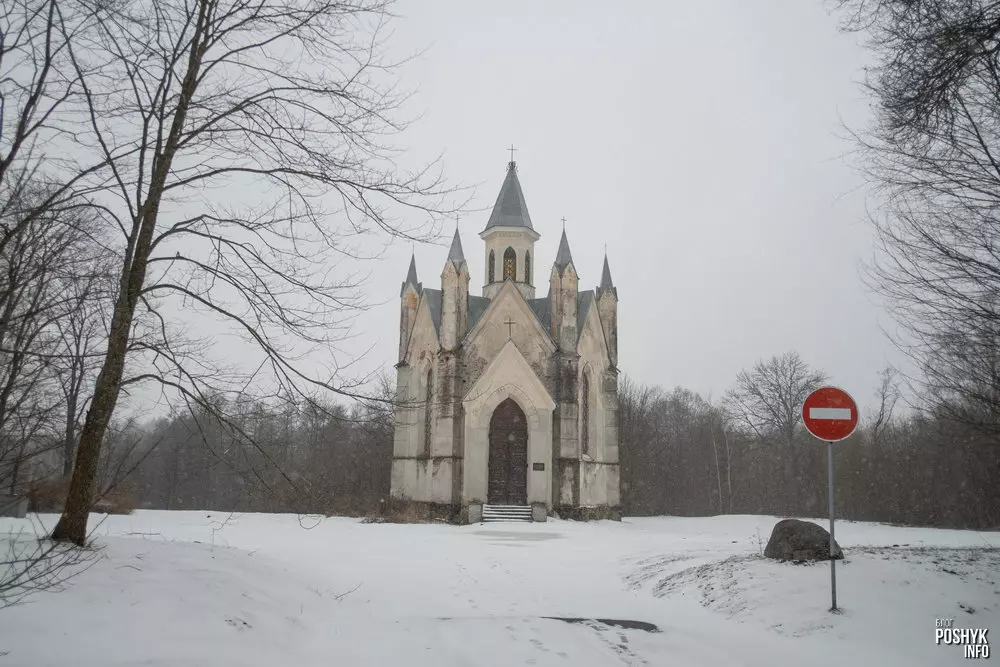
Interestingly, this church was originally constructed as a tomb for the Sventorzhetsky family, which explains its unusual architectural design. The hexagonal structure, adorned with pinnacles, resembles a chapel more than a traditional church. The exact date of the church’s construction remains unknown, but most sources suggest it was built in the mid-19th century. The former family tomb features distinctive Neo-Gothic architecture. From above, its hexagonal shape gives the impression of a rotunda.

There is an intriguing theory that the building may have been designed by the architect Jakub Kubicki. The tomb-church was situated near the Sventorzhetsky estate, and it is quite possible that the family commissioned the renowned Polish architect. However, Kubicki was primarily known for his work in the Classical style and in palace architecture. Moreover, he died in 1833—likely before construction of the church began.

After the suppression of the 1863 uprising, during which the Sventorzhetsky family actively supported the rebels, their estate was burned down. The tomb, however, was spared and transferred to the Orthodox Church. In 1869, the church was re-consecrated, though it appears the building itself was not altered. Fifty years later, in 1919, the Church of St. Daniel was returned to the Catholic community. During the Soviet era of religious repression, the church building was not destroyed, but services were no longer held there. It was repurposed first as a warehouse, and later as a local community club. Eventually, the building was abandoned. The church in Bogushevichi stood empty until a fire broke out in 1989, severely damaging its interior.

The first attempts to restore this beautiful church began in 2000. The central tower was partially rebuilt, the walls were plastered, and decorative elements were restored. Today, the church’s interior, though simple, feels quite cozy. You can reach this historical site via the M4 highway (Minsk–Mogilev), then drive approximately 10 kilometers along the H800 road. The Church of the Body of God in Bogushevichi is definitely worth a visit.
Darevsky Church of the Assumption of the Virgin Mary
As you travel along the Lyakhovichi–Baranovichi road, take a moment to stop in the village of Darevo, located just 6 km from the city of Baranovichi. Right by the roadside, you will see the Church of the Assumption of the Blessed Virgin Mary. The first wooden church on this site was built in the 15th century, but like many valuable architectural landmarks, it was eventually lost.
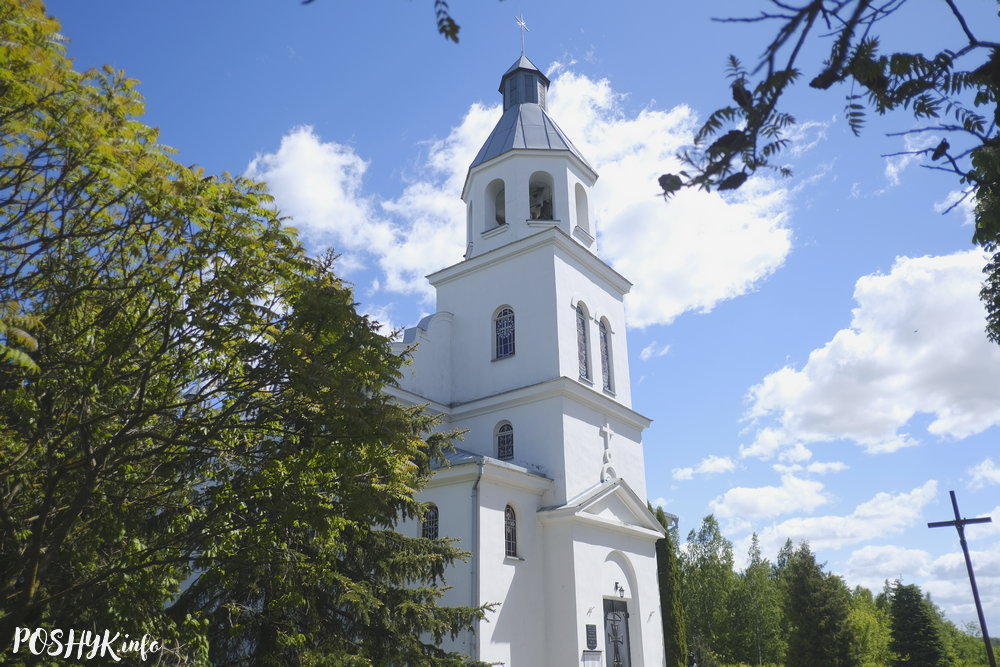
The current Darevsky church was rebuilt in 1841. However, during World War I, in 1915, the village was destroyed—along with the church. Eleven years later, a chapel was erected on the same site, where services were resumed. In 1931, the new abbot, Stanislav Shaplevich, initiated the construction of a new church in Darevo. The architect of the project was Bronislav Ivanchik, a resident of Baranovichi. Although a significant amount of money was needed for the construction, the funds collected were insufficient. As a solution, concrete blocks from abandoned German dugouts were repurposed for the church walls. These were relatively easy to obtain, as the nearby Shchara River had once marked the front line, leaving behind numerous fortifications.
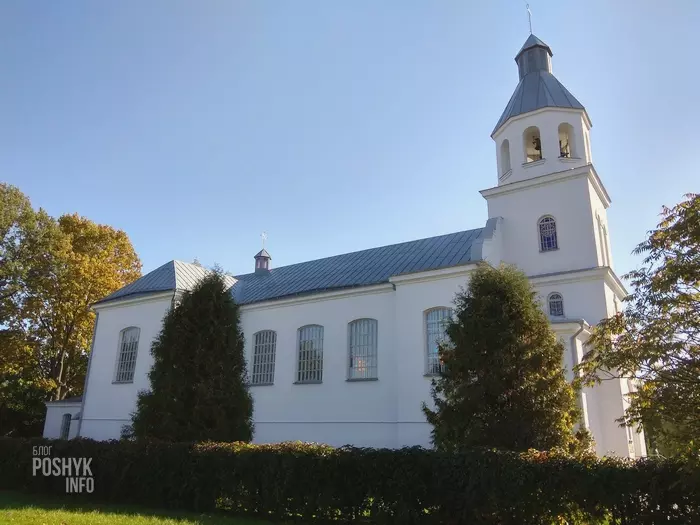
The new church was completed in 1938, but just a year later it was closed. From 1939, Father Shaplevich went into hiding to escape Soviet persecution. When German forces arrived in Darevo, he managed to resume services. However, he was soon suspected of ties to the Polish underground army (Armia Krajowa) and was forced to flee again. In 1947, Shaplevich was captured by Soviet authorities and sentenced to 25 years in exile in Inta. In 1944, the church came under artillery fire, but the durable concrete walls withstood the shelling. Despite this, the building was repurposed as a grain warehouse. Attempts to destroy the church continued—in 1986, the authorities tried to burn it down. While the roof was destroyed, the walls once again survived. In 1990, after more than 20 years of efforts by the parishioners to reclaim their place of worship, the church was finally returned to the Catholic community. During restoration work in the 1990s, unexploded shells were found embedded in the walls.
Church of the Heart of Jesus in the Village of Ilya
About 30 km from Vileyka lies the agricultural town of Ilya, a destination often included in tourist routes. It is known for its prominent Catholic landmark from the early 20th century—the Church of the Heart of Jesus, a stone church built between 1907 and 1909. Reaching Ilya is easy, as the town is located near the busy Minsk–Myadel highway (R58). Nearby, you’ll find the picturesque Vileika Reservoir. On one of its banks lies the village of Vyazyn, where several notable architectural monuments have been preserved, including the Church of the Nativity of the Virgin Mary and the Church of the Intercession.
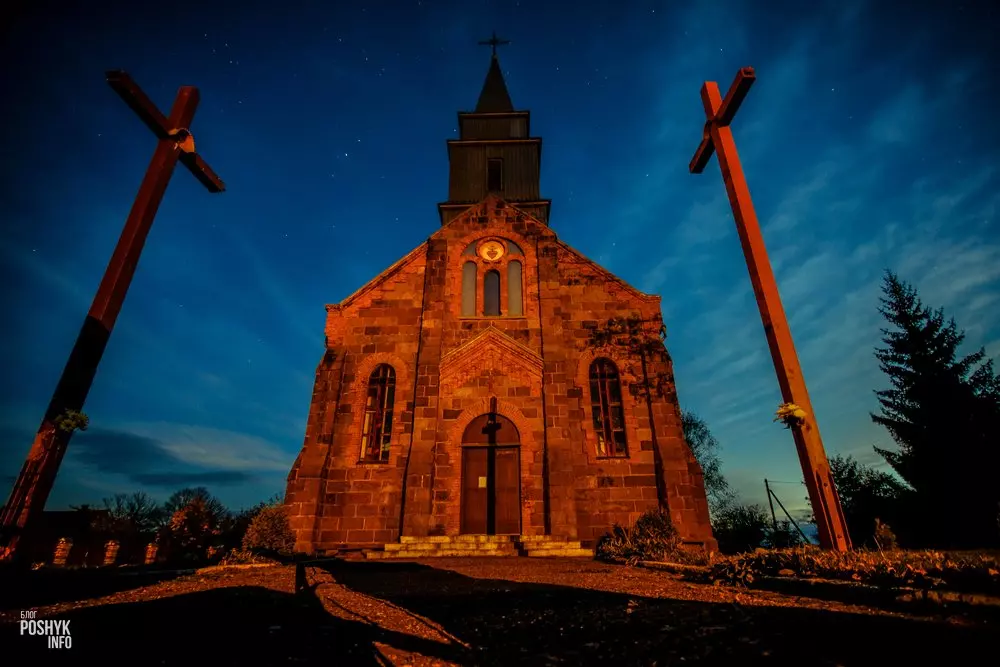
Ilya was first mentioned in historical records in 1564 as part of the Grand Duchy of Lithuania. The first church on this territory was built in 1669, though it has not survived to the present day. As mentioned earlier, the town of Ilya is home to the Church of the Sacred Heart of Jesus Christ. The church is remarkable for its architecture—constructed in the Neo-Romanesque style using both brick and wood, it stands as the main architectural highlight of the town.
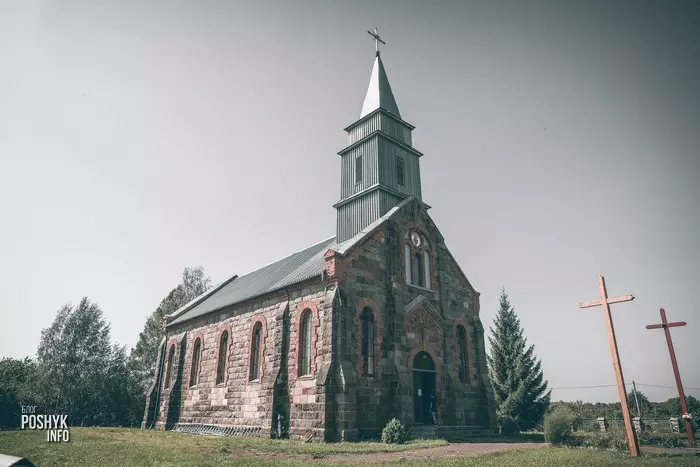
The church’s thick walls are adorned with decorative elements, and the apse extends from the main structure of the building. During the Soviet era, many religious sites in Belarus were closed. However, the church in Ilya was not formally closed, though it suffered significant damage during World War II, and services were suspended for a time.

In the second half of the 20th century, the building was repurposed and used as a dairy shop. The Church of the Heart of Jesus in Ilya was able to reopen its doors only in 1990. Three years later, it was officially re-consecrated. Today, the church remains active, welcoming not only local parishioners but also tourists interested in the rich history and culture of Belarus.
Church of the Holy Trinity in Germanishki
The village of Germanishki is located in the Voronovo District of the Grodno Region. The central attraction of this quiet settlement is the Church of the Holy Trinity, built in the late 19th to early 20th century. The church was constructed in the Neo-Gothic style, which was popular at the time. It stands out not for opulence but for its simplicity. The building has an austere appearance, made more elegant by its plastered walls and polychrome rubble masonry. The temple has a rectangular layout, and its façade is crowned by a three-tiered hipped bell tower.

The history of the church dates back to 1686, when a wooden church was first built on this site. The construction of the current stone church took place between 1886 and 1909. A rubble-stone fence still surrounds the church, preserving the historical layout of the grounds. Also preserved is a beautiful three-arched gate, adding to the charm of the site. From 1965 to 1987, the church was closed and remained inactive for several decades. It was returned to the faithful in the late 1990s and officially re-consecrated in 2000.
Peter and Paul Church in the Village of Novy Sverzhen
The Church of Saints Peter and Paul is located on the banks of the Neman River in the village of Novy Sverzhen. Experts classify its architecture as Renaissance style. For a long time, it was believed that the temple was originally built as a Calvinist gathering house. However, more recent research supports the theory that the Church of Saints Peter and Paul was founded by Radziwiłł the Orphan. According to an act of the Main Tribunal, in 1588, Radziwiłł the Orphan ordered the construction of the church. A member of a powerful noble family, he was known for his strong opposition to Protestantism, which had been promoted by his father, Radziwiłł the Black.
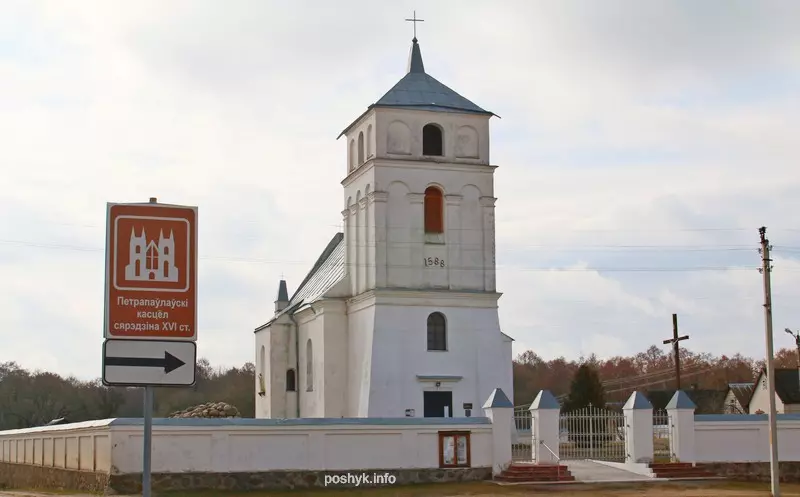
The church is built as a single-nave, rectangular hall-type structure. The transepts on either side are not strongly pronounced, and a semicircular apse extends beyond the main building’s outline. The church combines massive, squat towers with an overall modest design, which lends it a sense of austerity and striking architectural monumentality.

Over the centuries, the architecture of the church has changed. In 1818, a devastating hurricane destroyed the original tower, which was then rebuilt in a lower, more compact form. The three-tiered bell tower is topped with a steep, pointed spire. Decorative buttresses add character to the structure. A wooden staircase ascends from the base of the tower to the upper rooms. The decorative elements are restrained. The second tier of the tower features a simple arcade with pilasters, while the third tier is marked by semicircular niches.
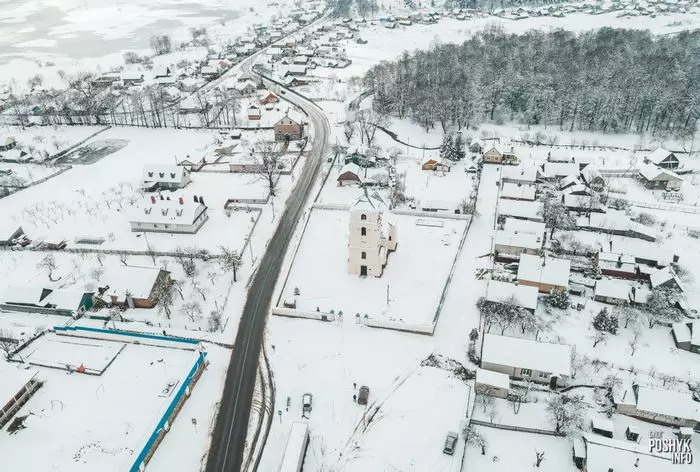
Like many Catholic churches in Belarus, the Church of Saints Peter and Paul was closed after the uprising of 1863. It was returned to the Catholic Church only in 1901. Originally, the church housed six icons of the apostles, a sculptural image of Christ, and silver liturgical vessels. During the Soviet era, these valuables were confiscated, and the church was repurposed for use as a manure storage facility. In later years, thanks to the efforts of local residents and the current abbot, the church complex was restored, bringing new life and harmony to this historic building.
Church of St. Barbara in the Village of Zamosc
In the small village of Zamosc, in the Minsk Region near Slutsk, the Church of St. Barbara has been preserved. This historic building dates back to the 17th century, though the exact year of its construction is unclear. There are two main theories: either 1620 or 1649, but it is not possible to confirm this definitively today. It is known that the church in Zamosc was built with the support of the local nobleman Andrei Samuil Vinka-Ratomsky. The architectural style of the church is somewhat ambiguous, featuring elements of early Baroque with noticeable Renaissance influences.

The church has a three-dimensional composition with simple forms. There are not many similar churches preserved in Belarus. It is also believed that the building may have originally served as a Calvinist chapel. In the second half of the 17th century, a Jesuit mission operated in Zamosc. Toward the end of the 18th century, the church was converted into a Uniate (Greek Catholic) church.
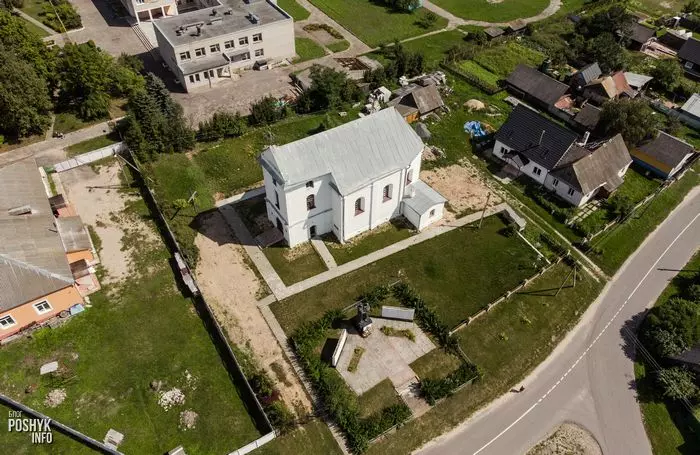
After the failed January Uprising of 1863, around 1865, the church was transferred to the Orthodox Church, where it remained in service until the Russian Revolution of 1917. After the revolution, the church was closed and repurposed for household or agricultural use. In 1973, a Monument to Countrymen was erected next to the church in memory of 197 villagers who died during the Great Patriotic War (World War II).
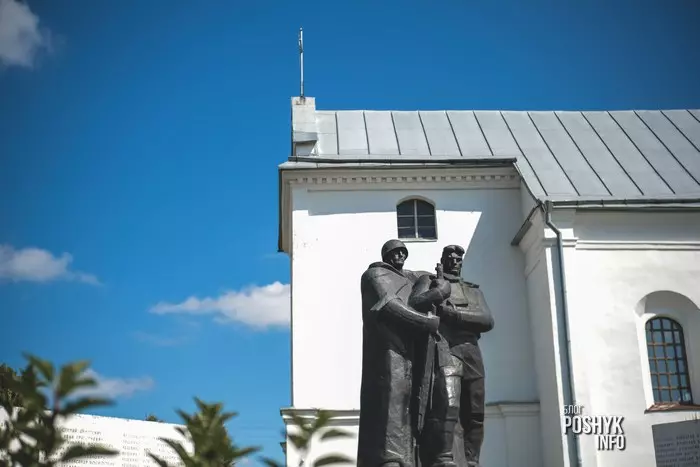
In 1990, the building was returned to the Catholic community. Following reconstruction, the Church of St. Barbara became active again and continues to serve the faithful today. Below is a short video overview featuring various churches in Belarus, including scenes from the Church of St. Barbara in the village of Zamosc.
Church of the Virgin Mary in Vyazyn
Not far from Ilya and the Vileika Reservoir lies the agro-town of Vyazyn. This place has been known since the 15th century, when Grand Duke of Lithuania Casimir IV granted it to Ivan Kuchuk, the Grand Marshal of Lithuania. Over time, Vyazyn passed through the hands of various owners.
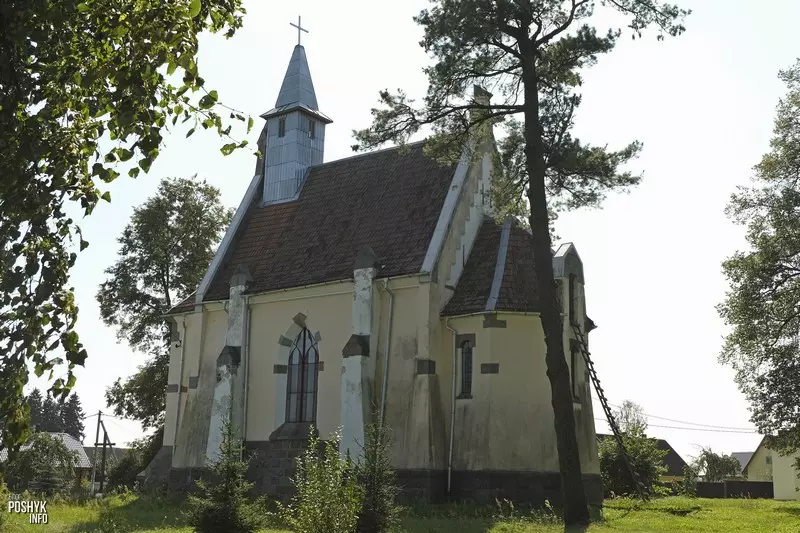
In 1808, the estate came under the ownership of Vikenty Gechan-Getsevich, who built a family residence there. A century later, in 1908, a chapel-tomb of the Getsevich family was constructed near the estate. Soon afterward, the chapel was consecrated in honor of the Nativity of the Virgin Mary and became a functioning church. This Neo-Gothic shrine is now listed among the historical and cultural heritage sites of Belarus.
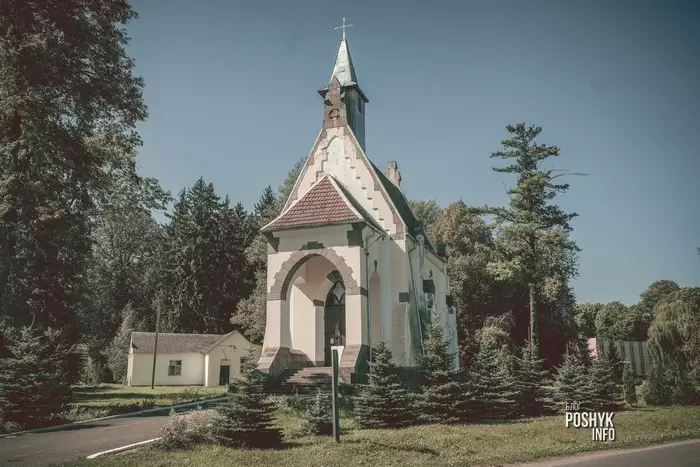
The church’s facade is crowned with a hipped bell tower, and its design is marked by clear symmetry. Built from rubble stone, the structure has retained much of its original appearance. The tall, narrow windows are characteristic of the Neo-Gothic style. Today, the church operates as a branch of the Church of the Sacred Heart of Jesus in Ilya. After World War II, with the arrival of Soviet power, the church in Vyazyn was closed. Over the years, the former place of worship was used as a warehouse, museum, and even a local community club.
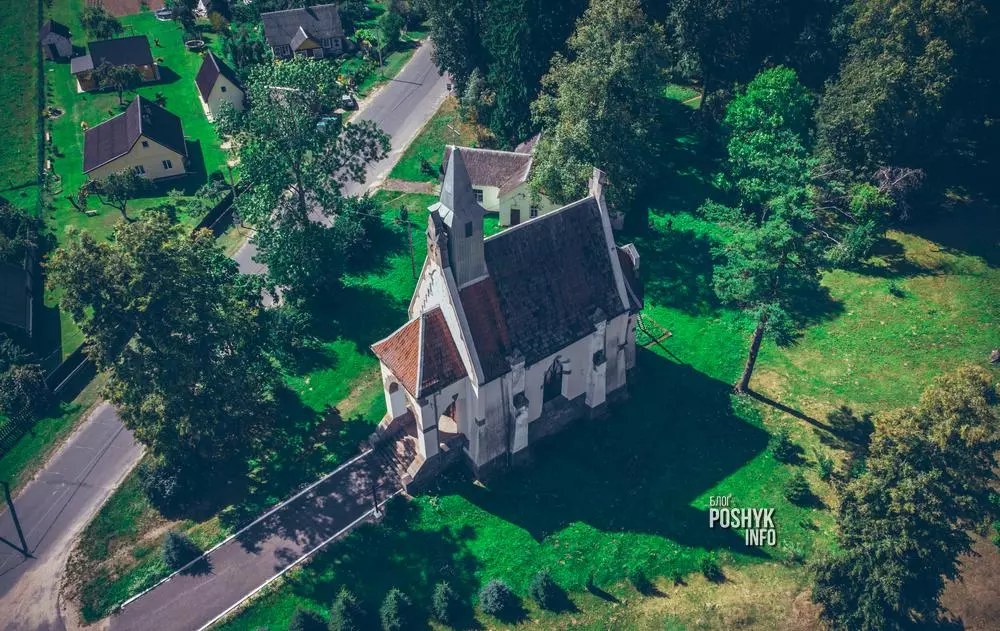
Fortunately, following the collapse of the USSR, the church was returned to the Catholic Church. Restoration began in 1993, and after the work was completed, the church reopened its doors to parishioners.
Trinitarian Monastery and Church in Krivichi
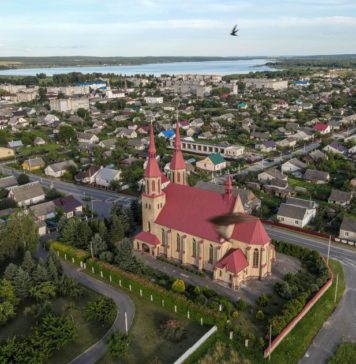
Krivichi is a fairly common name for settlements across Belarus. This article focuses on the urban-type settlement located in the Myadel District. The most notable—though not the only—attraction in Krivichi is the Church of St. Andrew the Apostle and the Trinitarian Monastery. Arriving on a foggy weekday, I wasn’t able to enter the temple complex, so most of the photos were taken from a drone.
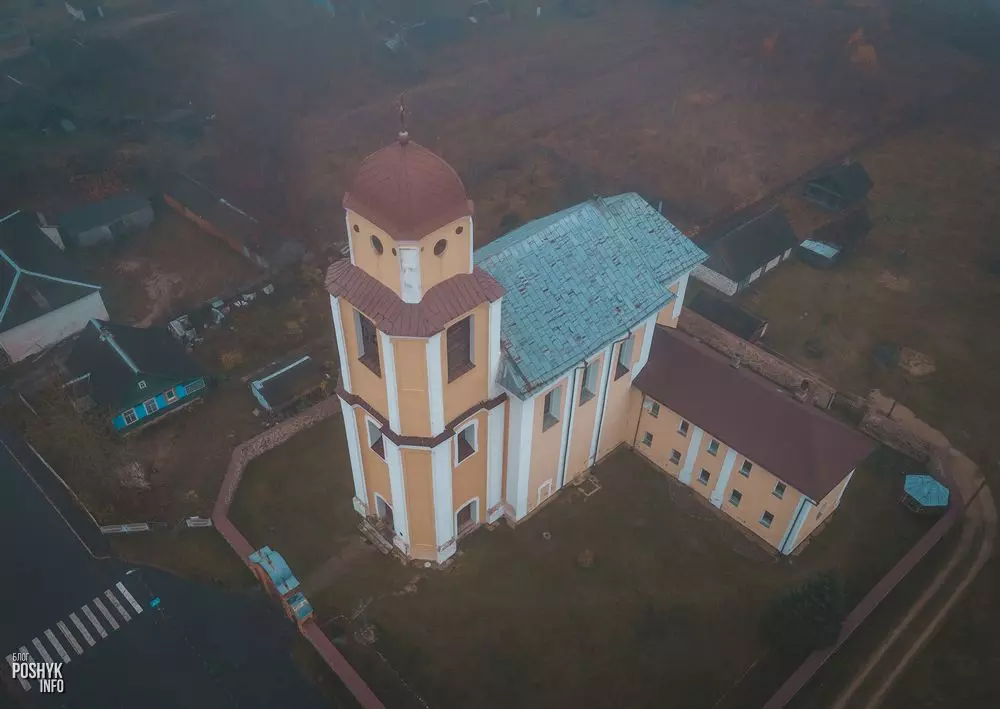
The history of the monastery and church dates back to 1770, when these lands belonged to Andrey Ukolsky. It was he who granted the fundusz—a charter allowing for the foundation and construction of a monastery in Krivichi. The first church was a wooden structure, but by 1796, a stone church had been completed.
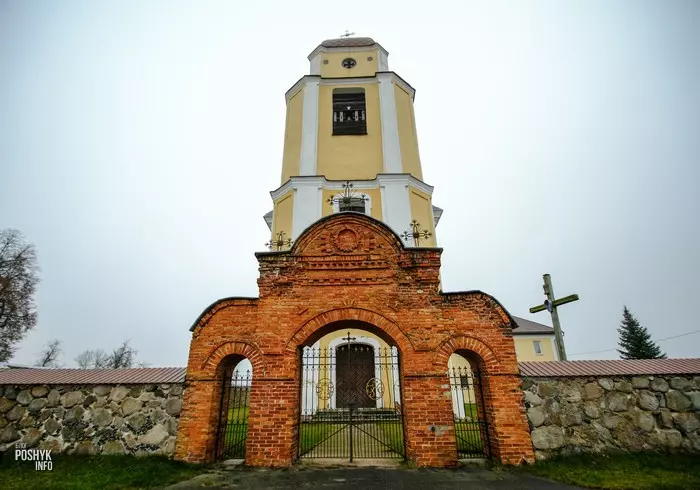
The architecture of the church is quite distinctive and reflects the late Baroque style. Its facade is integrated into a tall, three-tiered bell tower, and the residential building of the Trinitarian monastery adjoins the church on one side.
Who were the Trinitarians?
The Trinitarians are an ancient monastic order founded in France in 1198. Their original mission was to ransom Christians captured by non-Christians during the Crusades. In their homeland, they were often nicknamed the “Brothers of Donkeys” or the “Donkey Order,” since their monastic rule forbade them from riding horses until the 13th century.
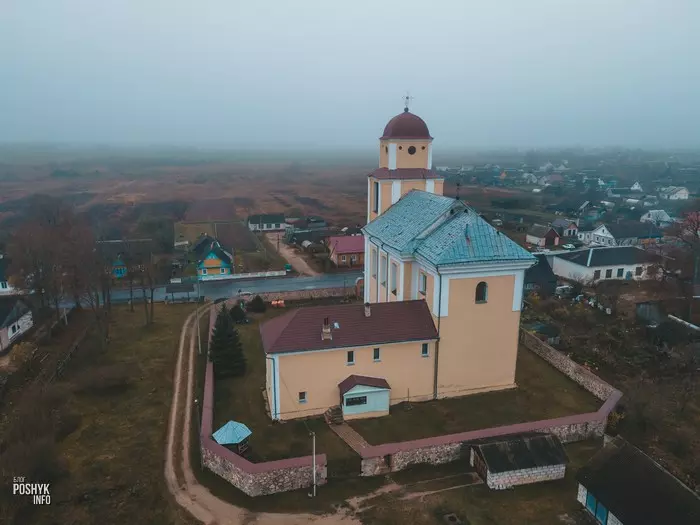
In 1832, after the suppression of the uprising, the Trinitarian monastery in Krivichi was closed, and the church was converted into a parish church. At the beginning of the 20th century, a massive rubble-stone fence and a three-arched gate were added around the temple.
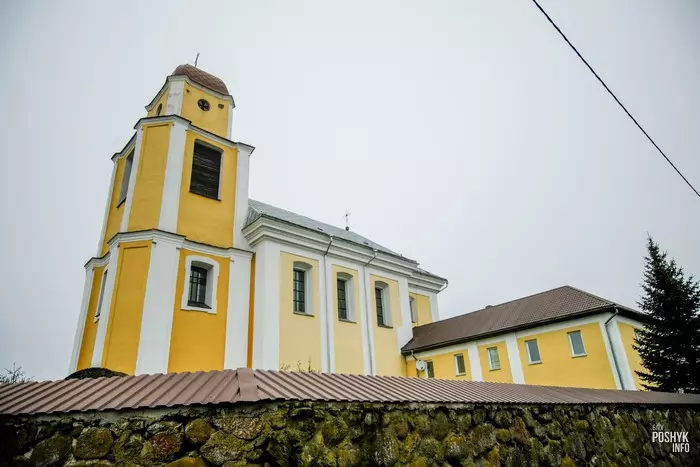
During Soviet times, the church stood empty for many years. However, in the early 2000s, it underwent a major restoration. Some parts of the building—like the roof—still retain tin cladding from previous repairs.