The bison is one of the main symbols of Belarus. In Belarus, the bison is not only a representative of the rich and diverse animal world, but also an unofficial symbol of the country. In ancient times, our ancestors personified this powerful and majestic animal as a force of nature and worshiped it as a symbol of their native land. However, over time, things changed, and of the three species of this animal, only one has survived to this day.

The main reasons for the bison’s disappearance in Europe were deforestation, disease, and hunting. The latter was often a privilege of kings and nobles. Under Catherine II, who considered herself a patroness of science, bison were massively hunted for research and museum exhibits. By 1809, despite the decree issued by Alexander I in 1802 to protect and account for these animals, only 350 bison remained.
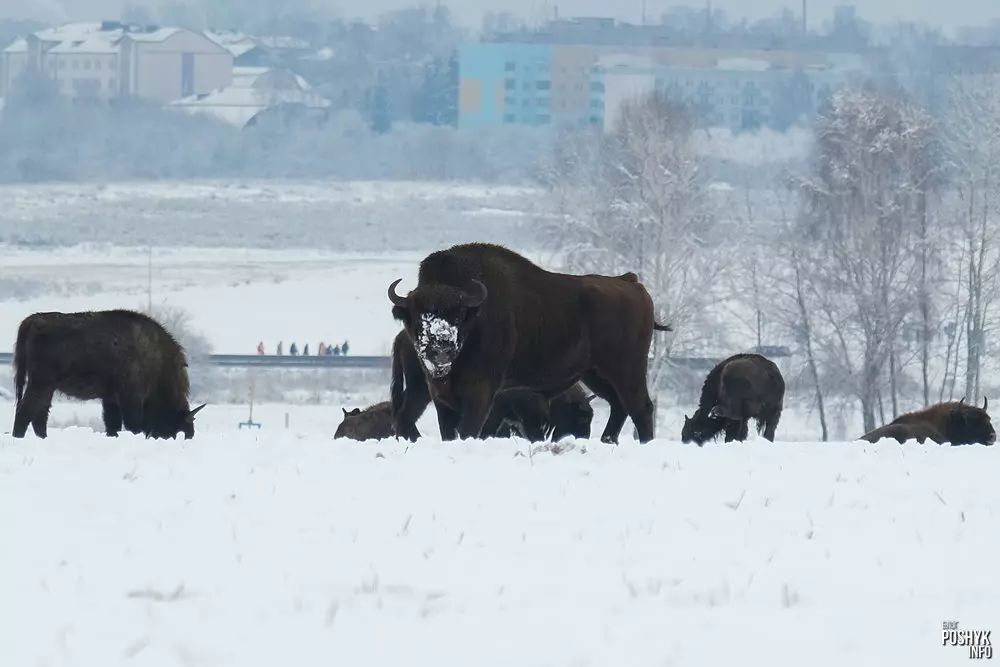
In the 20th century, fires and wars contributed to the disappearance of these already rare animals, especially during the post-war devastation, when hunting was not controlled.
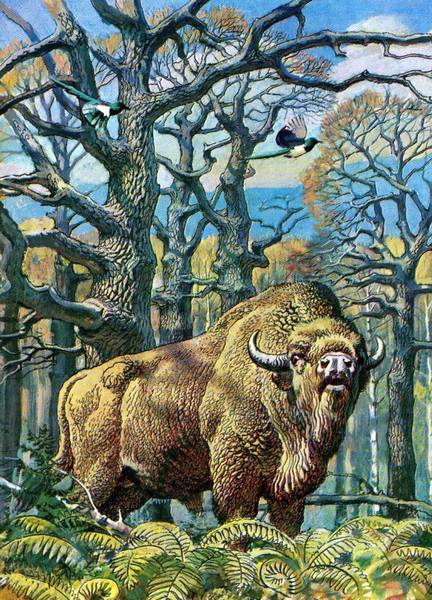
In Poland, the last bison living in natural conditions fell victim to poachers in 1926, and the last three Caucasian bison were killed in 1956. Animals that were kept in captivity during this period numbered between 66 and 100 individuals, according to various estimates. In the post-war period, these animals were used to restore the bison population in reserves.
Currently, bison are listed in the Red Book of Belarus, Russia, Ukraine, Poland, and Lithuania. The largest population is found in Belovezhskaya Pushcha.
The History of Bison Population Restoration in Belovezhskaya Pushcha
July 2016 marked the 70th anniversary of the start of work to restore the bison population in the Belarusian part of Belovezhskaya Pushcha. The first breeding bison, totaling 10 individuals (from Belovezhsk-Caucasian and Belovezhskaya origins), were brought from Poland between 1946 and 1949. By 1953, the population had increased to 18, and 7 of them were released for free breeding. By 1968, all the bison were in the wild, and the breeding center was disbanded. Now, in its place stands the residence of Father Frost.
In 1961, after the first Soviet-Polish conference on bison breeding, it was decided to keep only bison of Belovezhskaya origin in Pushcha. 114 Bialowieza-Caucasian individuals were sent to Ukraine and the North Caucasus. The remaining herd was supplemented with 38 purebred Belovezhskaya animals from the Russian Prioksko-Terrasny Reserve. By 1969, there were 63 bison in Belovezhskaya Pushcha. Since then, the population has been allowed to develop naturally, with minimal human intervention.
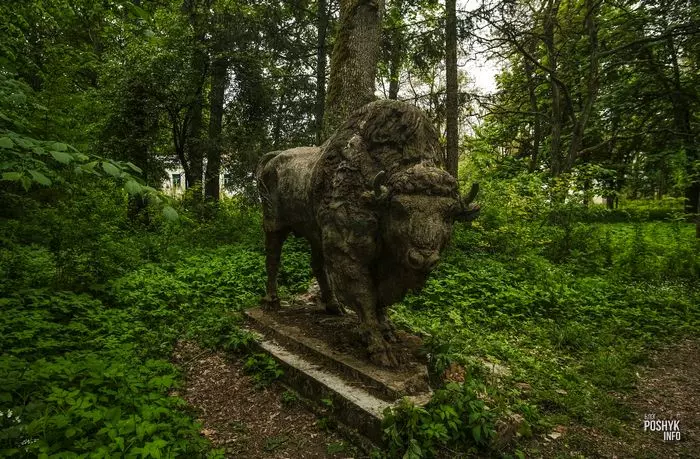
Currently, 10 bison micropopulations live in Belarus: Belovezhskaya, Borisov-Berezinskaya, Ozeranskaya, Nalibokskaya, Polesskaya, Osipovichskaya, Ozerskaya, Lyakovichskaya, Naidyanskaya, and Krasnoborskaya. As of the beginning of 2016, the total number of bison was 1,428, which constitutes more than 25% of the world’s bison population.
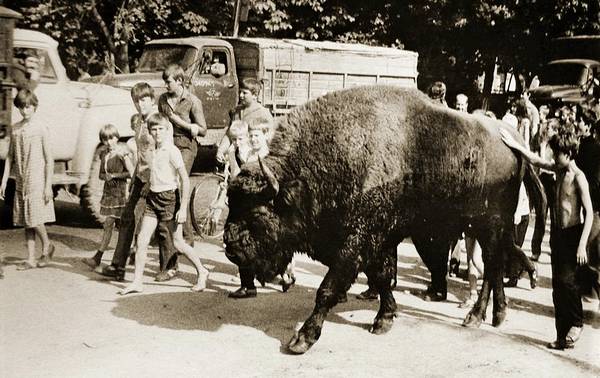
All bison are divided into the main and reserve funds. The main fund includes animals with good physical health that are valuable for further breeding. Hunting these bison carries a penalty of up to 6 years in prison and a fine of 2,400 basic units. The reserve fund includes older animals, those that are sick or injured, those born with defects, aggressive animals, and young males expelled from the herd. Despite public outcry, shooting is allowed for animals in the reserve fund. Experts call this process “population optimization” and view it as a necessary measure, as bison lack natural predators and are not subjected to natural selection.

Conservation Issues for the Bialowieza Bison
Despite the impressive number of bison in Belarus, which suggests there is no immediate threat of extinction, the conservation of bison as a species is not guaranteed.
The problem is that due to inbreeding (as micropopulations live in isolated groups), the genetic diversity of modern bison has become very poor. This makes them vulnerable to pathogens and environmental changes. According to specialists from the Ministry of Nature, when breeding bison, the pedigrees and genetic diversity of animals from other micropopulations must be taken into account.
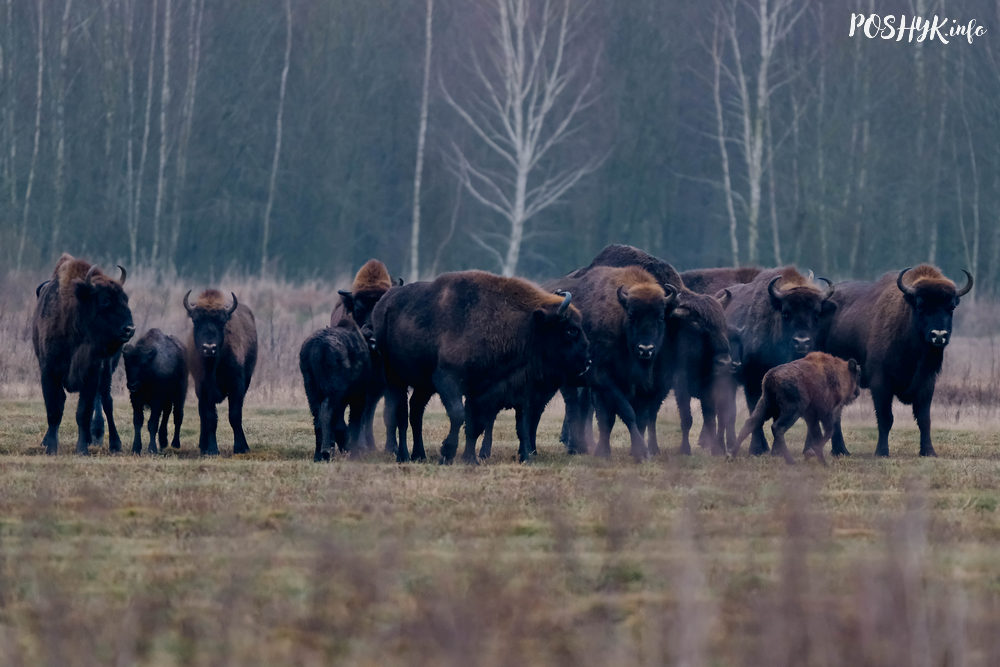
Interesting Facts about Bison:
- The bison is the heaviest and largest land mammal in Europe.
- Despite its apparent slowness and powerful physique, a bison can easily jump over a two-meter fence when threatened and run at a gallop through deep snow.
- Bison move silently and rarely make sounds, only vocalizing in extreme danger or anger.
- Despite their formidable appearance, bison are peaceful animals, and attacks on humans are extremely rare.
- Bison feed on about 400 plant species. An adult bison eats up to 40-60 kg of plants per day.
- They have excellent hearing and a keen sense of smell, but are short-sighted.
- Bison live alone or in small groups, with an experienced adult female acting as the herd leader.
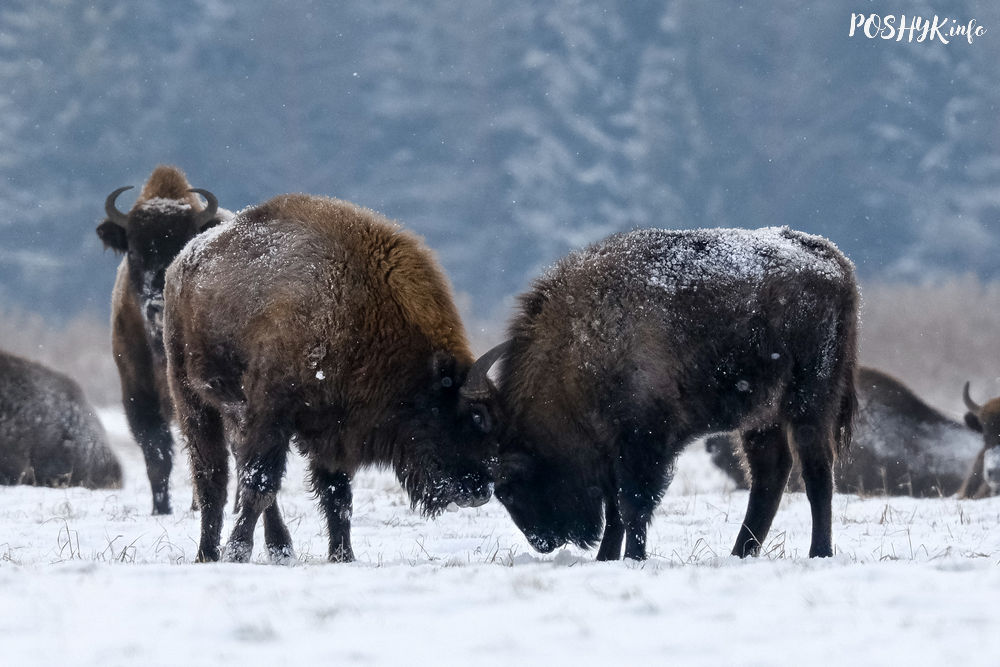
- Males use a musky scent and engage in fights to attract females during the mating season.
- A female bison carries her calf for 9 months, and the calf begins walking just a few hours after birth.
- In the wild, bison live up to 22 years, and in captivity, they can live up to 26 years.
- A camera has been installed in the feeding area of the Polish part of Belovezhskaya Pushcha, allowing online viewing of bison in their natural habitat.
The Bison as a Symbol in Belarusian Culture
The famous Song of the Great Bison by Belarusian poet Mikola Gusovsky is the first literary work to celebrate these strong and majestic animals. It was written in the early 16th century for Pope Leo X Medici, who wanted to learn more about the bison from the forests of the Grand Duchy of Lithuania.
The image of the bison can be found throughout Belarus: on the emblems of the Grodno and Brest regions, as well as in monuments, such as:
- at the entrance to National Airport Minsk
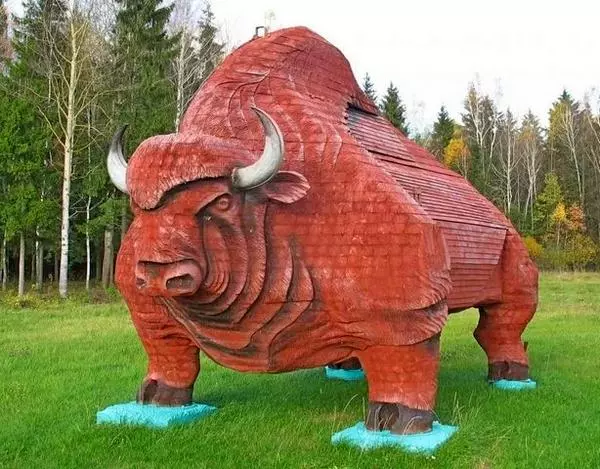
- on the M1 highway near Brest
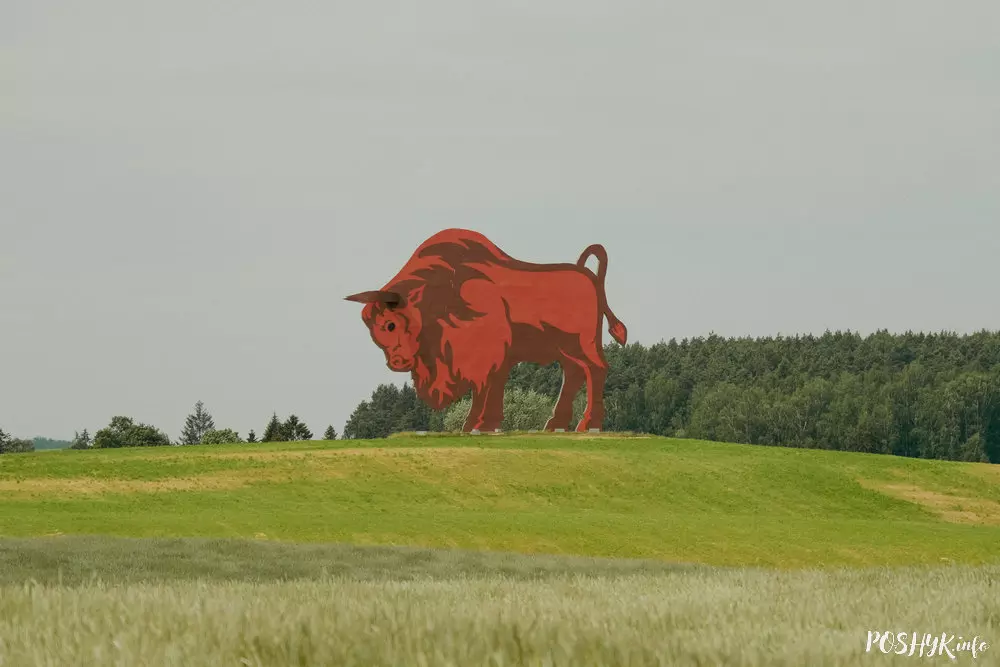
- at the Palace of Culture MAZ
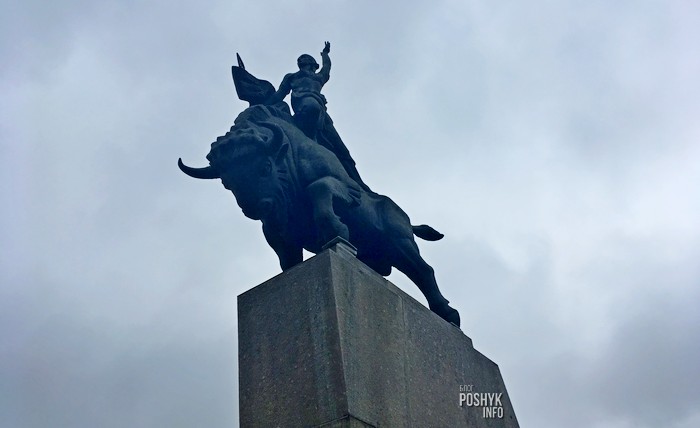
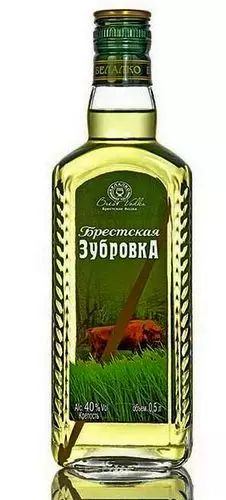
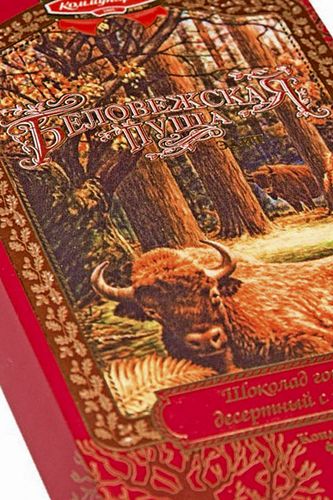
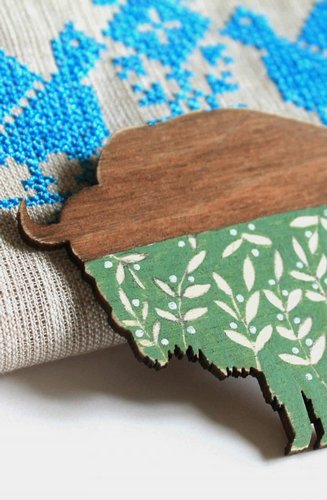
The bison “Volat” has been the mascot of the Dynamo-Minsk hockey club since 2004 and is depicted on the team’s logo. The bison also appears on the 100-ruble banknote, which harks back to the 1990s. Additionally, the bison is featured on national products such as “Brest Zubrovka,” Belovezhskaya Pushcha chocolate, and various souvenirs.