Discover the fascinating abandoned estates of Belarus, including the Grebnitsky, Plevako, Vankovichi-Oskerko, Dziekonskys and Trembitsky manors. Explore their rich histories, architectural details, and current states of decay. From noble families to Soviet-era transformations, these forgotten landmarks offer a glimpse into the past.
Abandoned Manor Vankovichi-Oskerko in the Village of Rudakov
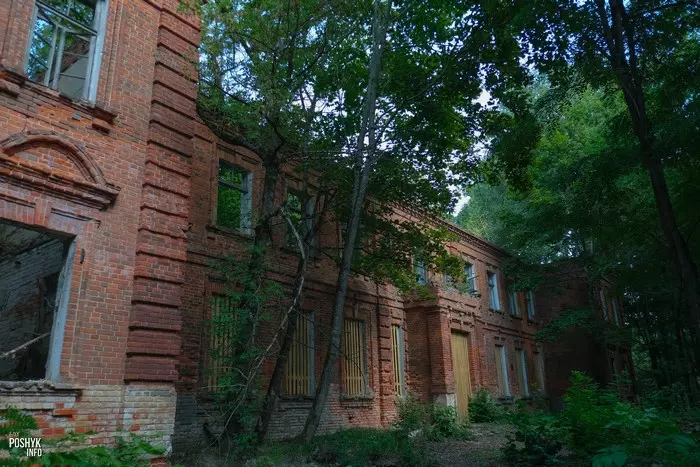
Located 10 kilometers from the city of Khoiniki, you can find the ruins of the manor in the village of Rudakov. The manor complex in Rudakov is associated with two well-known gentry families. The first was the Oskerko family, to whom the estate passed in 1816. Under their ownership, the formation of the park and the construction of the estate began. In 1884, the Vankovichi family became the owners of Rudakov.
History and Architecture of the Rudakov Estate
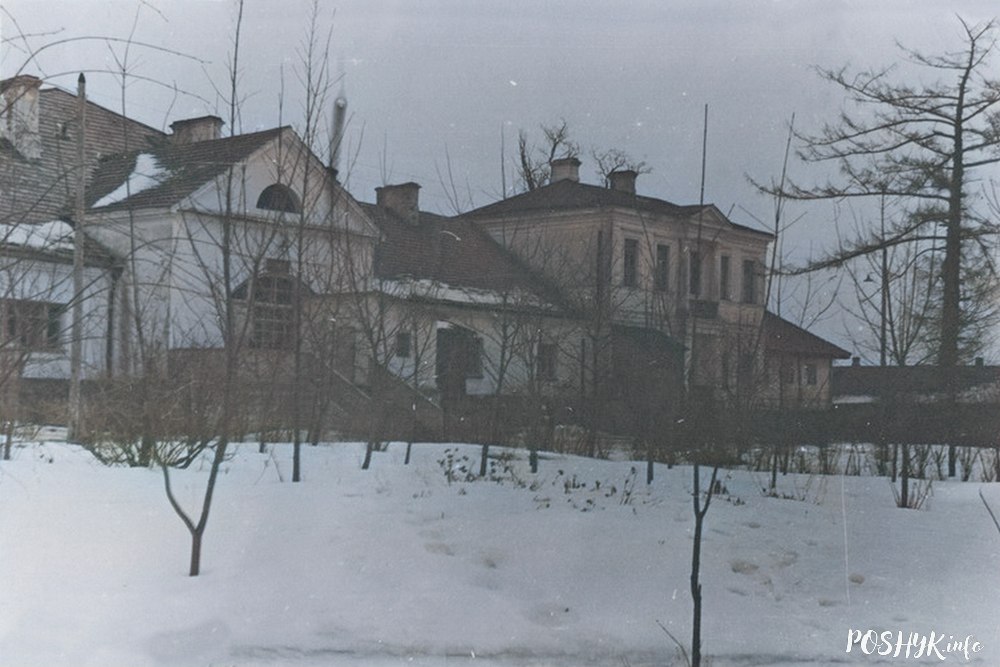
The original manor house was a three-winged Baroque palace made of brick. The central part was one story, while the side wings were two stories. Interestingly, clinker bricks produced locally were used for the construction of the palace. Many of these bricks still bear the Vankovichi family brand. The manor was richly decorated with pilasters and bas-relief elements. A gabled roof with round windows deserves special attention. Old photographs clearly show what the palace looked like at the beginning of the 20th century.
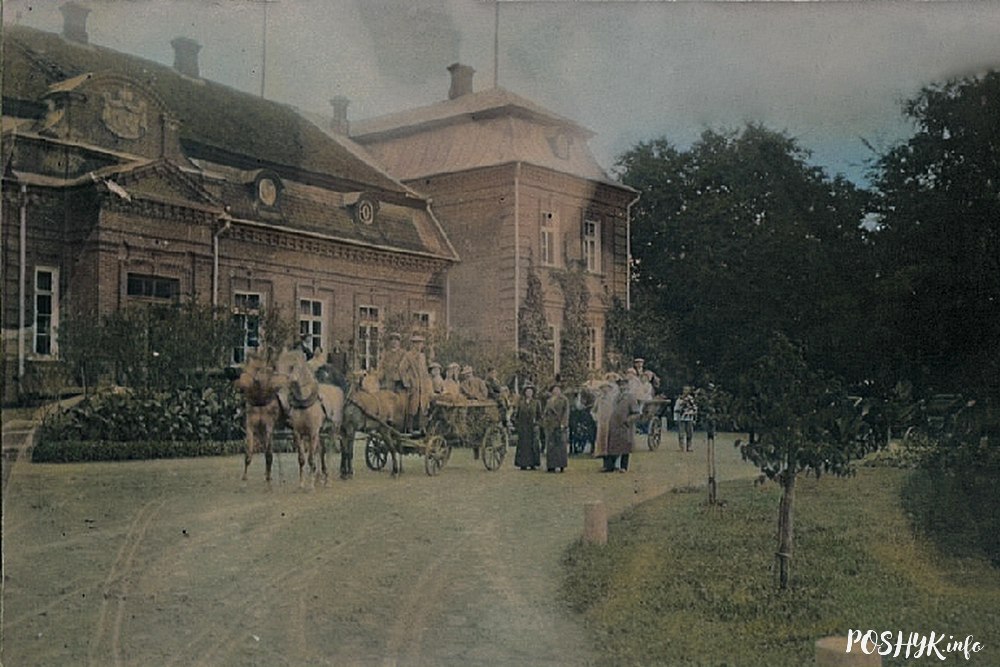
The last owner of Rudakov was Stanislav Vankovich. Under his ownership, the estate likely flourished. He actively built enterprises, expanded the park, and dug a pond for breeding fish. He also built a network of roads in Rudakov and was involved in agriculture. However, in 1917, the estate was nationalized, and an agricultural technical school was established within its walls. The educational institution operated here until 1986. During this period, the manor was significantly altered: the unique roof was removed, and a second floor was added to the central section.
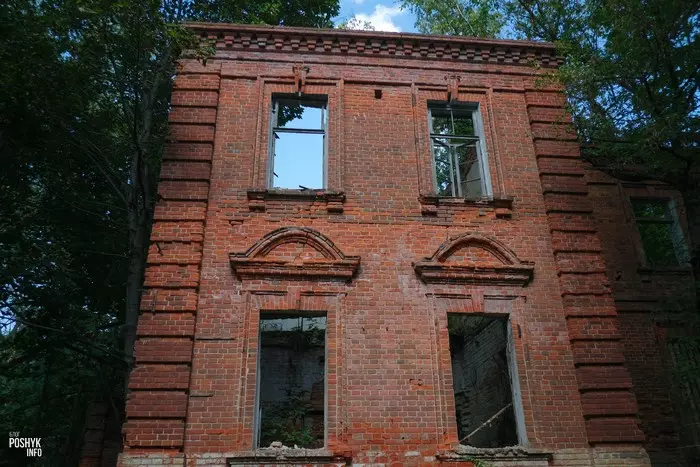
The village of Rudakov suffered from the Chernobyl disaster, which led to the abandonment of the manor buildings and the relocation of the vocational school to Khoiniki. On the opposite side of the Vankovich manor house, the school buildings once stood. In 2021, demolition of the buildings began, and now only piles of reinforced concrete remain. As you walk through the impressive grounds of the complex, you will encounter various outbuildings from the late 19th to early 20th century. All are in varying degrees of disrepair.
[adinserter block=”1″]Manor of the Dziekonskys “Chakhets” in the Village of Kashtanovka
The village of Kashtanovka is located in the Pruzhany district of the Brest region. This area has a rich history dating back to the second half of the 16th century. At that time, the estate was known as Chakhets. Over the centuries, the lands passed through the hands of various noble families. In the 19th century, Kashtanovka became the property of the Dziekonsky family, and it is with this surname that the local estate is now most closely associated.
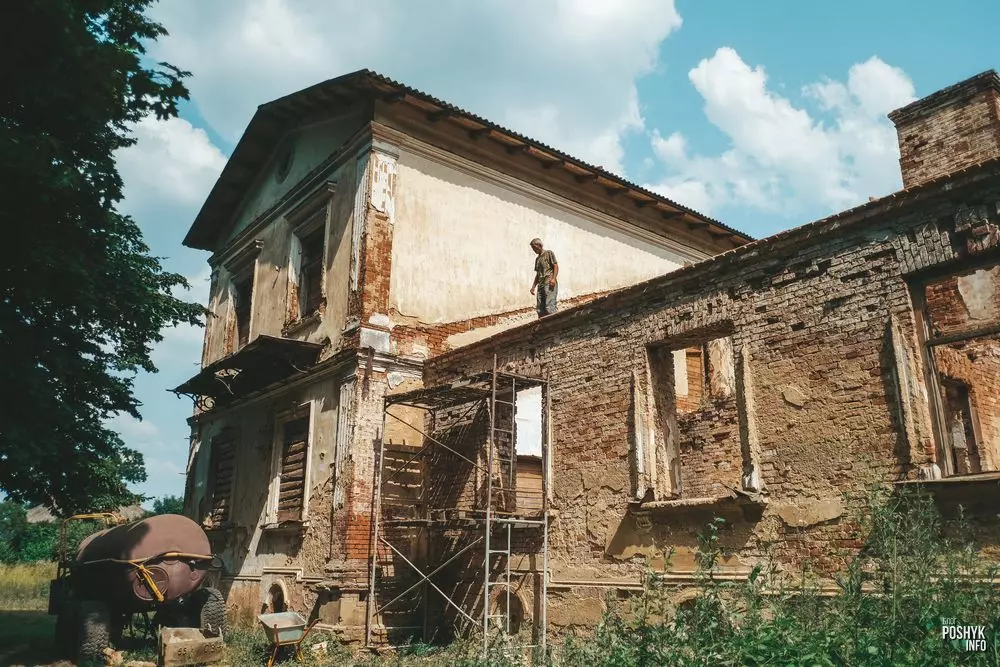
The manor is an asymmetric rectangular building, approximately 36 meters long. The main section is one-story, built on a high base, while a two-story wing of the manor was added slightly to the left. The main entrance is marked by a four-column porch with a triangular pediment. At the rear of the house is the park entrance, distinguished by metal columns with decorative elements. Another notable feature of the estate is the floor, which is lined with blue ornamental tiles.
The Chakhets Estate Today
The Chakhets estate reached its peak under Albina Dziekonsky, who expanded the manor house and developed the surrounding park. As with many estates in Belarus, 1939 brought tragedy and ruin. The last legal owner, Janusz Dziekonsky, was exiled to Siberia. His wife, Maria Orda, and son managed to escape to Warsaw, leaving their beloved Chakhets behind.
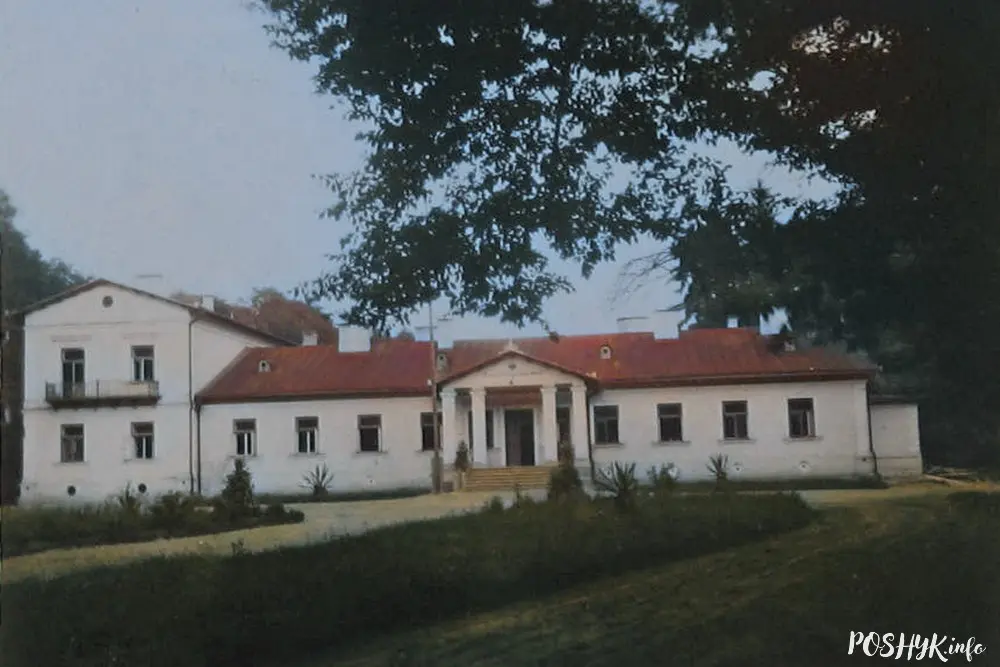
During the war and under Soviet rule, much of the estate’s valuables and antiques were lost. In the 1950s, the administration of the local collective farm was moved into the manor house. By the 1990s, the building had fallen into disrepair and was abandoned. Since the early 2000s, there have been several attempts to preserve this landmark of the Pruzhany region, including multiple auctions. In 2016, a successful purchase and sale transaction took place.
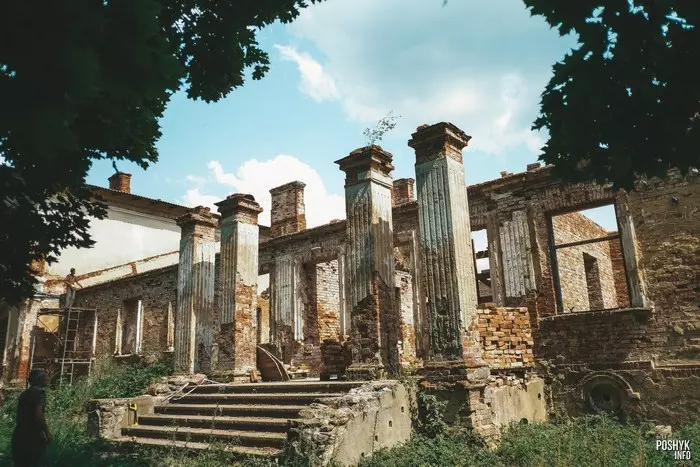
The Dziekonsky estate, along with 0.7 hectares of land and a distillery building, was sold to a private investor for about $11,000. As of the time of writing (August 2021), construction work is underway. Workers are clearing rubble and preparing surfaces for restoration. Plans are in place for the Dziekonsky estate to be transformed into a museum with a hotel. It will be interesting to return in a few years to see how the project develops.
The Ruins of the Plevako Estate in the Village of Ivenets
From the early 19th century until 1884, Ivenets belonged to the Plevako family, who founded a small estate on the banks of the Volma River. In addition to the manor house, the estate included a chapel, a landscape park, outbuildings, and a sawmill. Unfortunately, the Plevako estate was destroyed in the mid-20th century. Only the walls of the first floor and the foundation made of rubble stone have survived.
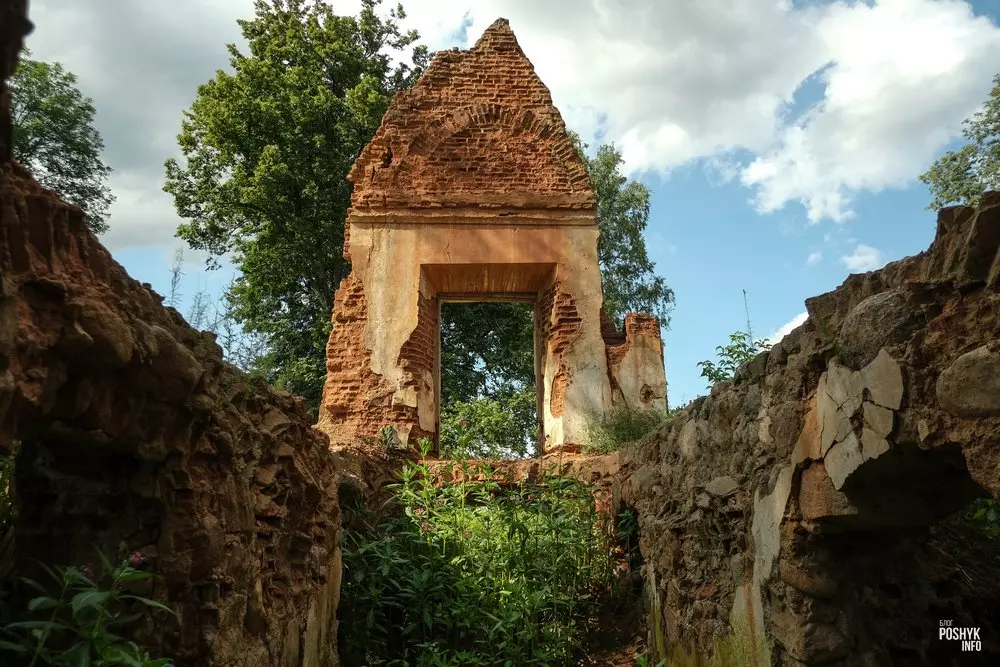
As you walk through the ruins of the estate, you can still see stove holes and some wooden elements. On the grounds of the manor complex, in the building that once housed the stable, is the Ivenets Museum of Traditional Culture.
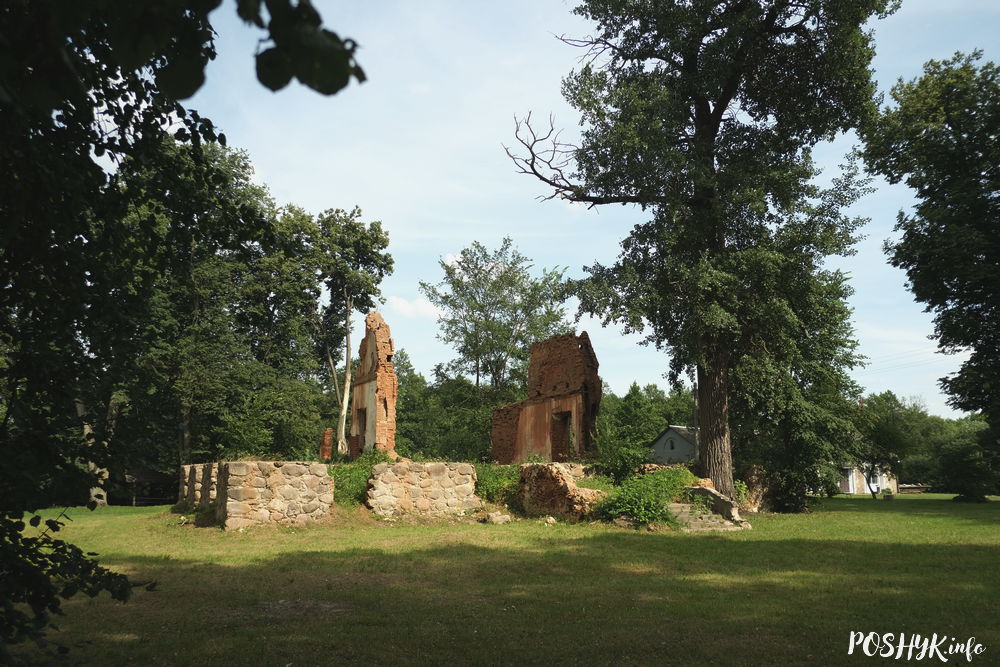
The staff can give tours and share the history of the site. The museum is open on weekdays from 10 a.m. to 7 p.m. (Phone: +375295638493). A little to the side, there is another building from the Plevako era – a former barn.
[adinserter block=”1″]Abandoned Estate of the Trembitskys in the Linovo
A few kilometers from the city of Pruzhany lies the village of International, a place with a Soviet name that, today, is hard to believe was once the site of the Trembitsky family estate. The village was originally called Linovo. Vincent Trembitsky purchased the Linovo estate at the end of the 18th century, and construction of the manor house began almost immediately. Initially, it was a small one-story palace in the classical style.
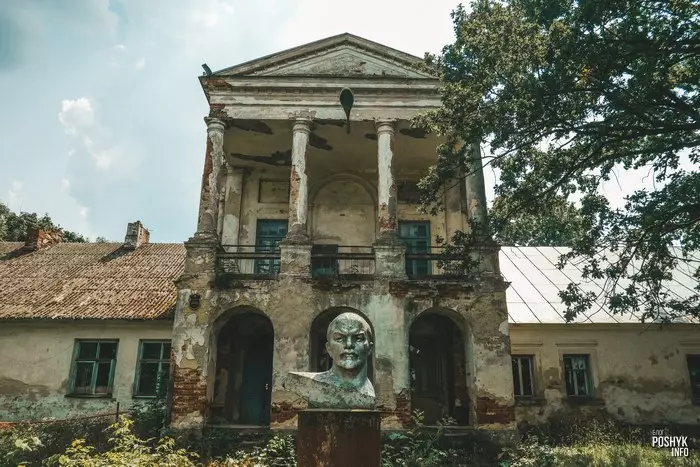
Later, under Vincent’s grandson, Vladislav, the estate underwent significant expansion. Vladislav approached the project thoroughly and invited Polish architect Luba to assist. As a result, the estate was extended to 110 meters in length, with a second floor added. The main façade was enhanced with a massive five-arched arcade, which houses a balcony with columns.
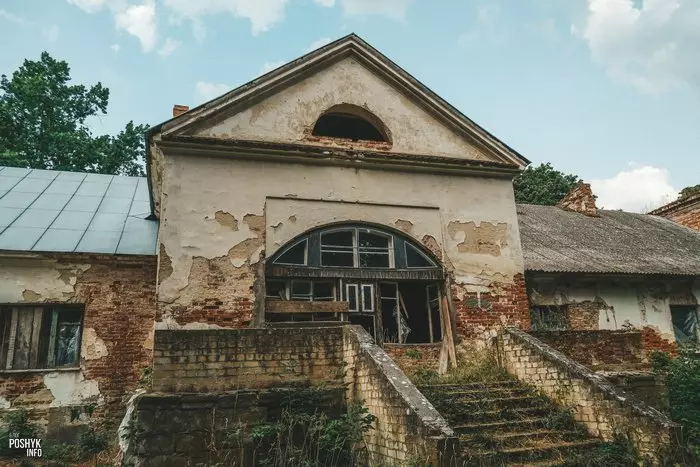
The Trembitskys lived in Linovo until 1939, when the estate was expropriated. During the Soviet era, the Trembitskys’ house and brewery were converted into a starch factory. The factory operated until the early 2000s, after which the estate entered a period of decline. Interestingly, in 2012, the estate was purchased by an investor for over $100,000, with the promise to restore the gentry estate in a few years. However, nearly a decade later, the building continues to deteriorate.
A reminder of the Soviet period remains: a bust of Lenin, which was installed in the 1960s when the starch plant was beginning operations. The administration left long ago, the enterprise went bankrupt, but the statue of the architect of communism remains in place. Of special note is the manor park. Despite its neglected state, many centuries-old trees still stand, including walnuts, lindens, oaks, and ash trees.

In the right wing of the estate, a store named “Natalie” operated until recently. However, it closed, becoming a sort of “museum” of failed entrepreneurship in the village of International. The two-story left building is the most depressing part of the estate. This section is falling apart before our eyes.
You can see what the interior of the building looks like in the video:
Abandoned Estate of the Grebnitskys in the Village of Orekhovno
Belarus is a country where, in every small settlement, there was once a gentry estate. During the Soviet era, this changed dramatically: most of the intelligentsia were dispossessed, and manor houses fell into ruin. The village of Orekhovno is no exception, where part of the Grebnitsky estate has been partially preserved. In 1745, the land in Orekhovno was sold to the Grebnitsky family by the landowner Jan Rypinsky. Over time, it was decided to build a small family palace on the site of the old estate.
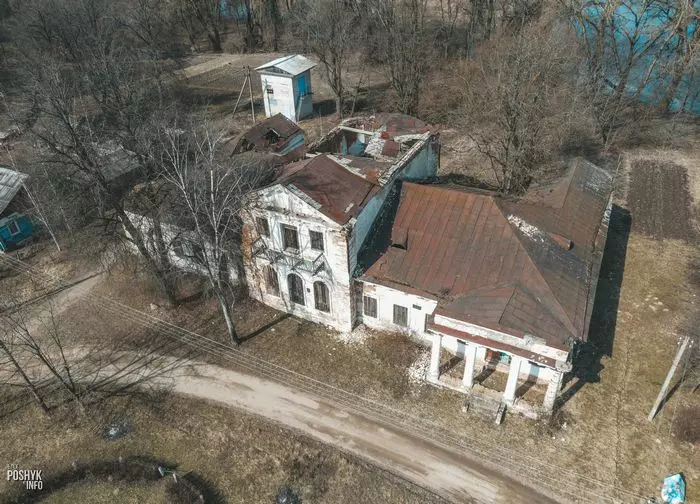
The manor house was constructed on the banks of the small Orekhovno Lake, a perfect location for the estate. By 1840, the Grebnitsky estate was completed. By this time, a landscape park had been established, and a Uniate church had been built. Architecturally, the estate is an example of late classicism. It is one-story, with a two-story central part. An unusual feature is the entrance, located on the right side of the house, whereas such estates typically have the entrance in the center. This may be the result of later reconstruction. Some sources mention that there was also a symmetrical entrance on the left side.
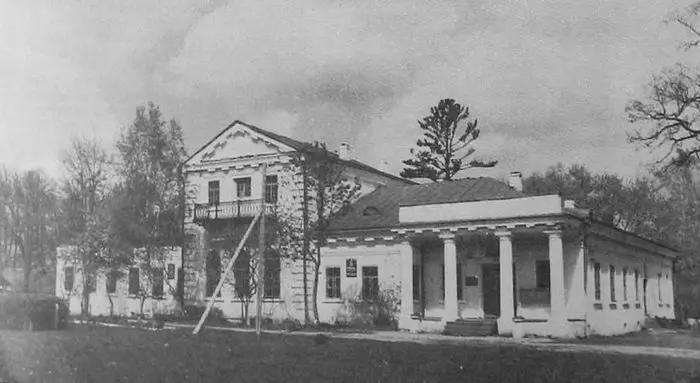
Unfortunately, the four-column portico is slowly collapsing, with one of the columns close to falling at any moment. The Grebnitskys ceased to own Orekhovno in 1917, when nationalization began. In the 1930s, apartments for workers of the collective farm “Red October” were set up inside the estate. During World War II, the Grebnitsky estate was used as a military hospital by the 2nd Ushach partisan brigade. After the war, classrooms were established in the manor house.
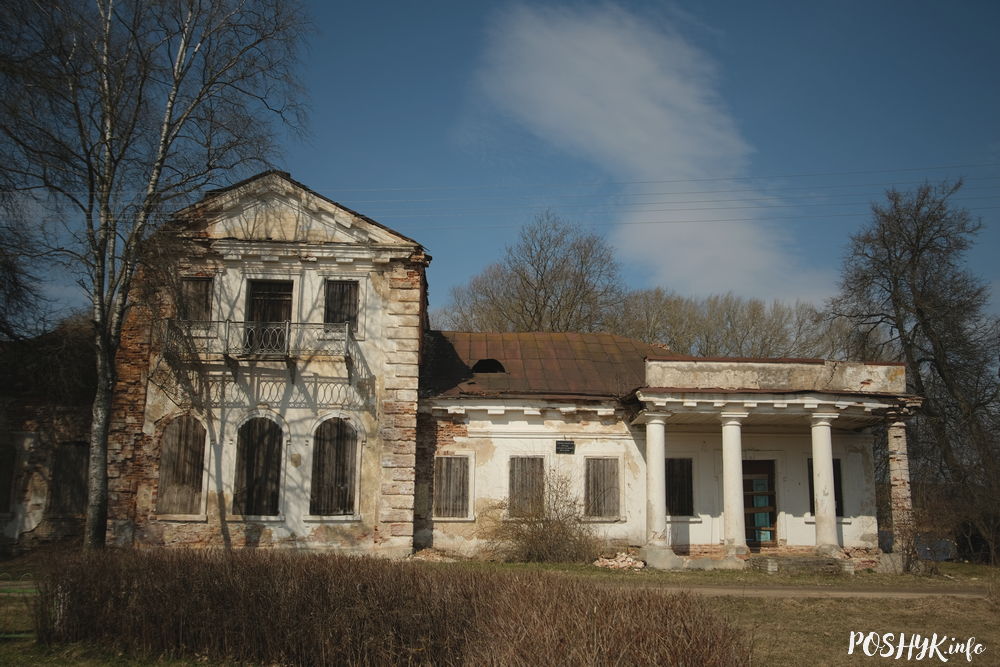
The school operated here until the early 1990s, when it moved to a new building. After that, the estate became abandoned and began to deteriorate year by year. The “Vitebsk Property” auctioned the Grebnitsky estate several times. While there were potential buyers, the complexity of reconstruction and various restrictions made it difficult to begin restoring the estate. The last auction started at just 27 rubles, so if you’ve ever dreamed of owning your own estate, the house in Orekhovno might be waiting for you.