Take a fascinating journey through Belarus’s rural landscapes and uncover the beauty of its historic wooden churches. From the 19th-century Church of the Intercession in Lan to the stunning St. George’s Church in Slobodka, each temple tells a unique story of faith, tradition, and craftsmanship. Explore these architectural gems, many of which have stood the test of time, with intricate designs, beautifully preserved details, and rich histories. Whether you’re a history enthusiast or a lover of architecture, these churches offer a glimpse into Belarus’s cultural heritage.
Osinogorodok: Wooden Church and Bell Tower
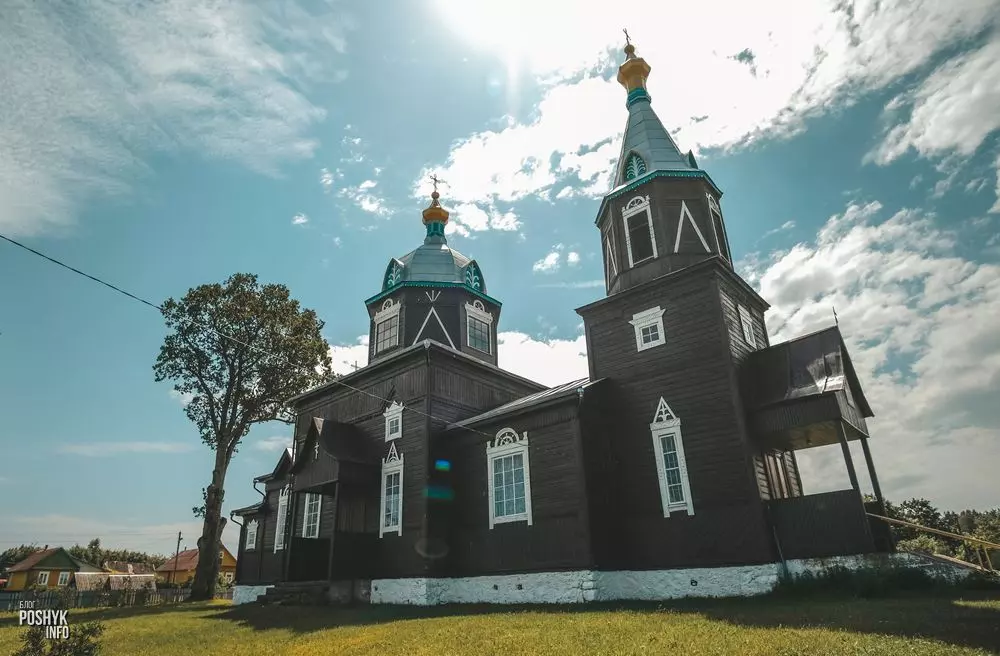
Osinogorodok, located in the Vitebsk region, lies on the way from the village of Kozlovshchina, near a place with a beautiful name – Paris. The main attraction in Osinogorodok is the Church of the Intercession and its bell tower, but there are a few other interesting details worthy of attention.
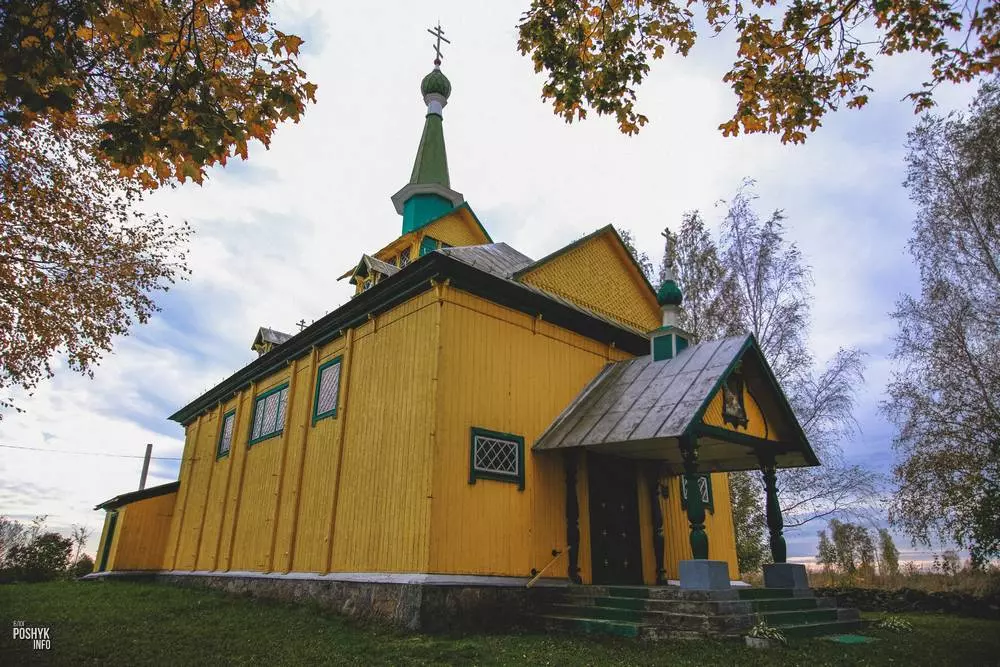
An information plaque on the church gives the construction date as 1830, but some sources mention an earlier date of 1782. The reason for the discrepancy is simple: the church in Osinogorodok has been repeatedly rebuilt and renovated. Therefore, it is difficult to say with certainty which date is correct. Despite the confusion, it is known that the Church of the Intercession took on its present appearance after a major overhaul in 1897. The work was funded and supported by Prince Drutsky-Lyubetsky.

Of particular note is the bell tower, which is one of the few such structures in Belarus. It combines elements of Art Nouveau with classical Orthodox architecture (in the upper tier). The lower tier is made of rubble stone, and it is likely that it was built during the church’s reconstruction in the late 19th century. In front of the entrance to the church grounds, there is a simple, unassuming gate. The church in Osinogorodok is notable not only for its architecture but also for its location. The temple stands atop an ancient settlement dating back to the Iron Age (5th century).
Trinity Church in the Village of Knyaginin
On the way from Minsk to Myadel, you can visit several interesting sights. One of them is the agricultural village of Knyaginin, located next to the P58 highway, where a wooden church from the 19th century has been preserved (although some sources suggest it dates back to the 18th century). The Trinity Church is located in the center of the village, on the main square.
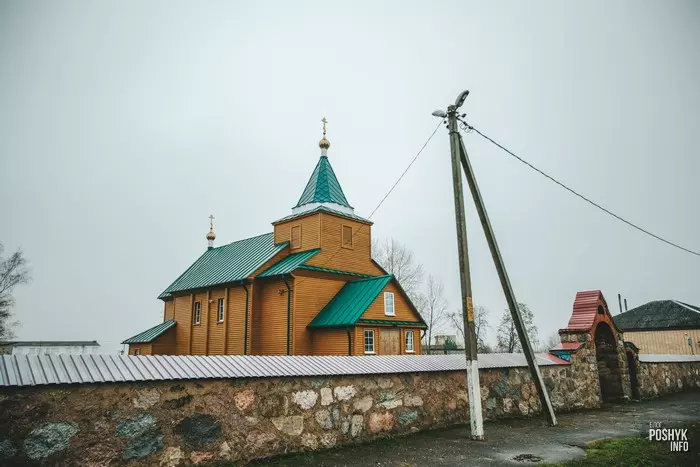
The church in Knyaginin was restored in 2010, and as a result, it now looks like a newly built structure. The tower was altered, with its height reduced, and the arched wooden windows replaced by rectangular PVC ones, which simplified the church’s architecture. The fence and gates, made from chipped boulders, were originally built in 1907. After some time, the fence was dismantled and rebuilt from rubble stone, giving it a more authentic appearance than the temple itself.
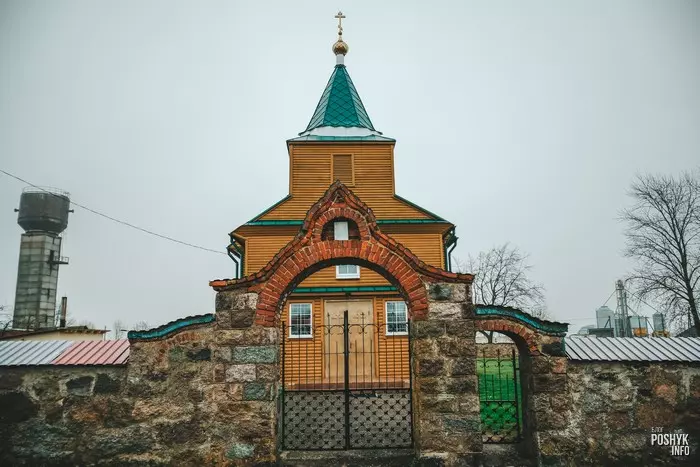
During WWII, the church in Knyaginin remained unharmed. According to local legends, the parish priest was a diplomat who knew how to negotiate both with the Germans and the partisans. From Knyaginin, it’s worth driving to the village of Krivichi, where you’ll find the former Trinitarian monastery and a church built in 1887.
Wooden Church of 1814 in the Village of Gorodok
A classic example of folk wooden architecture can be found in the village of Gorodok, located in the Glusk district of the Mogilev region. The Church, dedicated to Saints Cosmas and Damian, was built in 1814, although some sources suggest it was constructed in 1866. Surrounding the church is a stone fence with a rather simple gate from the early 20th century. On the temple grounds, there is a small cemetery, and some of the graves have been preserved.

The Church in Gorodok is a typical wooden structure, measuring about 32 by 12 meters. It features a pitched dome, which was likely altered during the Soviet era. Throughout its history, the church has remained in operation, with the exception of a brief period before the Great Patriotic War. In the 1970s, the church underwent a major overhaul. Today, the Church of Saints Cosmas and Damian in Gorodok is open to visitors.

Wooden Church of the Exaltation of the Cross in Gorodishe
If you are interested in wooden architecture in Belarus, a visit to the church in the urban settlement of Gorodishe is a must. The church dates back to 1922 and has preserved its authenticity and historical charm. Every element of the church is made of wood, making it a captivating sight.
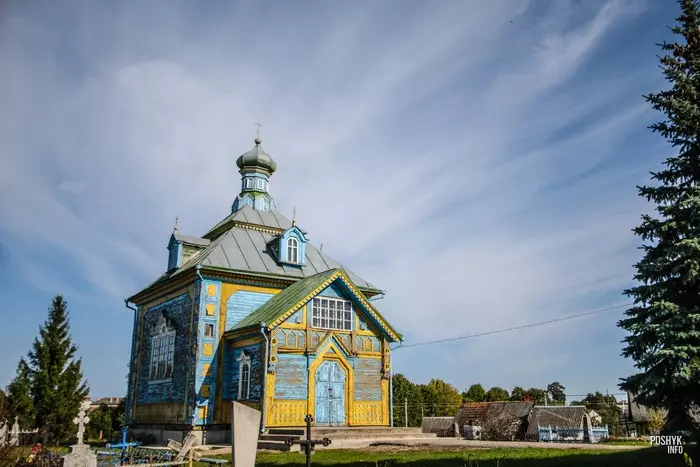
The Holy Cross Church is located on September 17th Street, in the same place as its predecessor, which was built in 1764. Architecturally, the temple belongs to the neo-Russian style (also known as pseudo-Russian). What sets Gorodishe Church apart is its bright carved decor. Of particular note are the intricately crafted wooden window frames and decorative elements.
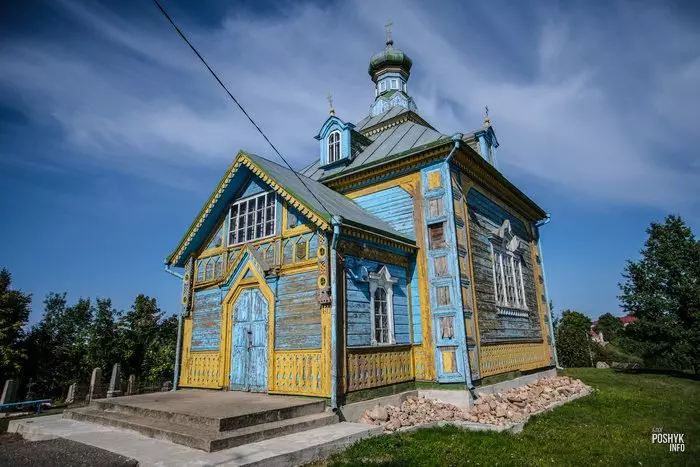
Next to the church stands a wooden bell tower, which, according to some sources, dates back to 1840. It is simple in design, with minimal decoration, except for an old, weathered cross on its roof. Surrounding the temple is an old cemetery, which is well-maintained and tidy. In Gorodishe, you can also visit the Church of the Virgin Mary, located near the fire station.
Wooden Church of 1867 in Patsevichi
Patsevichi is a small village on the way from Sands to Zelva, along the P50 highway. One of the notable features of Patsevichi is a small church, which is affiliated with the Church of Saint Nicholas in the nearby village of Samuylovichi. The Church in Patsevichi was built in 1867, is made of wood, and is dedicated to the Nativity of the Blessed Virgin Mary.

The temple is small, but its grounds are well-maintained. Scaffolding is visible, suggesting that the church may have been recently repainted. Benches are arranged around the church, and services are held outdoors in good weather. Liturgy is celebrated once a month.
The Wooden Church of St. George in the Village of Slobodka
Between the historical park of Sula and the Kul, there is the small village of Slobodka, where you can see the wooden Church of St. George. The temple is located in the Stolbtsy district of the Minsk region, about a 40-minute drive from the capital city. The exact date of construction is unknown, but two possible years are suggested—1880 and 1905.
The church in Slobodka is an example of traditional wooden architecture. The temple is still functioning and is well-maintained. Above the entrance, there is an icon depicting St. George. Similar wooden churches can be found throughout the country, including a very similar one in the village of Kievets.
St. George’s Church in the Agricultural Town of Zaluzhye
On the way out of the town of Staryya Darohi, you’ll pass the small agricultural town of Zaluzhye in Maryina Gorka. This place is home to the preserved wooden St. George’s Church.

Zaluzhye is mentioned in historical records as early as the 16th century, originally as a possession of the Olelkovich family. Later, the settlement passed into the hands of the Radziwills (17th century) and then the Wittgensteins (19th century). The church has been standing since the town’s founding, but the current structure was rebuilt at the beginning of the 20th century, possibly around 1905.During Soviet times, the building of the church was repurposed as a club, which continued to function almost until the collapse of the USSR. After that, St. George’s Church was returned to the faithful, and services resumed.
Wooden Church in the Village of Malye Zhukhovichi
Near the settlement of Mir, there is the village of Malye Zhukhovichi, where you can find an interesting wooden church. The church was built in the mid-19th century, in 1878, on the site of its predecessor. However, some sources mention an earlier date, 1783, suggesting that the church was rebuilt at that time. There is no consensus on the exact history of the church.

The Church of the Nativity of John the Baptist is designed in the retrospective style. The temple features a tall belfry tower, which is a dominant architectural feature of the church. Since 1961, the parish has not functioned, and the church in Malye Zhukhovichi was likely closed. It is known that the church was returned to believers only in 1989.
In addition to the church, there were several estates in Malye Zhukhovichi, but they were destroyed during Soviet times. The ruins of the Somers estate, including the officina and fragments of the park, remain. The Rudlevsky estate, now an ordinary residential building, no longer shows any of its former grandeur.
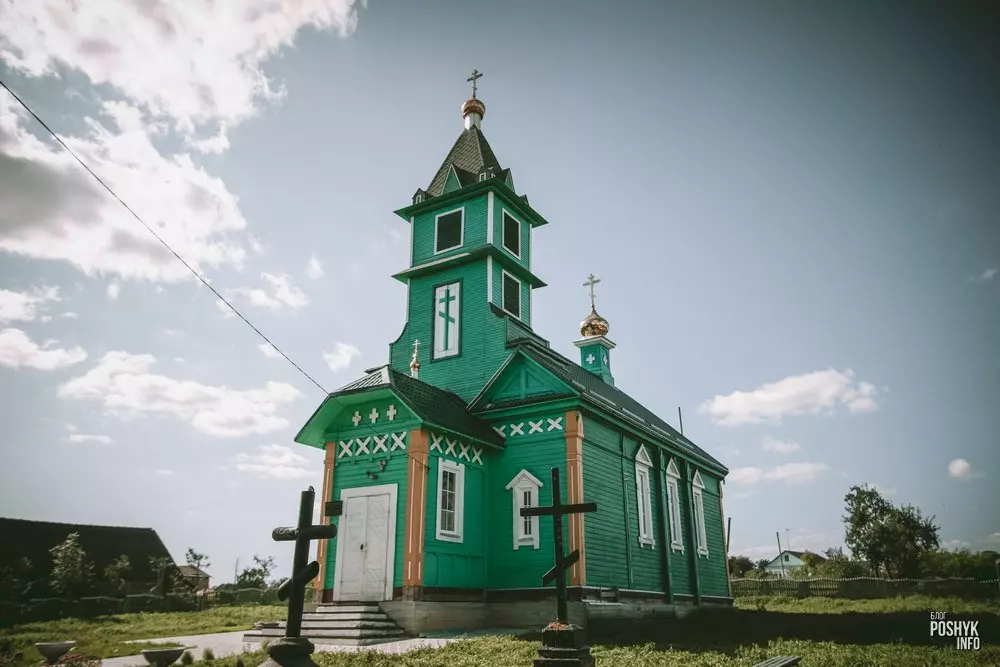
Church of the Intercession and Gate-Bell Tower in the Village of Lan
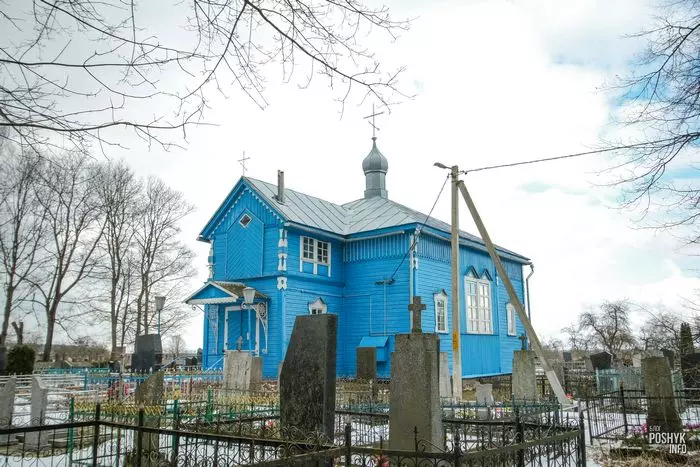
The agricultural town of Lan, with its beautiful name, is located on the route between Nesvizh and Kletsk. The main attractions in Lan are the Church of the Intercession and its stone gate-bell tower. The church in Lan was built in 1844 and is a notable example of wooden architecture. The temple was closed and ceased to operate from the 1960s until the early 1990s. In 1992, the church was damaged by a fire and was subsequently rebuilt with some alterations.
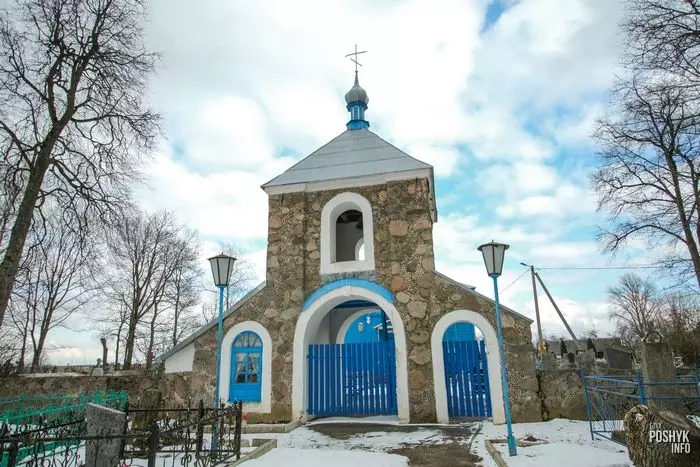
In front of the Intercession Church stands a large gate-bell tower made of rubble stone, built in 1874. The gate is two-tiered and features two arches, with a gatehouse room located on the left side.
The church is easy to find at Lesnaya Street 1a in the village of Lan. For more information, you can contact the temple at +375-1770-331417.
The Wooden Church of St. Elijah in the Agricultural Town of Sakovshchina
A few kilometers from the city of Volozhin lies the small agro-town of Sakovshchina. Among the town’s attractions stands the Church of St. Elijah, a beautiful example of wooden Orthodox architecture, which still partially functions today. The church in Sakovshchina was built in 1878, as evidenced by a plaque on the bell tower. It has most likely been preserved in its original form. The Church of St. Elijah is easy to find. It is located on the outskirts of the village, at the local cemetery, in a peaceful and well-maintained area, with the western Berezina River flowing nearby.
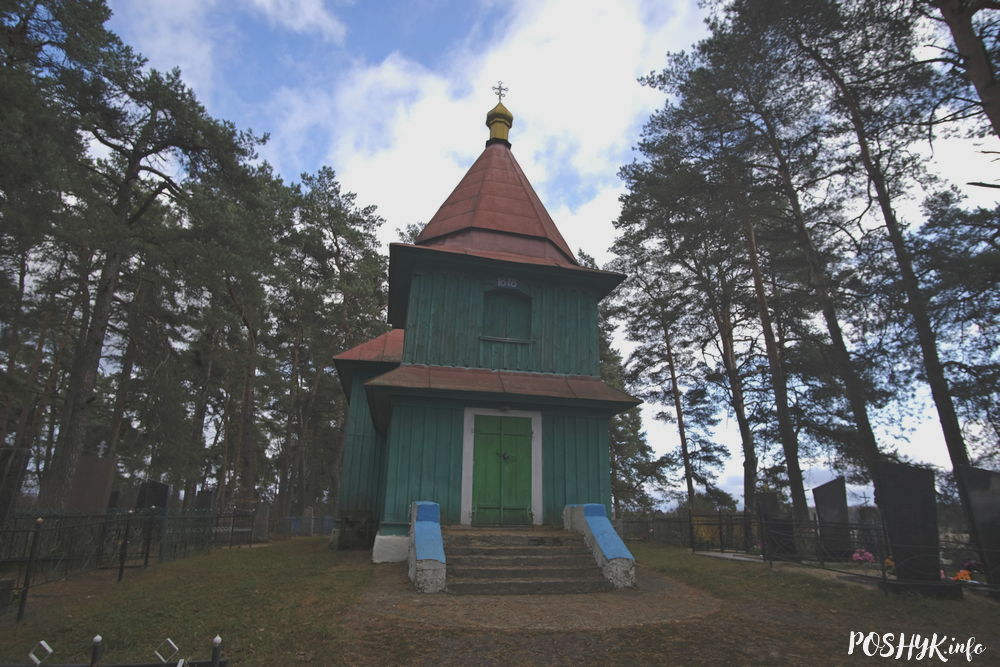
The church is rich in small wooden details that have been well-preserved. The temple is square in shape, and its three-tiered belfry adds to its architectural beauty. The windows and entrances are rectangular, contributing to its simple yet elegant design. Sakovshchina is conveniently located along highway H8262, which connects Volozhin and Golshany. This road passes by many other interesting locations, such as Ten’s Managers and Vishnevo.