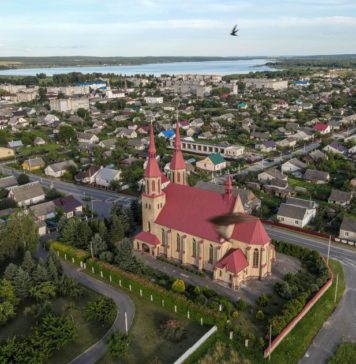
Antopol in the Brest region has a rather rich history, but it is challenging to establish the exact date of the town’s formation. Some sources suggest it was founded in 1718, others in 1795, and some even point to the end of the 16th century. The reason for this uncertainty is simple: the settlement has been destroyed several times, first by war, then by fires, and again by war. These repeated destructions have left few historical monuments intact. For example, the ancient estate of the Breverns-Gedroits, under whose ownership the Resurrection Church was built, no longer exists.
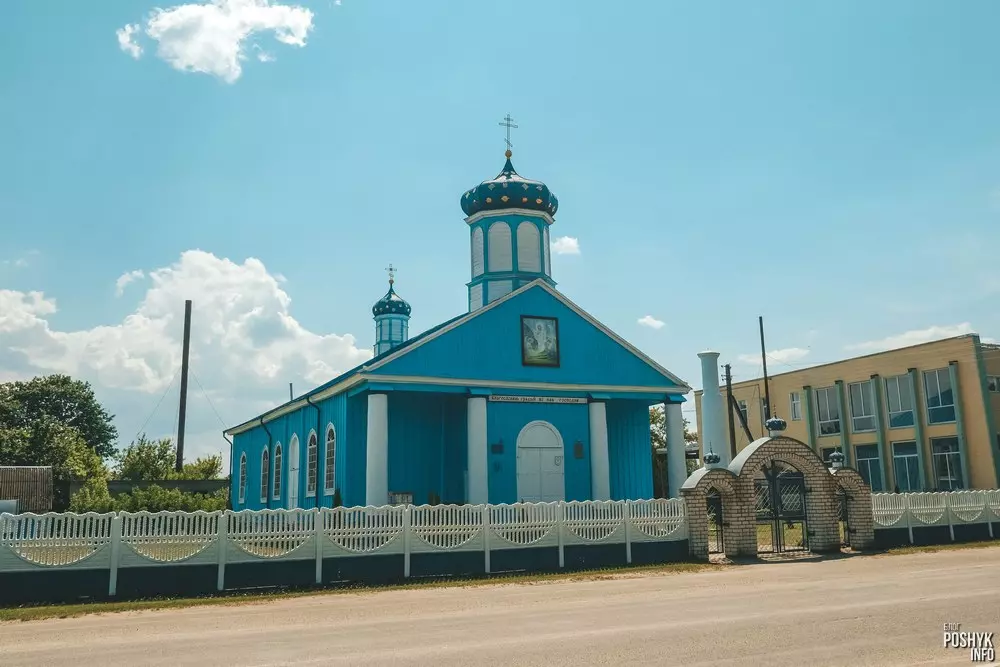
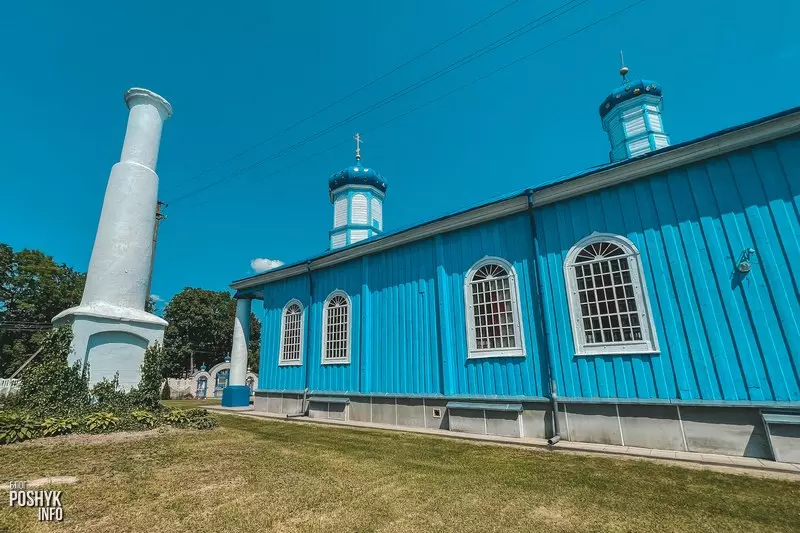
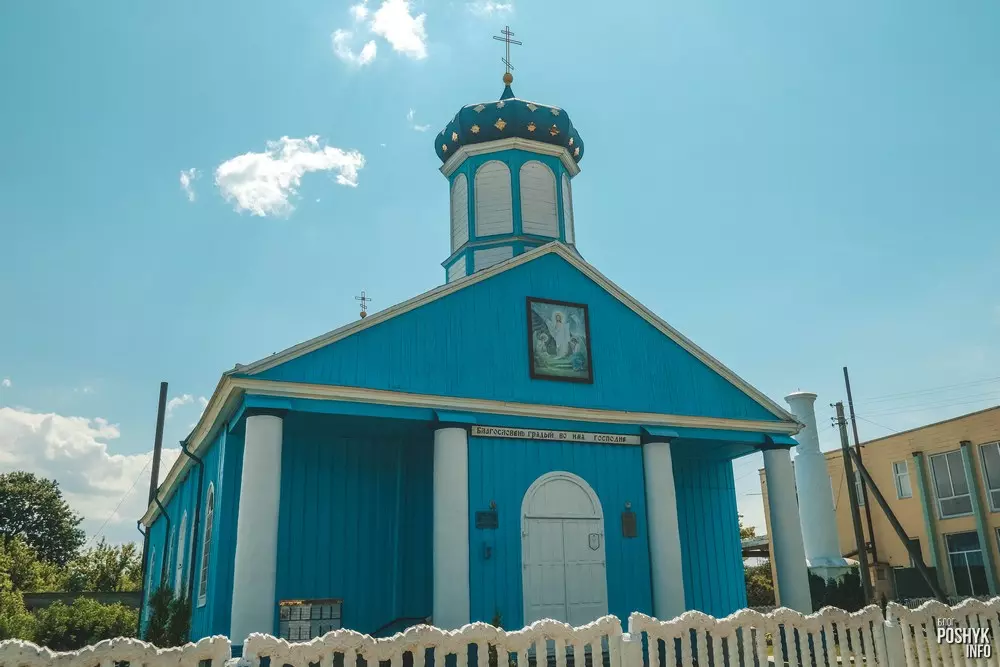
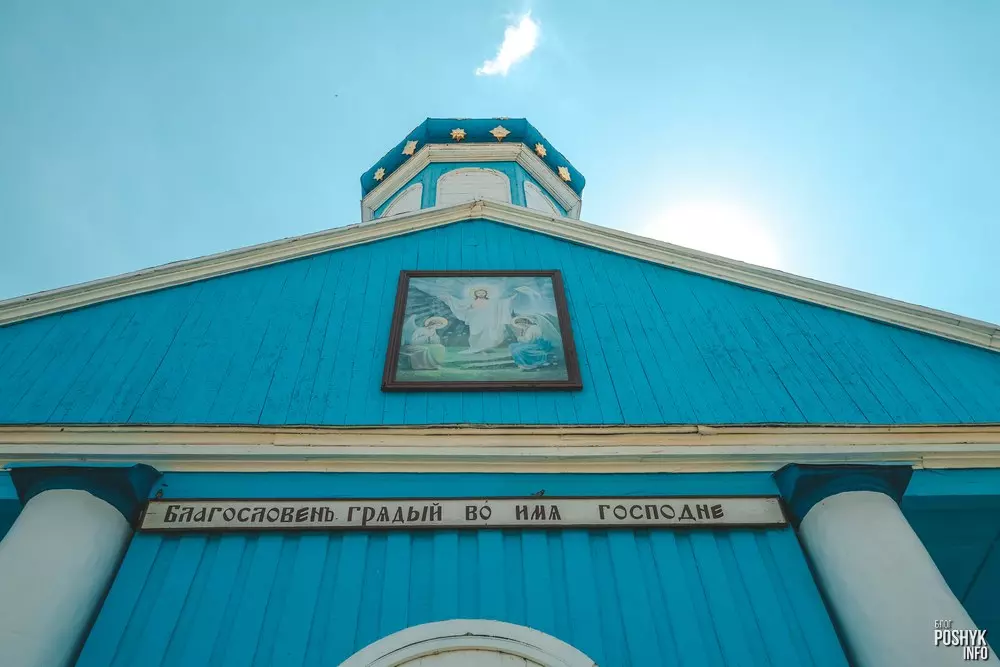
The Orthodox church is dated to 1857, with construction beginning in 1854. It was built on the site of a former Uniate church that burned down in a fire. The Antopol Church exhibits elements of Classicism and is a fine example of wooden architecture. The building is distinguished by a stylized four-column portico, and the pediment is decorated with a painting depicting the resurrection of Jesus Christ.
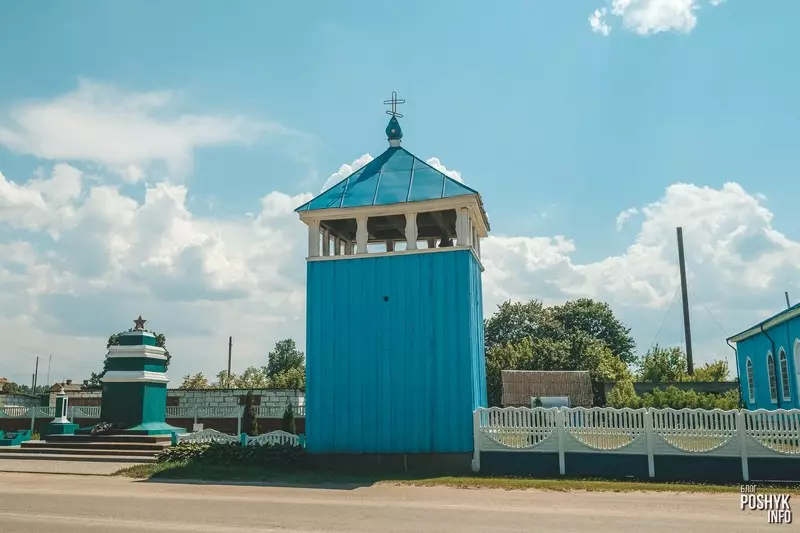
In 1866, a simple wooden bell tower was built to the left of the church.
Above the entrance is a traditional onion dome, typical of Orthodox architecture. On the grounds of the Church of the Resurrection is an unusual monument – the memorial column honoring the Constitution of the Commonwealth.
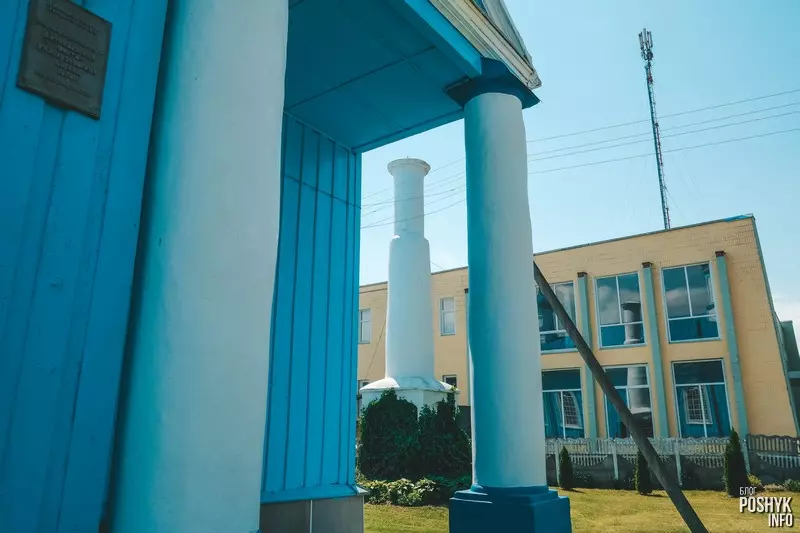
Near the Church of the Resurrection in Antopol, you will find a tall column with no information plaque or markings. It is difficult to say with certainty what the obelisk commemorates, but it is likely a memorial column erected in honor of the adoption of the Constitution of the Commonwealth on May 3, 1791. Similar columns were once found throughout Belarus, with more than 300 originally built. However, it is believed that fewer than 20 remain today.
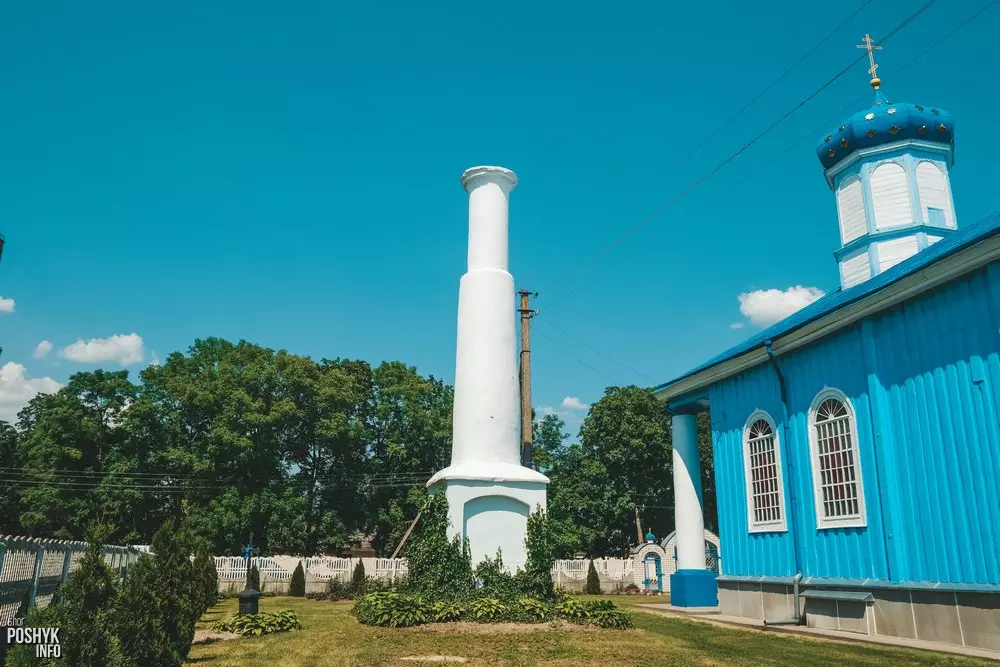
The column was likely installed during the time the Brevernov family owned these lands, in the second half of the 19th century. At that time, the family had a vast estate that included several factories, an economic yard, and a manor-palace. In the early 2000s, the column bore the number “185,” and at the top of the obelisk was a beautiful cornice. During subsequent repairs, the cornice was covered, and the inscription was erased.
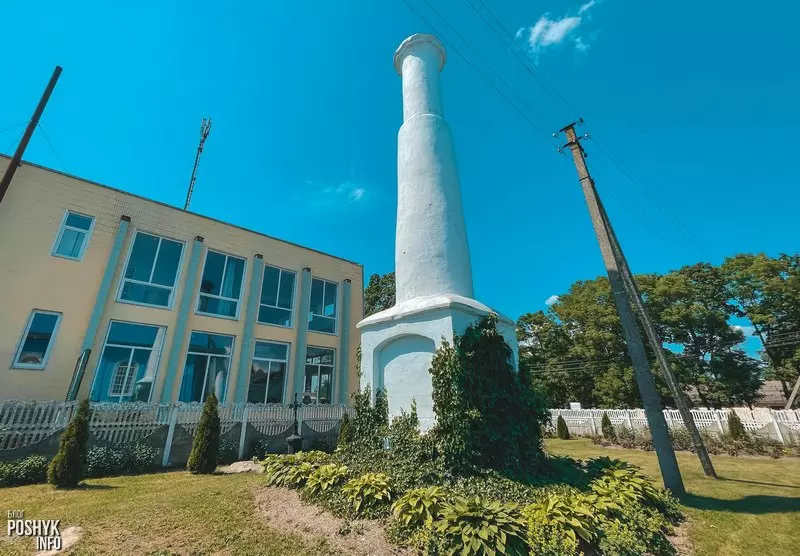
Finding this monument is not difficult, as it is located in the very center of the village, on Sovetskaya Street.
Former Church
The central part of the Antopol is home to several interesting sights, among which the former Church of St. Andrew Baboli stands out. Why “former”? Today, the local fire station occupies the building, but despite this, the structure has retained many of its original architectural features.
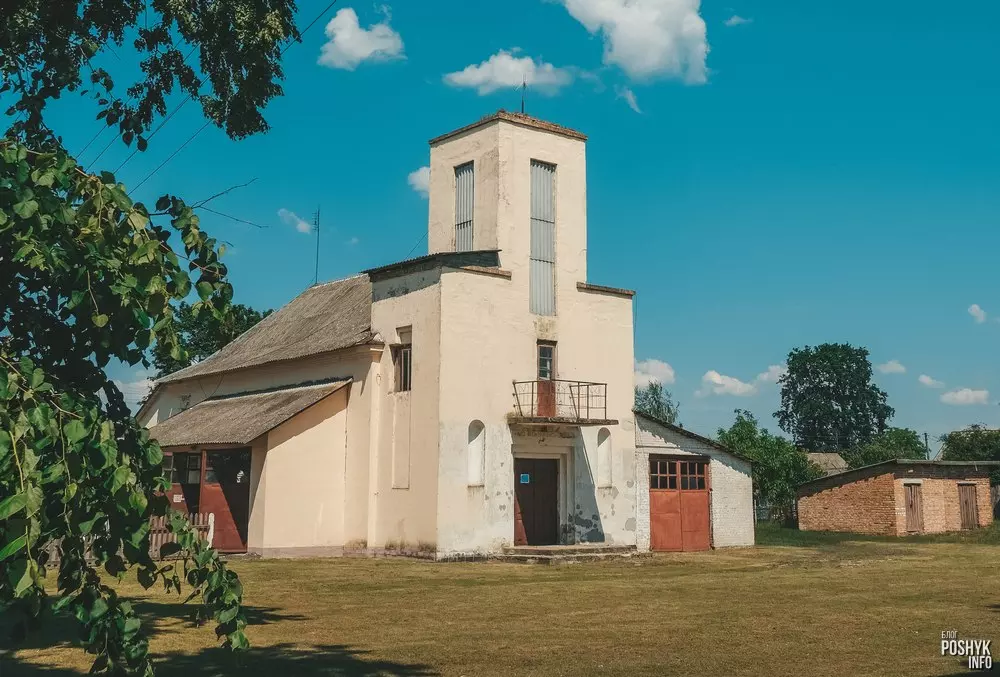
The church was built in the first half of the 20th century, presumably in 1939. In the “Code of Monuments,” 1838 is mentioned, but this is likely a typographical error. The architecture of the building exhibits characteristics of the Constructivist style. The building is rectangular, with a high two-level tower that once served as the bell tower.
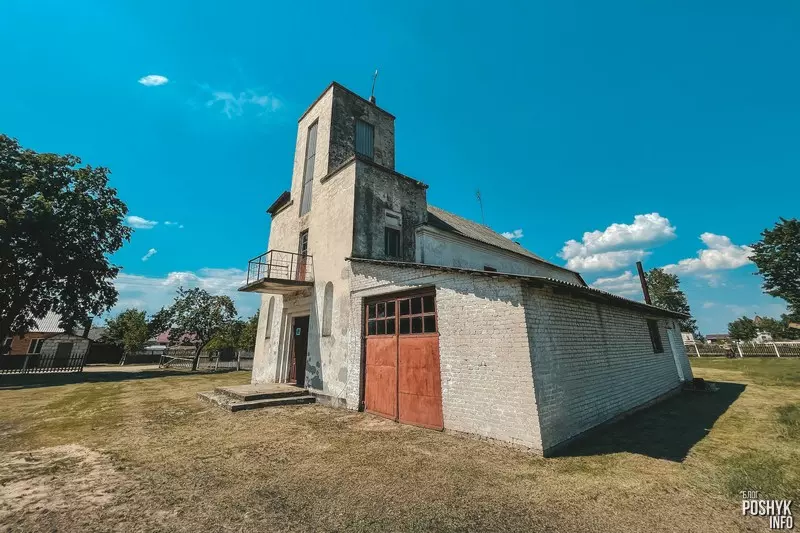
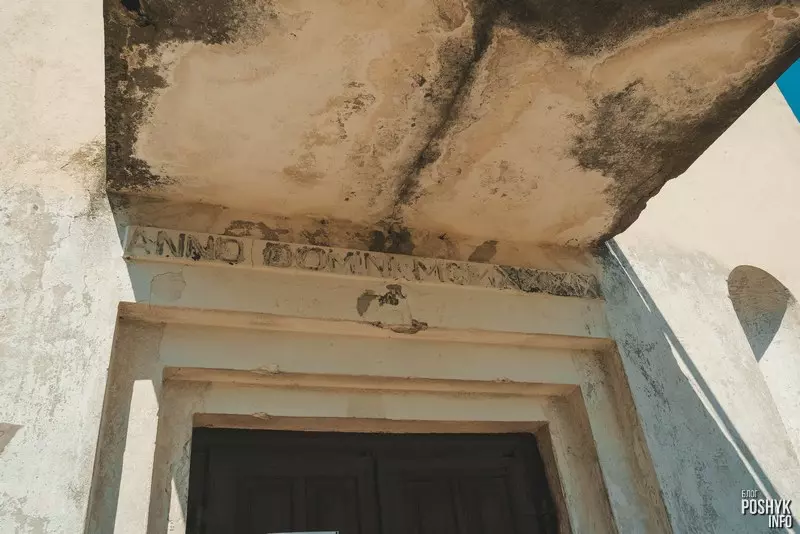
The initiator of the church’s construction was the notorious Maria Rodzevich, the last owner of the estate in Grushevo, located about 10 kilometers from Antopol. Thanks to her support, Jesuit monks brought the relics of the missionary Andrei Boboli to this church. After the war, the church in Antopol was abandoned and stood unused for many years. In the 1990s, it was partially rebuilt: a garage was added to the right side, and fire engine storage boxes were constructed on the left side.
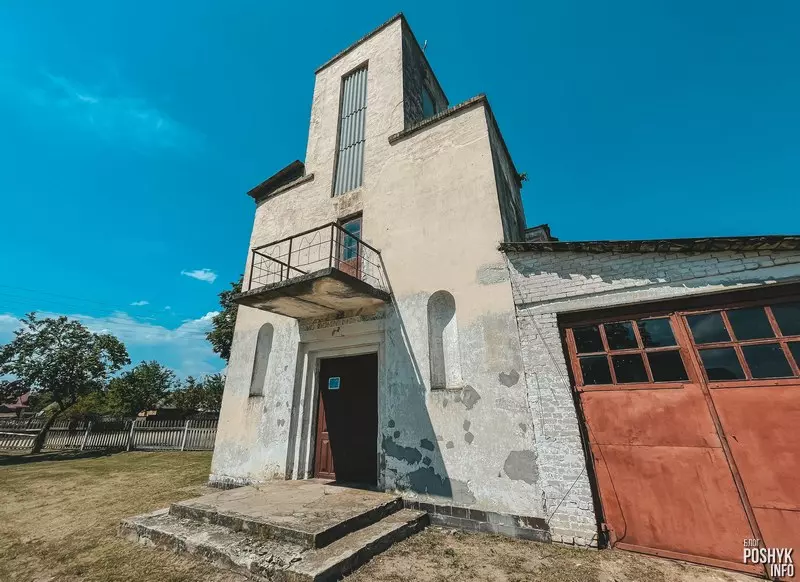
The former church is located at the intersection of Chernyakhovsky and September 17 streets.
The Building of the Choral Synagogue “Khoma”
Antopol, located in the Drogichin district, has a rich Jewish history, a small reminder of which can be found in the building of the former Choral Synagogue “Khoma.” Since its restoration, the building has been used as a House of Culture since 2008. The first Jewish settlers arrived in Antopol long ago, and many tragic events affected both the Jewish community and the village itself. The original synagogue, dating back to the 17th century, no longer exists, nor does the building that replaced it. It is likely that the current building was restored after World War I, on the foundation of a synagogue from the second half of the 19th century.
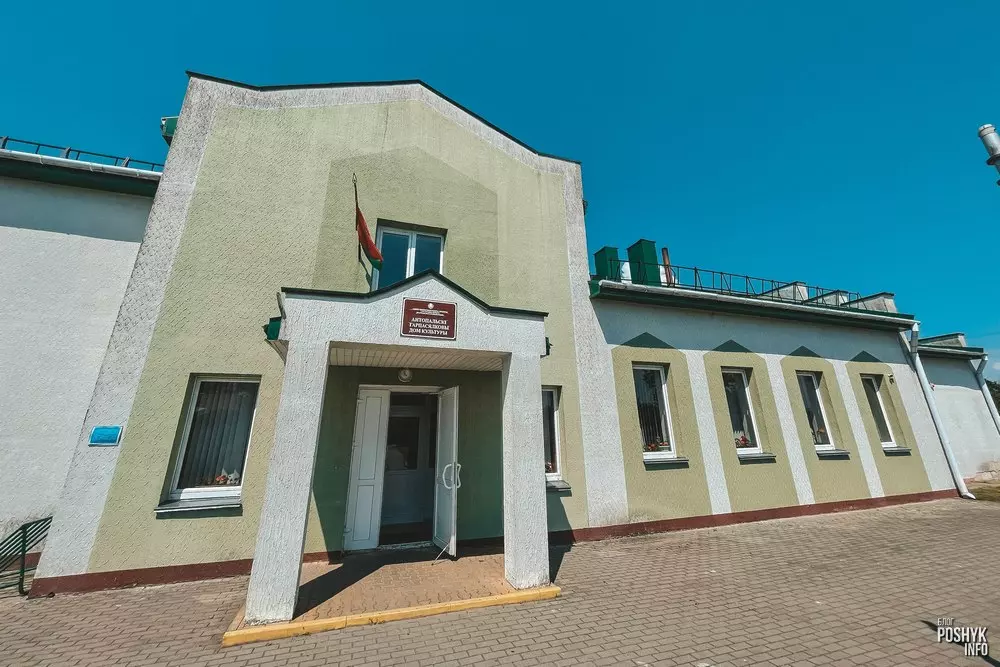
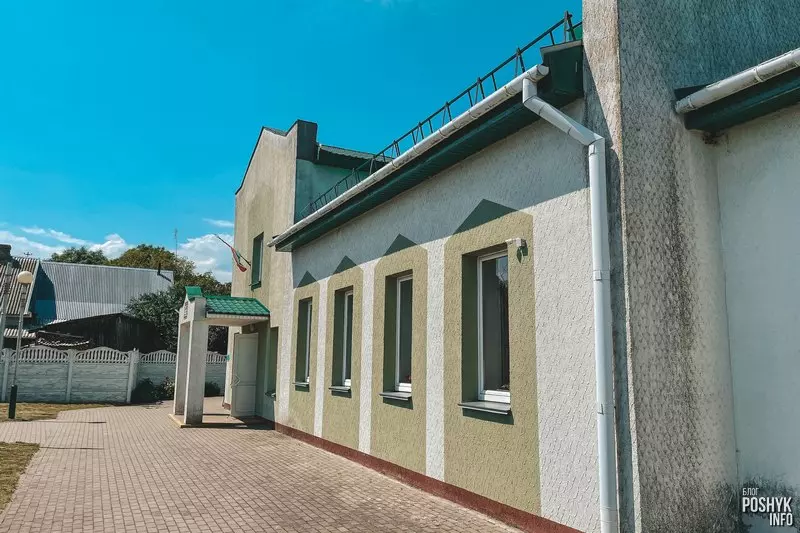
The architecture of the building is simple and does not stand out significantly. Without an information plaque, it would be difficult to recognize it as a historical monument. In Soviet times, the building housed the “Rodina” cinema.
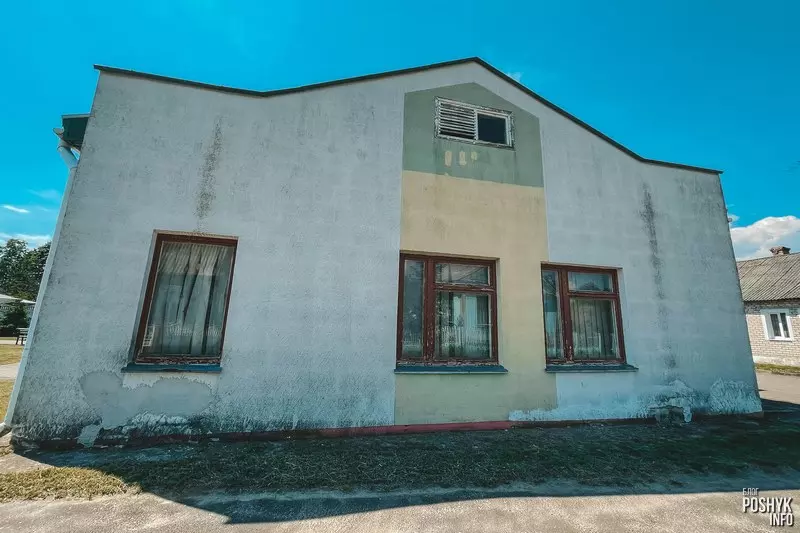
The former Jewish temple is located in the center of the village, at Proletarskaya Street, No. 4.
“Shopping Malls” in the Urban Village of Antopol
In any large settlement, and even more so in a city, the central part always attracts merchants. In Antopol, this is reflected in the construction of shopping pavilions in the town center. Although modest in appearance, the Antopol pavilions are considered a monument of civil architecture from the mid-19th century. They were built by the local Jewish community, which at the time made up three-quarters of the population.
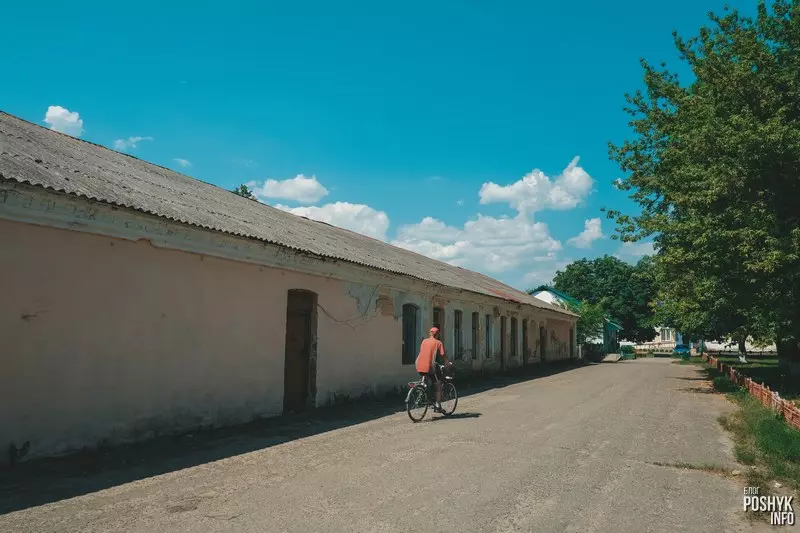
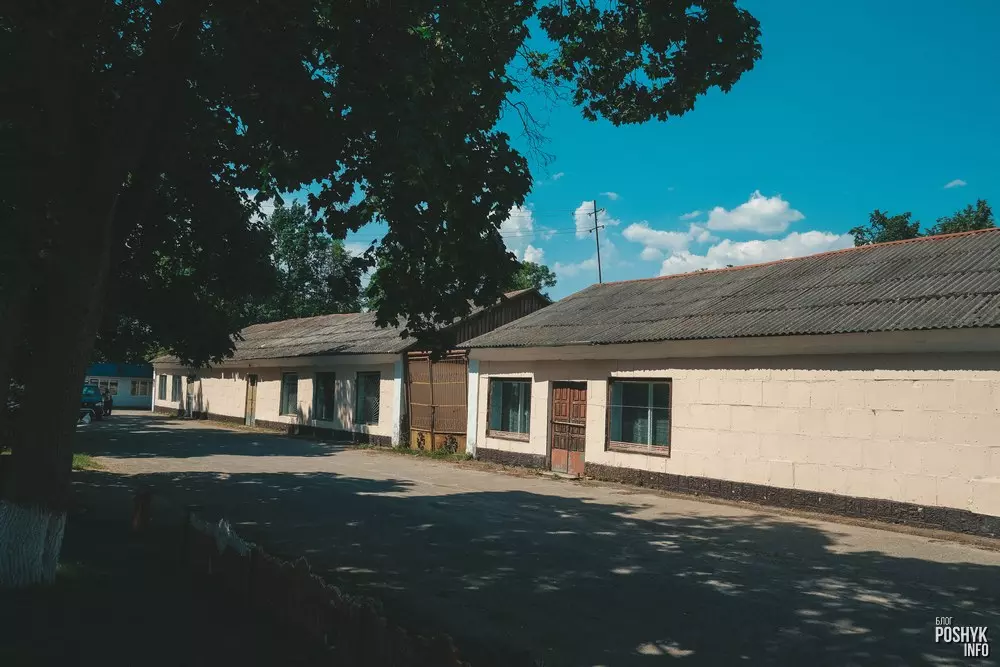
The building is brick, one-story, and rectangular. Retail outlets of various sizes, some with warehouses and some without, line the entire perimeter. The commercial buildings form an inner courtyard, approximately 300 m², with through passages.
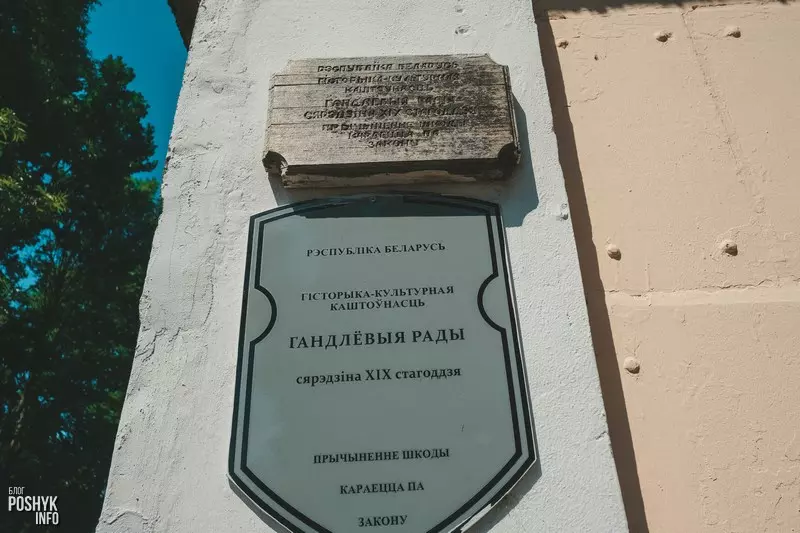
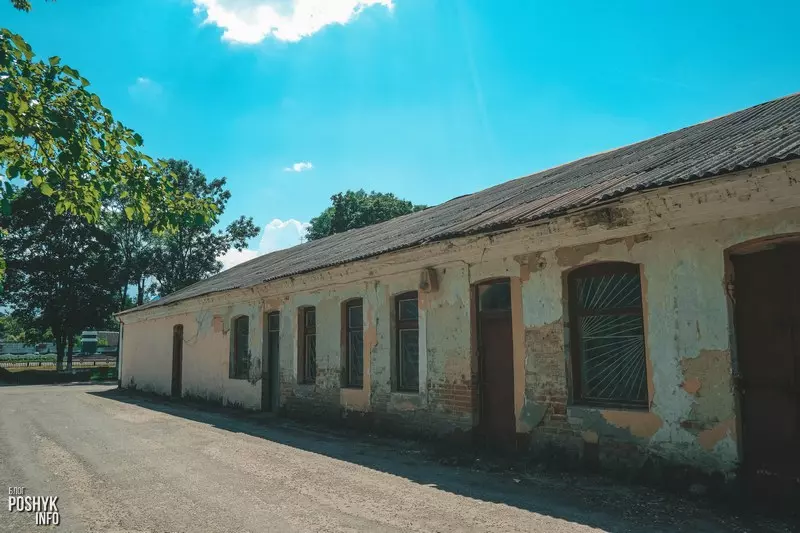
Today, the pavilions in Antopol are abandoned and no longer serve their original purpose. However, local entrepreneurs still trade near the main street of the village, albeit using cars and tents instead of the original pavilions. The building has undergone several renovations over the 20th century. The last tenants moved out before 2010, and the pavilions were subsequently put up for sale. So far, no investor has shown interest.