
Explore detailed descriptions and photos of the most common birds in Belarus, including the River Tern, Great Grebe, Coot, Tufted Duck, and Herring Gull. Learn about their characteristics, behavior, and where to spot them in the wild.
River Tern
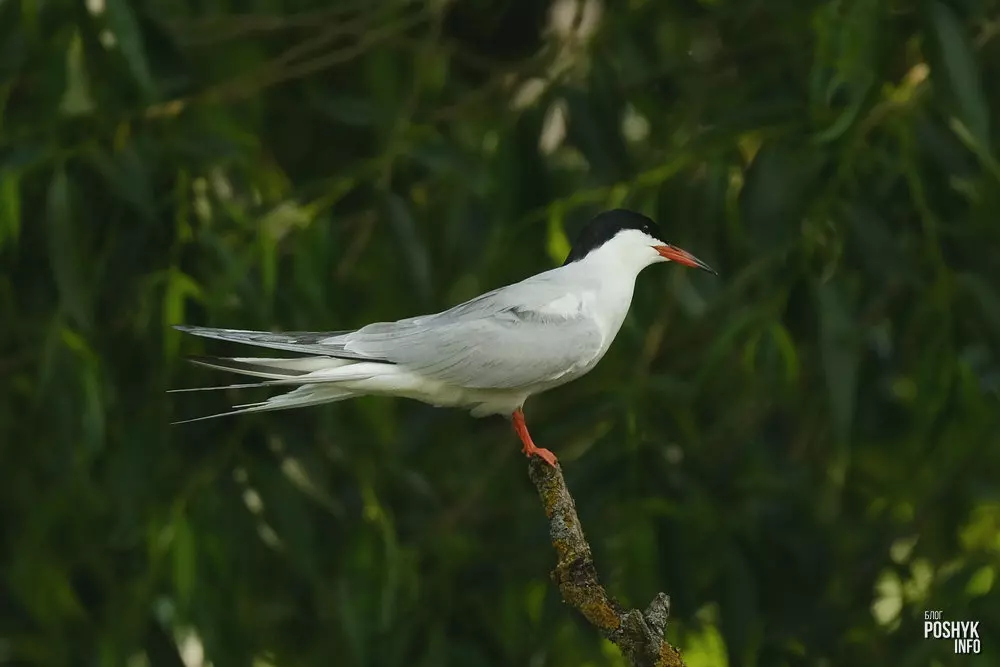
As the name suggests, the river tern (Sterna hirundo) prefers to live near rivers and reservoirs. It arrives in Belarus during the warm period of the year for nesting and departs early for wintering. Externally, it is distinguishable by its bright red feet and matching red beak. The plumage is light grayish-silver and darkens toward the tips of the wings. Another distinctive feature is the “black cap” on the top of its head, which extends to the eyes. The average size of the river tern is just over 30 centimeters.
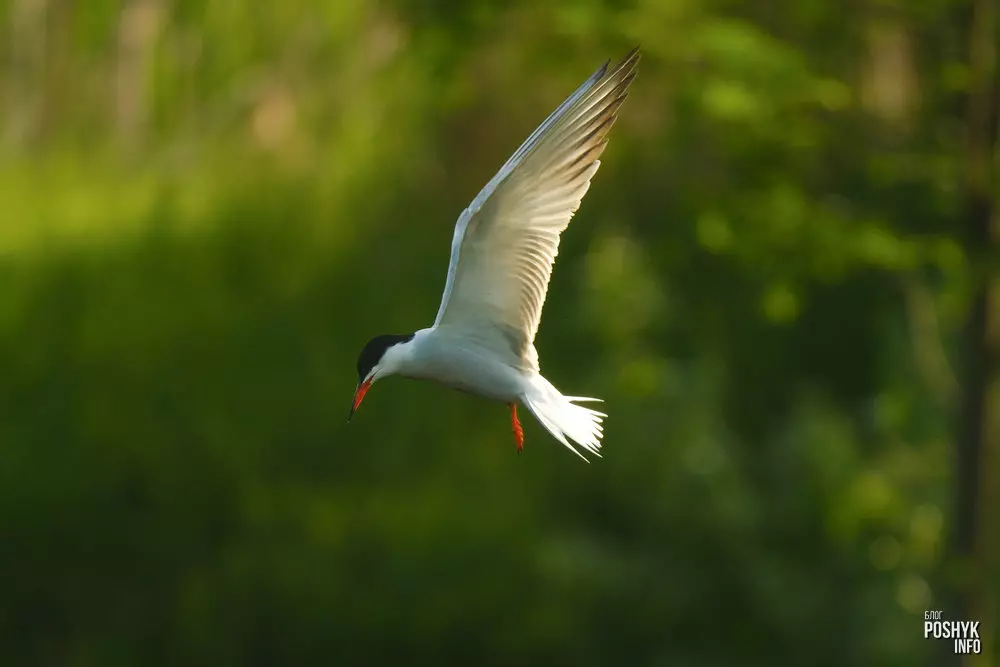
The tern feeds on small fish, skillfully diving for them from a height. It builds its nests on the ground, near the water, making its eggs vulnerable to various predators. In Belarus, the common tern is quite widespread, and it is not difficult to observe the bird in its natural habitat.
Great Grebe
The Great Grebe (Podiceps cristatus) is quite common in the waters of Belarus and can be easily recognized by its unusual collar. It is also known as the Chomga. For our latitudes, this bird is considered migratory; it returns for nesting in late March to early April. It spends almost all its time on the water, rarely coming ashore or flying. The Great Grebe is slightly smaller than a duck, usually not exceeding 50 centimeters in length.
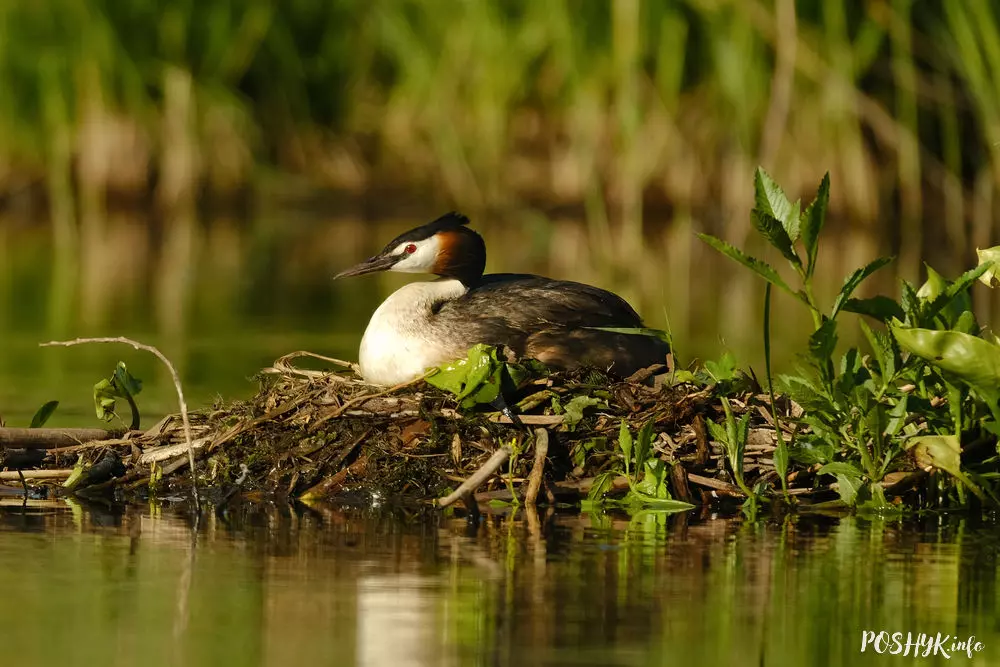
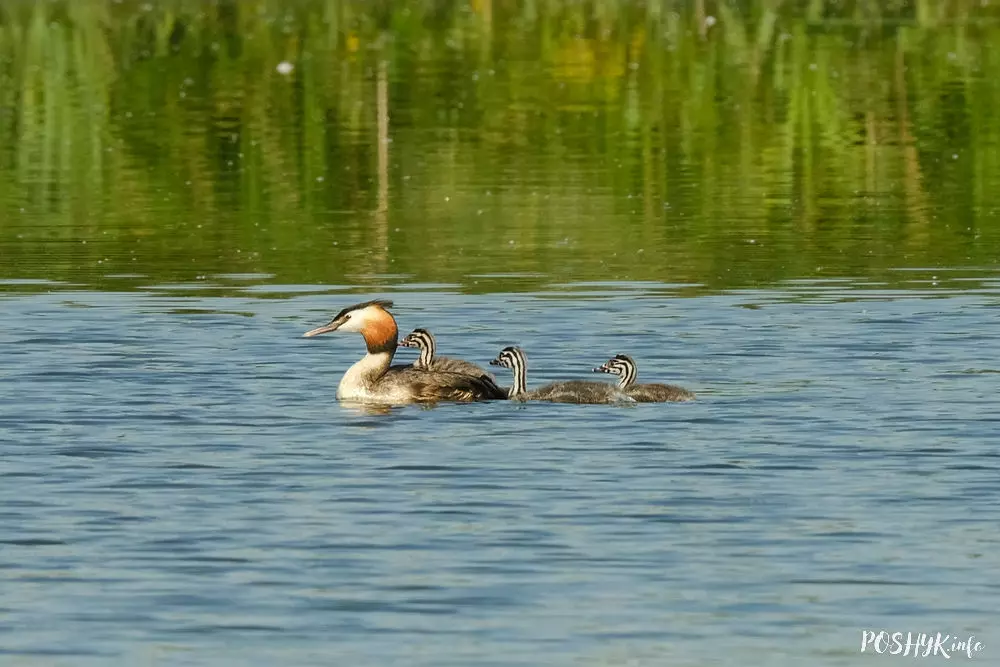
This bird is easily recognizable due to its long dark red neck and tufts of feathers on its head that resemble a fancy hat (by the way, these are absent in winter). Additionally, it has an elongated beak and striking red eyes. The most interesting time to observe the grebe is during the spring mating season. The male and female perform elaborate courtship displays on the water, accompanied by loud calls and “dances.” It is no surprise that the birds and their chicks look peculiar, yet endearing. The chicks have a striped black-and-white pattern on their necks, resembling a zebra.
You can encounter the Great Grebe on many reservoirs, where they build small nests located far from the shore.
Waterfowl Coot (Fulica atra)
The coot (Fulica atra) is easily recognizable among other waterfowl. Its distinguishing features include a white beak and a large, leathery white spot on its forehead, as well as red eyes. The coot is similar in size to a duck, measuring about 35-38 centimeters in length, and its weight rarely exceeds 1 kilogram. Its plumage is matte black or dark gray. In Belarus, the coot does not typically stay through the winter, but in spring, it can be seen on many large reservoirs, including in the capital.
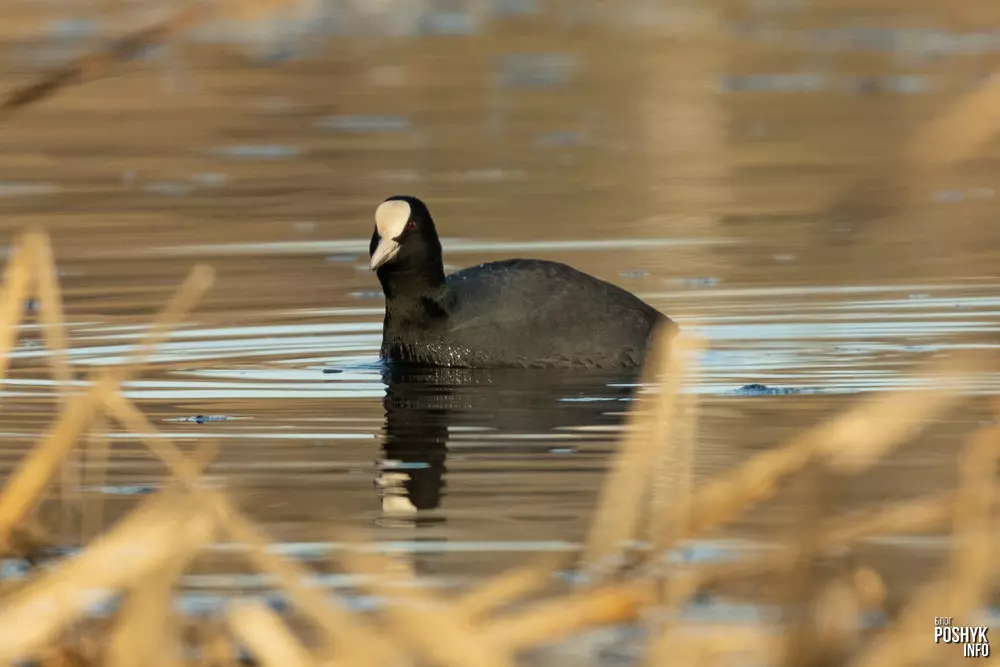
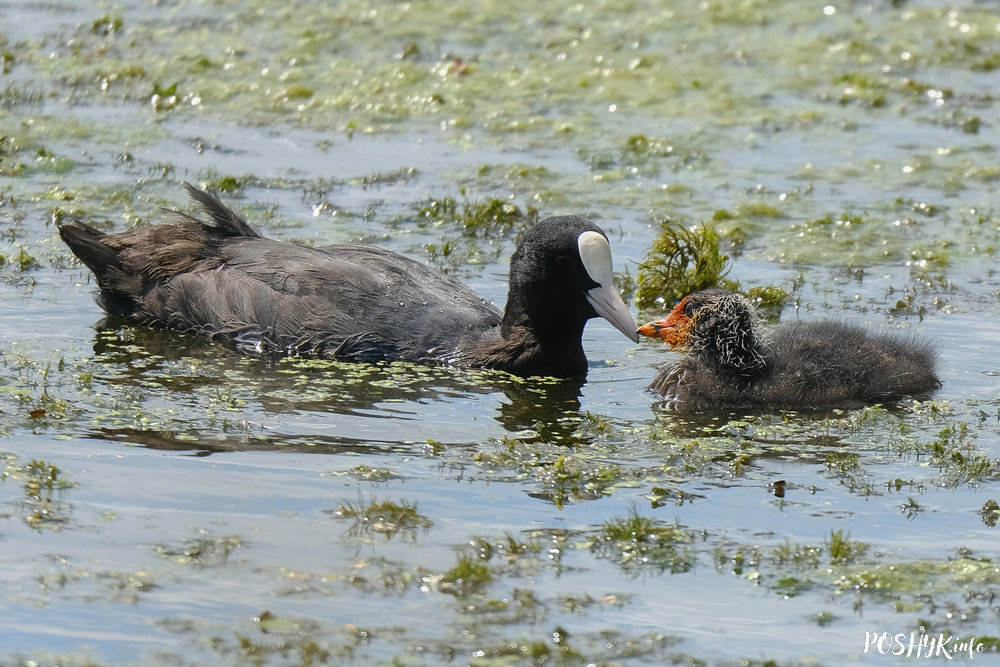
Since the coot spends most of its time on the water, its diet mainly consists of various algae, small fish, and insect larvae. However, the bird can also find food on land. Coots breed large broods, sometimes several times a year. The chicks are covered in gray down and initially have yellowish beaks.
What Does the Tufted Duck Look Like?
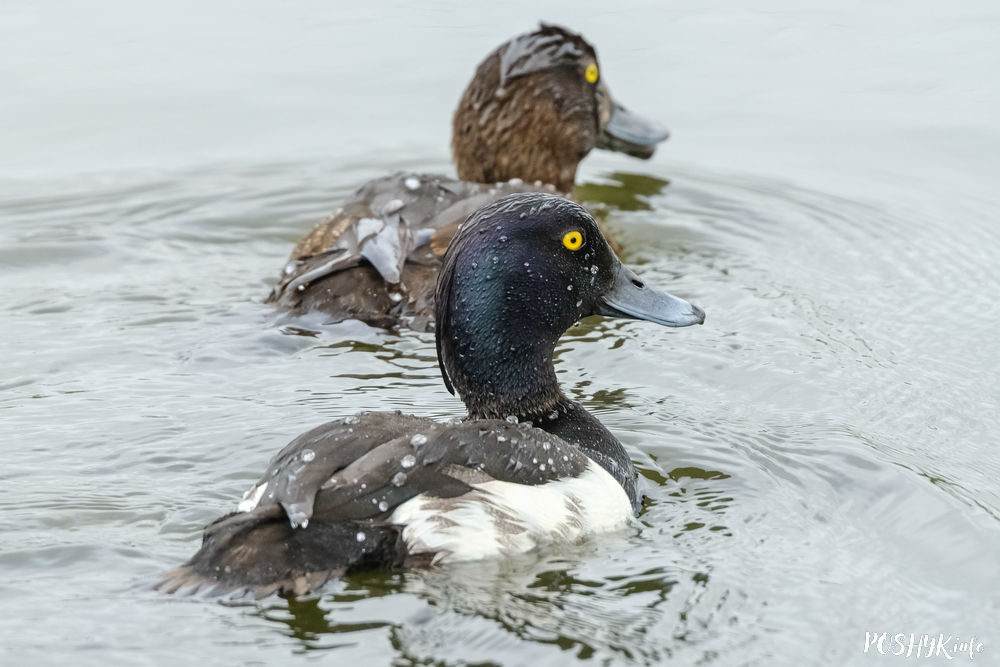
One of the duck family birds commonly found on the reservoirs and rivers of Belarus is the Tufted Duck (Aythya fuligula), known locally as the Chubat dive. It resembles a common mallard in size but looks noticeably different. During the mating season, the male is distinguished by a tuft of feathers on its head, white sides, and a rich black body with green and blue iridescent hues on the head. Females are brown and lack the pronounced tuft. They have yellow eyes and a silver-gray beak. By mid-summer, males begin to molt and, after the process, look similar to the females.


In Belarus, the Tufted Duck is a migratory species, which breeds locally but rarely stays for the winter. In early autumn, the birds begin to roam, and by October, they migrate south. They prefer to nest in small colonies, but away from other species. The Tufted Duck can be found both on lakes and rivers, as well as on artificial reservoirs.
Herring Gull (Larus argentatus)
The Herring Gull is a fairly large bird from the gull family, common in many parts of Europe, including Belarus. It is one of the most familiar gull species due to its widespread presence and characteristic behavior. Larus argentatus typically reaches a length of 55-67 centimeters, with a wingspan of 120-150 centimeters. Adult birds weigh between 0.7 and 1.5 kilograms.
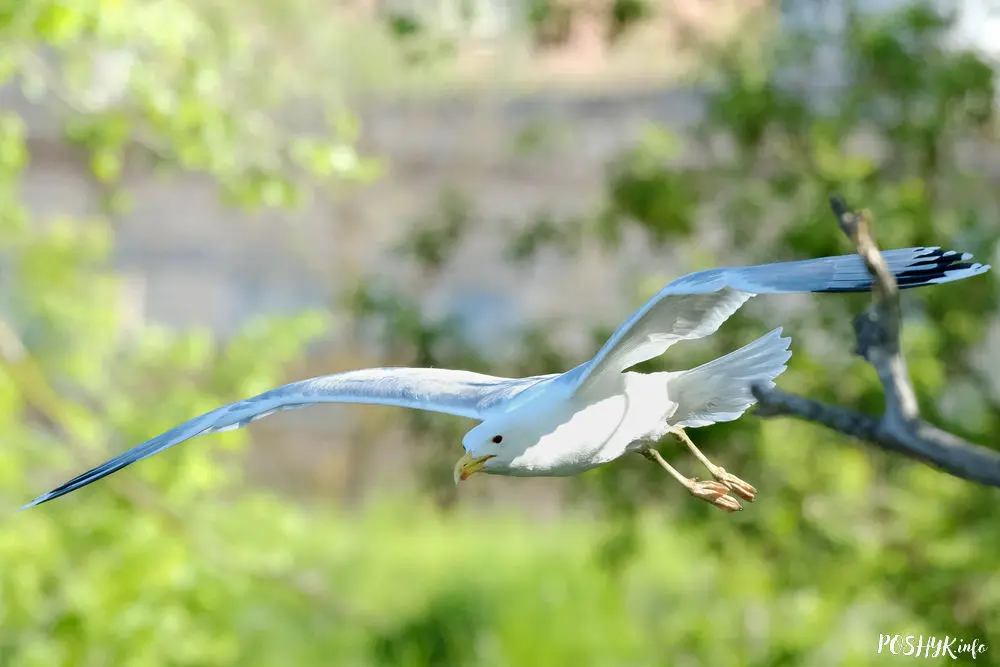
The adult Herring Gull has white plumage on the head, neck, and belly, with gray wings and back. The wing tips are black with white spots, which is a characteristic feature of the species. The legs of adult birds are pale yellow, and their beaks are bright yellow with a red spot on the lower mandible (the so-called “feeding spot”). Young Herring Gulls (juveniles) have brownish-gray plumage with mottled patterns. This coloration provides camouflage and helps them blend into their surroundings. Gulls reach their full adult plumage by the age of 4, when they become sexually mature.
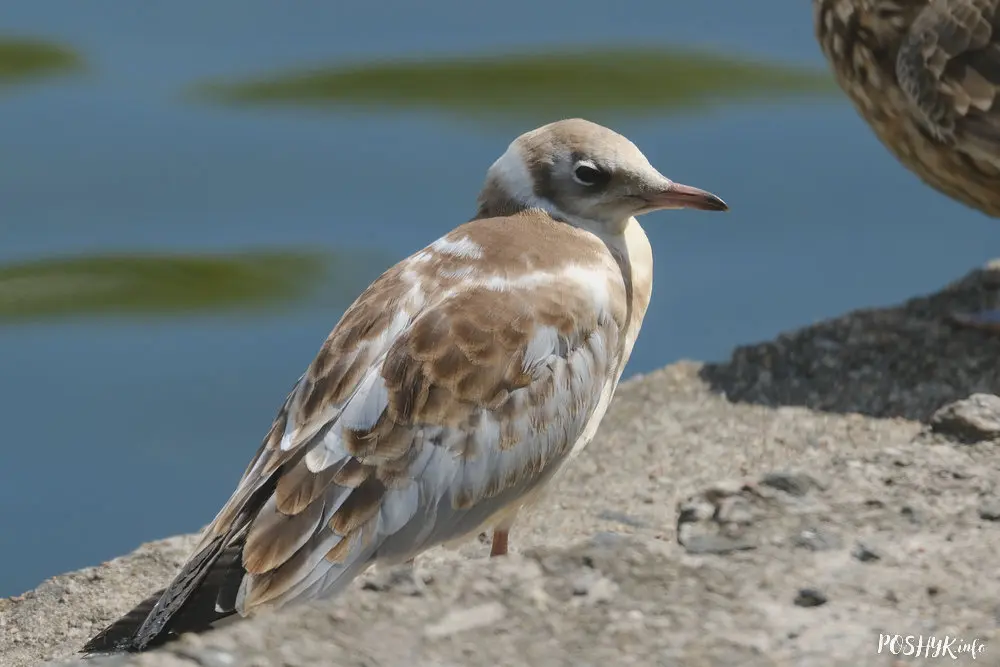
As they mature, young Herring Gulls gradually molt into adult plumage. They have a dark bill, typically blackish-brown, and dark legs. The head of young gulls may be more mottled or brownish, which distinguishes them from adults, whose heads are completely white. Herring Gulls are omnivorous and have a varied diet, feeding on fish, shellfish, small mammals, carrion, food waste, and often scavenging in landfills or near human settlements. They are commonly found in coastal areas, on islands, and near rivers or lakes. In urban areas, they may even nest on the roofs of buildings.
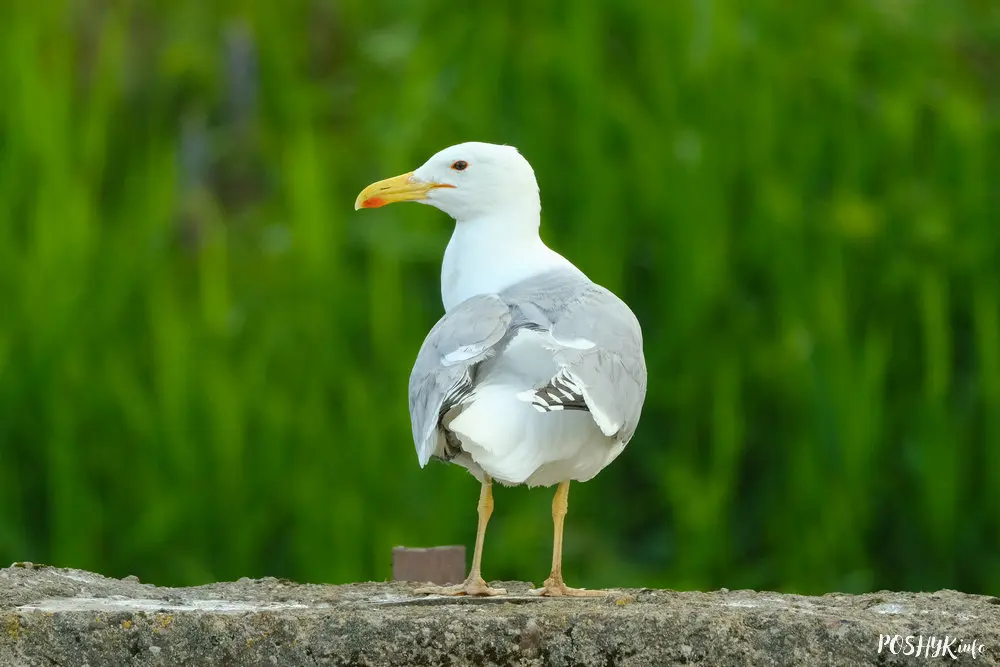
In Minsk, Herring Gulls can be spotted on almost all bodies of water. Herring Gulls form strong lifelong pairs. Males and females collaborate to build nests, incubate eggs, and raise their chicks, often engaging in courtship displays like food sharing and choral singing. These birds are considered highly intelligent, capable of adapting to new environments and finding new food sources. They are also known to use tools—such as dropping shellfish on hard surfaces to break open their shells (similar to the behavior of crows).
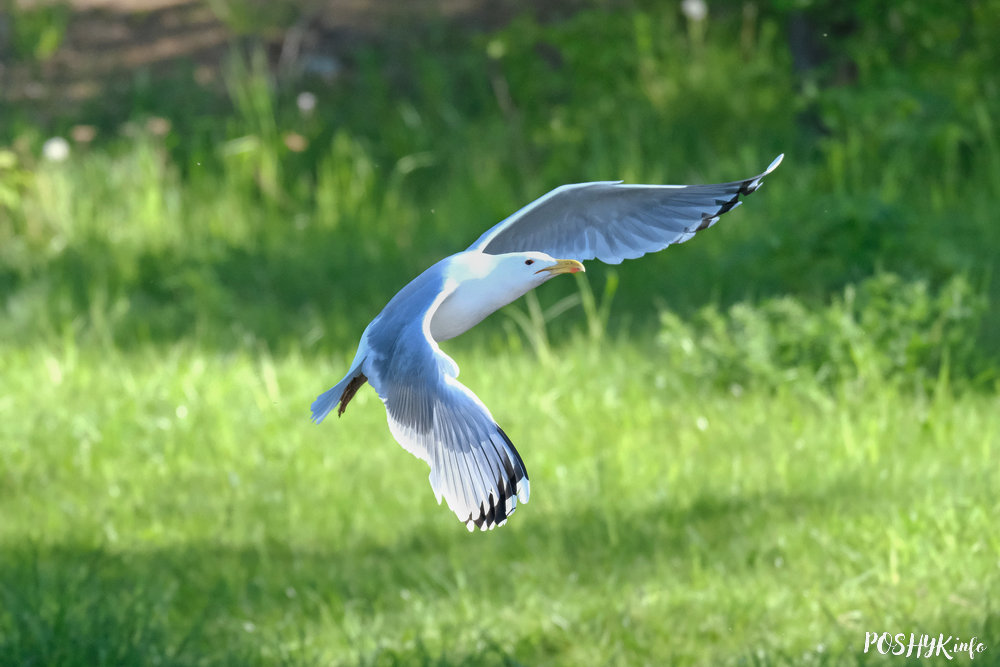
Herring Gulls possess excellent navigation skills and can travel long distances between breeding and wintering grounds. While some remain sedentary, others migrate south for the winter. In some cities, these gulls have become local celebrities due to their food-stealing habits and unusual behavior, often featured in news stories or viral videos.